
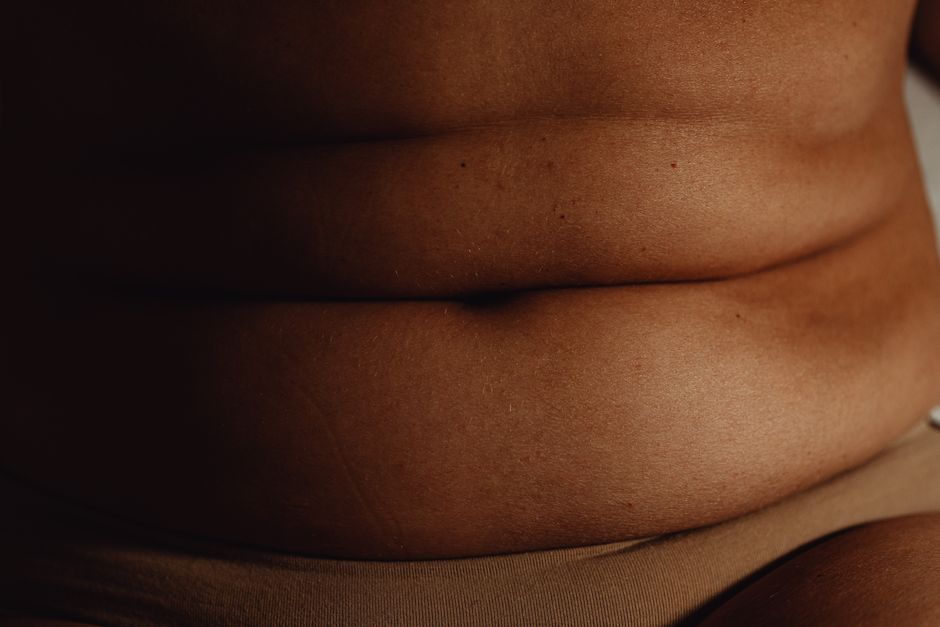
Cellulite on the stomach is not a sign that you have done something wrong. It is a very common skin change caused by how fat sits beneath the skin and how the connective tissue around it is built. There is no method that removes it permanently, but several approaches can make it less noticeable, and some can improve the skin’s appearance for a while.
What Is Cellulite On The Stomach?
Cellulite is the dimpled, uneven texture you can see and feel on the skin. It happens when small pockets of fat push against the connective tissue just under the skin. That tissue is made of fibrous bands called septae. When those bands pull down while fat pushes up, the surface ripples.
On the stomach, the skin is thinner than on the thighs or buttocks. That can make the texture easier to see, especially when you sit or bend forward. The medical term for cellulite is edematous fibrosclerotic panniculopathy, though most clinicians simply call it cellulite.
It is worth being clear about one thing: cellulite is not a disease. It is a normal variation in how skin and fat are arranged. Nearly all women develop some form of it after puberty, and it becomes more common with age. Men can have it too, but far less often.
What Causes Cellulite On The Stomach?
The main driver is anatomy, not lifestyle. The structure of connective tissue under the skin differs between people, and that structure is largely inherited. If your mother or grandmother had cellulite, you are more likely to have it too.
Several factors influence how visible it is:
- Genetics. The strength and pattern of your connective tissue bands are inherited.
- Hormones. Estrogen, insulin, and thyroid hormones appear to play a role. This is one reason cellulite is far more common in women.
- Body fat. More fat under the skin can make dimpling more obvious, but cellulite also appears in people with low body fat.
- Age. Skin thins and loses elasticity over time, which can make existing texture more visible.
- Weight changes. Rapid weight gain or loss can change how skin sits over fat.
One point that gets lost in marketing: losing weight does not reliably get rid of cellulite. It may reduce it in some people and make it more noticeable in others, because the skin does not always tighten to match the smaller fat layer beneath it.
How To Get Rid Of Cellulite On Stomach
No treatment removes cellulite permanently. That is the honest starting point. What treatments can do is temporarily reduce its appearance, and the results fade when you stop. This is true for every option currently available.
Here is what the evidence supports, and what it does not.
Weight and Exercise
Regular physical activity and a healthy body weight can improve the overall look of the skin. Strength training builds muscle, which can give the stomach a firmer appearance. This does not target cellulite directly, but it changes the underlying shape.
No exercise removes cellulite. Claims that specific moves “burn cellulite” are not supported by evidence. Fat is not spot-reduced by working the muscle near it.
Topical Creams and Gels
Most over-the-counter cellulite creams contain caffeine, retinol, or plant extracts. Some studies show a small, short-term improvement in skin appearance. The effect is usually modest and disappears within days to weeks of stopping use.
Caffeine can temporarily tighten skin by drawing out fluid. Retinol may thicken the outer skin layer over time. Neither changes the connective tissue bands that cause the dimpling. No cream has been shown to remove cellulite.
Massage and Mechanical Devices
Devices that massage or suction the skin, including some handheld rollers, can temporarily smooth the surface. The effect comes from moving fluid and stretching tissue, not from changing structure. Results last a short time.
Manual lymphatic drainage, a gentle massage technique, is sometimes used. Some clinicians recommend it, but the evidence for lasting benefit is limited.
In-Office Procedures
Several procedures are performed by dermatologists and other clinicians. These include laser therapy, radiofrequency, acoustic wave therapy, and subcision, where a small needle is used to break the fibrous bands.
Some of these have shown improvement in clinical studies, but results vary, and most require multiple sessions. Benefits are temporary, often lasting months rather than permanently. Subcision has shown more durable results in some studies than surface treatments, but it is also more invasive and carries risks like bruising, swelling, and infection.
Cost, downtime, and the need for repeat sessions are real considerations. No procedure is a permanent fix.





Which Treatments Actually Have Evidence?
The evidence base for cellulite treatment is uneven. Some approaches have been studied in controlled trials. Others rely mostly on marketing.
| Approach | Evidence Level | Typical Duration of Effect |
|---|---|---|
| Weight management and exercise | Indirect benefit; changes overall shape | Ongoing with continued habits |
| Topical caffeine or retinol creams | Small short-term effects in some studies | Days to weeks |
| Massage and suction devices | Limited; temporary smoothing | Short-term |
| Laser, radiofrequency, acoustic wave | Modest improvement in some trials; results vary | Months, with repeat sessions |
| Subcision | More durable results in some studies | Longer, but not permanent |
The pattern is consistent: nothing is permanent, and results fade. Anyone promising a cure is overstating what the evidence shows.
What Does Not Work For Stomach Cellulite?
A lot of products and routines are sold with claims that do not hold up. Knowing what to skip can save money and disappointment.
- Detox teas and cleanses. No evidence supports these for cellulite. The body already clears waste through the liver and kidneys.
- Cellulite “burning” exercises. You cannot target fat loss to one area through movement.
- Body wraps. Any smoothing effect is from temporary fluid loss and disappears within hours.
- Dry brushing. It may exfoliate skin, but it does not change the tissue beneath.
- Supplements marketed for cellulite. No large human trials confirm benefit.
If a product claims to dissolve fat or “release” cellulite permanently, treat that claim with skepticism. The biology does not support it.
Can You Prevent Cellulite On The Stomach?
You cannot prevent cellulite, because it is largely determined by genetics and skin structure. You can influence how visible it is.
Maintaining a stable weight, staying physically active, not smoking, and protecting your skin from sun damage may help keep skin healthier over time. Sun exposure breaks down collagen and elastin, which can make skin thinner and texture more noticeable. That is a general skin-health point, not a cellulite-specific one.
Hydration and a balanced diet support skin health in general. No diet has been shown to prevent or remove cellulite specifically.
The most useful mindset is realistic. Cellulite is common, it is not harmful, and the goal of any treatment is temporary cosmetic improvement rather than a cure.
When To Talk To A Doctor
Cellulite itself does not need medical treatment. It is a cosmetic concern, not a health risk.
See a doctor if you notice skin changes that are new, painful, or one-sided, or if the skin becomes red, warm, or swollen. Those can point to other conditions that need evaluation. A clinician can also discuss in-office options and give you a realistic sense of what to expect from each.
If you are considering a procedure, ask about the evidence for that specific treatment, how long results typically last, the risks, and the cost of repeat sessions. A provider who is honest about limits is a better guide than one who promises a permanent result.
Frequently Asked Questions
Can you get rid of cellulite on your stomach permanently?
No. No treatment currently removes cellulite permanently, and all available options produce temporary improvement that fades over time.
Does losing weight get rid of stomach cellulite?
Not reliably. Weight loss may reduce cellulite in some people and make it more noticeable in others, because skin does not always tighten to match a smaller fat layer.
Do cellulite creams really work?
Some creams with caffeine or retinol show small, short-term smoothing in studies, but the effect disappears within days to weeks of stopping and no cream changes the underlying tissue.
Is stomach cellulite a health problem?
No. Cellulite is a normal variation in how skin and fat are arranged and is not harmful, though new, painful, or one-sided skin changes should be checked by a doctor.
