
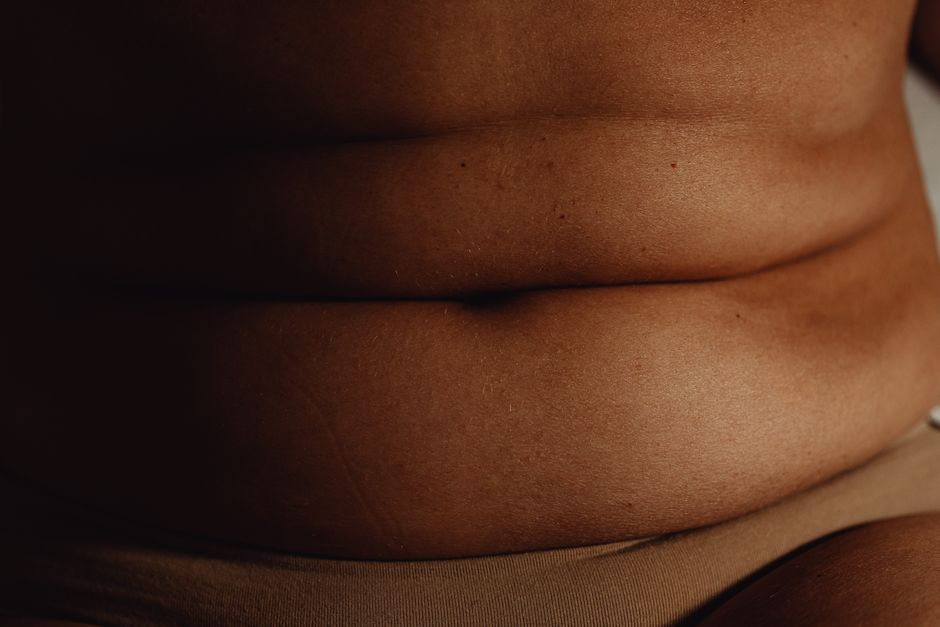
Stomach cellulite is simply fat beneath the skin pushing against connective tissue while that tissue pulls downward, creating a dimpled surface. It is not a toxin issue or a sign of poor health. It forms because of how your body stores fat, the structure of your connective tissue, and hormonal changes that come with age. What helps is reducing overall body fat, building muscle in your core, and improving circulation—though genetics will always play a role in how much you see.
What Exactly Causes Stomach Cellulite?
Cellulite happens when fat cells push up against the skin while fibrous bands called septae pull down. This creates the classic cottage cheese or orange peel look. On the stomach, the skin is often thinner than on the thighs or buttocks, which can make the dimpling more visible.
Everyone has these fibrous bands. Women typically have them arranged vertically, which makes cellulite more likely to show. Men usually have a crisscross pattern that hides it better. This is why cellulite is far more common in women—roughly 80 to 90 percent of women will develop it at some point, while men rarely do.
Hormones also matter. Estrogen promotes fat storage and can weaken collagen over time. As estrogen levels shift during perimenopause and menopause, skin loses elasticity and fat redistribution occurs, often making stomach cellulite more noticeable.
Is Stomach Cellulite the Same as Belly Fat?
No. Cellulite is a structural issue in the skin layer. Belly fat is excess adipose tissue stored in the abdominal cavity and under the skin. You can have visible stomach cellulite with very little belly fat, and you can have significant belly fat with no visible cellulite.
That said, the two are related. More subcutaneous fat—the fat just under the skin—means more pressure pushing outward against the septae. When those bands pull down harder, the dimpling becomes more obvious. Losing that subcutaneous fat can reduce the appearance of cellulite, but it will not eliminate it entirely because the connective tissue structure remains.
Visceral fat, the deeper fat around your organs, does not directly cause cellulite. It affects health outcomes like heart disease and diabetes risk, but it sits too deep to influence skin texture. Skinny people develop cellulite, and overweight people may not have any.
Can Diet Reduce Stomach Cellulite?
Diet cannot target cellulite specifically. No food removes dimples from your stomach. But diet affects the two things that make cellulite visible: total body fat and skin quality.
Reducing overall body fat through a calorie deficit will reduce subcutaneous fat volume. As fat cells shrink, they push less against the skin, which can soften the appearance of dimpling. This takes time and consistency—spot reduction is a myth, so losing fat from your stomach means losing it from your whole body.
Hydration and anti-inflammatory foods may help skin look firmer. Skin that is well-hydrated appears smoother. Some research suggests that diets high in processed foods and refined sugars may accelerate collagen breakdown, though the direct link to cellulite severity is not well established.
Foods rich in vitamin C, like citrus fruits and bell peppers, support collagen production. Collagen is the protein that gives skin its structure. But eating more vitamin C will not erase existing cellulite—it simply supports the skin’s ability to maintain its current structure.





What Exercises Actually Help?
Strength training is the most effective exercise approach. Building muscle in your abdominal wall and surrounding areas creates a firmer base under the skin. When muscle is toned and fat is reduced, the skin has less loose tissue to dimple.
Compound movements are the most efficient—squats, deadlifts, lunges, and hip thrusts all engage the core and lower body. Planks, dead bugs, and bird dogs strengthen the deep abdominal muscles that help flatten the stomach’s appearance.
Cardiovascular exercise helps by burning calories, which supports fat loss. High-intensity interval training (HIIT) burns more calories in less time than steady-state cardio, but both work. The best exercise is the one you will do consistently—no single routine has been proven superior for cellulite specifically.
One clarification: exercise cannot break up the fibrous bands causing the dimples. No amount of crunches will snap those septae. Exercise changes the tissue around them—fat volume and muscle tone—which changes how visible the bands are.
Do Topical Creams and Massage Devices Work?
Most creams do not work. Caffeine-based creams can temporarily dehydrate fat cells, which may reduce the appearance of cellulite for a few hours. Retinol creams may thicken skin over months of consistent use, which can make dimples less obvious. But no cream permanently removes cellulite.
The marketing here is aggressive. Creams claiming to “melt” fat or “detoxify” tissue have no clinical evidence behind them. The skin is a barrier—very few active ingredients penetrate deeply enough to affect fat or connective tissue.
Massage devices, including dry brushing and suction-based tools, produce temporary improvement by increasing blood flow and reducing fluid retention. The skin looks smoother for a day or two. The effect fades because the underlying structure has not changed.
Some clinical treatments do show results. Acoustic wave therapy, laser treatments, and radiofrequency devices have studies supporting modest improvement. These work by heating or mechanically stressing the tissue, which may stimulate collagen production and thicken the skin. Results vary widely, and multiple sessions are typically required. These are medical procedures—expensive and not covered by insurance—not at-home fixes.
Does Weight Loss Always Reduce Stomach Cellulite?
Not always. For some people, weight loss makes cellulite look worse. This happens when fat is lost faster than skin can tighten. The skin briefly appears looser, and the connective tissue bands become more pronounced.
Age is the complicating factor. Younger skin has more elastin and collagen, so it snaps back after fat loss. As you age, collagen production decreases naturally, and skin loses that ability to tighten. Women over 40 often notice that cellulite becomes more visible even at lower body weights.
Gradual weight loss—about one to two pounds per week—gives skin time to adapt. Crash dieting often leads to muscle loss along with fat, which can make the stomach look softer and more dimpled even at a lower weight. Preserving muscle through strength training during weight loss is the best protection against this effect.
Are There Medical Treatments That Remove Cellulite?
Several procedures are FDA-cleared for cellulite reduction, but none permanently eliminate it. The evidence is honest about this: treatments improve appearance, and results last months to a few years, not forever.
Cellulaze is a laser procedure that cuts the fibrous bands and stimulates collagen. Studies show improvement lasting up to a year or more in many patients. It is invasive, requires local anesthesia, and costs thousands of dollars.
Subcision devices like Cellfina physically cut the septae bands. This directly addresses the structural cause. Clinical trials report high patient satisfaction, with results lasting three years or longer in some studies. It carries risks of bruising, soreness, and rare cases of skin contour irregularities.
Aesthetic treatments like cryolipolysis (fat freezing) and ultrasound reduce fat but do not address the fibrous bands. They may help if excess fat is the main driver of your cellulite, but they will not smooth the dimpling itself. Some dermatologists combine fat reduction with band-release procedures for better results.
No procedure is a cure. Cellulite is a normal variation of human anatomy, and any treatment that claims permanent removal is not supported by evidence.
How Long Does It Take to See Improvement?
With consistent fat loss and strength training, expect four to six months before changes become visible. Skin remodeling is slow. The fat reduction may happen faster, but the skin needs time to adjust to the new tissue underneath.
Topical treatments, if they work at all, take eight to twelve weeks of daily application. Medical procedures show results in one to three months, depending on the treatment and your body’s healing response.
The honest answer is that improvement is usually modest. Most people see a softening of dimples rather than complete smoothness. If you are looking for perfect skin, no evidence-based approach delivers that. If you want visible improvement, a combination of fat loss, muscle building, and possibly clinical treatment offers the best chance.
Frequently Asked Questions
Can you get rid of stomach cellulite completely?
No treatment or lifestyle change completely eliminates cellulite because it is a structural feature of your connective tissue. The goal is reducing its appearance, not erasing it entirely.
Does drinking more water help with cellulite?
Proper hydration can make skin look plumper and temporarily reduce the appearance of dimpling. It does not change the underlying fat or connective tissue structure.
Why is my stomach cellulite getting worse even though I exercise?
Hormonal changes, aging, and genetics can increase cellulite visibility regardless of exercise. If you are losing fat faster than skin can tighten, the dimpling may temporarily look more pronounced.
Are expensive cellulite creams worth trying?
Most have no evidence of lasting effect, and any visible change typically lasts hours rather than days. If you try one, manage expectations—caffeine-based formulas may temporarily tighten skin, but none will remove cellulite.
