
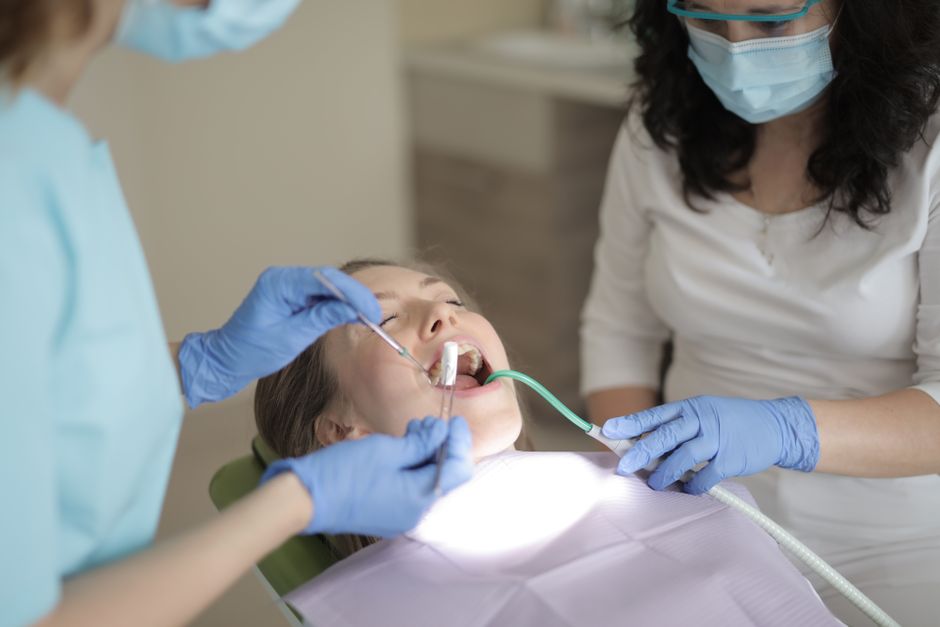
Getting into dentistry requires a clear path: a bachelor’s degree, passing the Dental Admission Test (DAT), and completing a four-year dental school program accredited by the Commission on Dental Accreditation (CODA). After dental school, you must pass national board exams and obtain a state license to practice. This guide breaks down each step honestly, without the hype you see on pre-dental forums.
What Are the Exact Steps to Become a Dentist?
The path is long but straightforward. Most dental schools require a bachelor’s degree first. Your major does not have to be science, but you must complete prerequisite courses. These typically include biology, chemistry, organic chemistry, physics, and sometimes biochemistry or anatomy.
During your undergraduate years, you take the Dental Admission Test (DAT). This computer-based exam tests natural sciences, perceptual ability, reading comprehension, and quantitative reasoning. Most competitive applicants score 20 or above out of a possible 30. Current research suggests that DAT scores combined with GPA remain the strongest predictors of dental school success.
After acceptance, dental school takes four years. The first two years focus on biomedical sciences and preclinical lab work. The last two years involve clinical rotations where you treat patients under supervision. Upon graduation, you earn either a Doctor of Dental Surgery (DDS) or Doctor of Dental Medicine (DMD) degree. These are equivalent degrees with the same training.
How Competitive Is Dental School Admission?
Dental school admission is highly competitive. According to the American Dental Education Association, roughly 50-55% of applicants get accepted each year. That means nearly half of all qualified applicants do not get in. This is not a back-up career path.
Your undergraduate GPA matters significantly. Most accepted students have a cumulative GPA of 3.5 or higher. Science GPA is often weighted more heavily. Some schools use a cutoff below which they will not review applications. As of 2026, the average DAT score for accepted students sits around 20-21 across all sections.
Extracurricular activities matter but not as much as grades and test scores. Dental shadowing is expected. Most schools want to see 100+ hours shadowing a general dentist. Some also value community service, research experience, or leadership roles. But no amount of volunteering fixes a low GPA.
One non-obvious insight: many applicants underestimate the importance of the personal statement and interview. These are not just formalities. Schools use them to assess whether you understand what dentistry actually involves. They want to see realistic expectations, not romanticized ideas about “helping people smile.”
What Prerequisites Do You Actually Need for Dental School?
Every dental school publishes its specific prerequisite courses. Most require eight semester hours of biology with lab, eight hours of general chemistry with lab, eight hours of organic chemistry with lab, and eight hours of physics with lab. Many also require biochemistry, English composition, and psychology.
Some schools have moved toward competency-based admissions. This means they accept courses from community colleges or online programs as long as you demonstrate mastery. However, traditional four-year university courses are still preferred by most admissions committees.
There is no single “best” major for dental school. Biology and chemistry are common because they naturally cover prerequisites. But English majors, business majors, and psychology majors are accepted regularly. What matters is completing the prerequisites with strong grades, not the name on your diploma.
One clarification worth making: you do not need to be a pre-dentistry major. That label is not an official major at most schools. It is simply a track or advising designation. Your transcript will show your actual major, and dental schools care about that major’s rigor and your performance in it.
Here is a comparison of common undergraduate paths to dental school:
| Major | Prerequisites Covered | Typical GPA of Accepted Students |
|---|---|---|
| Biology | All science prerequisites naturally | 3.5 – 3.7 |
| Chemistry | All science prerequisites plus advanced chem | 3.4 – 3.6 |
| Biochemistry | All prerequisites plus advanced biochem | 3.5 – 3.8 |
| Non-science (English, Business, Psych) | Must take science prerequisites separately | 3.6 – 3.9 |





How Much Does Dental School Cost and Is It Worth It?
Dental school is expensive. Public in-state tuition averages around $40,000 per year. Private school tuition averages closer to $70,000 per year. These figures do not include living expenses, fees, instruments, or health insurance. Total four-year cost often exceeds $300,000.
Most students finance this through federal student loans. Private loans are also available but typically have higher interest rates. Some schools offer scholarships, but these are rare and competitive. The Health Resources and Services Administration (HRSA) offers loan repayment programs for dentists who work in underserved areas.
Is it financially worth it? For most graduates, yes. The median annual salary for general dentists in the United States is around $170,000. Specialists like oral surgeons or orthodontists earn significantly more. However, new graduates often earn less while building their patient base. It takes several years to reach median income levels.
Some people report that the debt-to-income ratio for dentistry has worsened over the past decade. Tuition has risen faster than inflation, while reimbursement rates from insurance have not kept pace. This is a real concern, not alarmist talk. You should enter dentistry understanding that the financial picture is less rosy than it was for your parents’ generation.
What Licensure Requirements Come After Dental School?
Graduating dental school does not automatically allow you to practice. You must pass national board exams and obtain a state license. The National Board Dental Examination (NBDE) Part I and Part II are required by all states. As of 2026, the Integrated National Board Dental Examination (INBDE) has replaced the two-part format for most candidates.
After the written exam, you must pass a clinical examination. This is typically administered by a regional testing agency like the Western Regional Examining Board (WREB) or the Central Regional Dental Testing Service (CRDTS). You treat a live patient under observation to demonstrate clinical competence.
State licensure also requires a background check and proof of CPR certification. Some states have additional requirements like jurisprudence exams on state dental laws. License renewal typically requires continuing education credits every one to two years.
One thing many aspiring dentists do not realize: licensure is state-specific. If you move to another state, you may need to apply for a new license. Some states have reciprocity agreements, but not all. Plan your career geography carefully.
What Are Common Misconceptions About Getting Into Dentistry?
The biggest misconception is that dentistry is an easy path to a high income. It is not. The academic demands are intense. The financial debt is substantial. The physical demands of performing precise manual work for decades are real. Many dentists develop neck, back, or hand problems over their careers.
Another misconception is that you need perfect hand skills to succeed. Manual dexterity helps, but it can be developed through practice. Dental schools teach you the techniques. What matters more is patience, attention to detail, and the ability to work with anxious patients. Clinical skills improve with repetition.
Some people believe that a high DAT score guarantees admission. It does not. Admissions committees look at the whole application. A high score with weak grades, poor shadowing experience, or a bad interview will still result in rejection. Conversely, a slightly below-average score with outstanding grades and meaningful experience can still get you in.
This is widely claimed though strong evidence is limited: that having a dentist parent or relative significantly boosts your chances. While family connections may help with shadowing opportunities or mentorship, admissions committees evaluate applicants blindly based on credentials. There is no published evidence that legacy status moves the needle in dental admissions the way it does in undergraduate admissions.
Here is a quick list of what actually matters most for admission:
- Undergraduate GPA, especially science GPA
- DAT scores across all sections
- Dental shadowing hours (100+ recommended)
- Personal statement quality and authenticity
- Interview performance
- Letters of evaluation from science professors and a dentist
Frequently Asked Questions
How long does it take to become a dentist?
It typically takes eight years after high school: four years of undergraduate study and four years of dental school. Some programs offer accelerated paths combining undergraduate and dental school in six or seven years.
Can you become a dentist without a bachelor’s degree?
Some dental schools accept applicants with three years of undergraduate coursework, but most require a bachelor’s degree. Very few students are accepted without one, and those who are typically have exceptional DAT scores and grades.
What is the hardest part of getting into dental school?
Most applicants find the DAT preparation and maintaining a competitive GPA simultaneously to be the hardest part. The application process itself is also time-consuming, requiring multiple essays, interviews, and coordination of letters of recommendation.
Do you need to be good at science to become a dentist?
Yes, strong science skills are necessary. Dental school coursework includes pharmacology, pathology, microbiology, and anatomy. You do not need to love every science subject, but you must perform well in them to succeed academically.
