
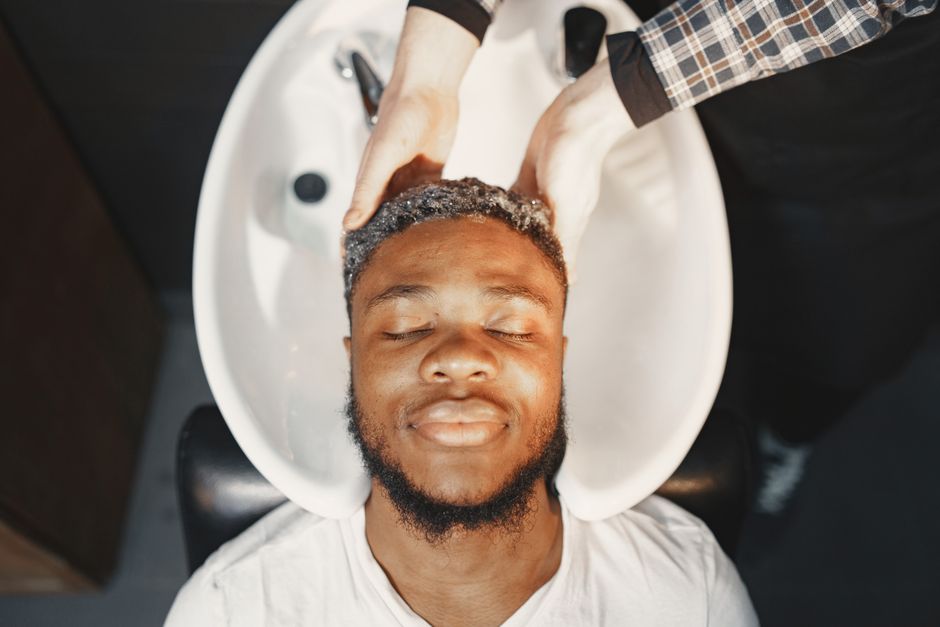
Getting black hair glue out of hair at home usually comes down to one thing: breaking the bond. Most black hair glues are built on latex, rubber, or a similar polymer that grips the hair shaft and does not respond to ordinary shampoo. The most reliable at-home method is to soften the adhesive with a food-grade oil or a dedicated adhesive remover, let it sit for several minutes, then comb it out slowly from the ends upward. Water alone will not dissolve it. Pulling or ripping the glue out is the fastest way to damage your hair and scalp.
What Is Black Hair Glue Actually Made Of?
Most black hair glue sold for wigs, closures, and lace fronts is a polymer emulsion. The two common bases are natural rubber latex and synthetic acrylic or styrene-butadiene copolymers. When the glue dries, these long polymer chains cross-link and grip both the hair shaft and the skin.
That cross-linking is why water fails. Water can soften some glues slightly, but it does not break the polymer bonds. Oil and solvent-based removers work because they get between the polymer chains and the hair, weakening the grip so the glue can slide off.
This is also why the same glue behaves differently on different people. Hair porosity, scalp oil, humidity, and how thickly the glue was applied all change how tightly it holds. A thin line of glue on a lace front is a very different problem from a full scalp application that has been in place for weeks.
One important distinction: hair glue and hair bonding glue are usually the same product category. But “glue” in some products refers to a water-based craft-style adhesive, which behaves differently and may respond better to warm water and conditioner. Check the label if you still have the bottle.
How To Get Black Hair Glue Out Of Hair At Home
Oil is the most accessible method and the one most people can start with using items already in the kitchen. The goal is to saturate the glue, not just coat the surface.
Here is the general sequence:
- Apply a generous amount of oil directly to the glued sections. Coconut oil, olive oil, castor oil, and mineral oil are all commonly used. Mineral oil and baby oil tend to be the most slippery, which helps with sliding.
- Let it sit for at least 15 to 20 minutes. Some people cover the area with a plastic cap to hold warmth and slow evaporation. Heat from a warm towel can help, but keep it comfortably warm, not hot.
- Work through the hair in small sections with a wide-tooth comb. Start at the ends and move toward the roots. Never start at the scalp and pull downward through a knot of glue.
- Reapply oil as needed. If the glue is still tacky, it needs more time or more oil, not more force.
- Wash with a clarifying or dish-style degreasing shampoo once the glue is out, then follow with a moisturizing conditioner. The oil needs to come out or the hair will stay greasy.
Commercial adhesive removers designed for hair glue are another option. These are solvent-based and generally work faster than oil. Follow the package directions. Most are meant for brief contact, and leaving them on longer than directed is not better.
Warm water can help loosen water-based glues, but it will not dissolve latex or rubber-based glue on its own. Some people find that a warm water soak followed by oil works better than either alone.
Do not use acetone, nail polish remover, gasoline, or paint thinner. These are dangerous on skin and scalp, and they can cause chemical burns and serious hair damage.
Why Pulling The Glue Out Is The Worst Option
Ripping dried glue out of hair removes hair along with it. The glue has bonded to the outer layer of the hair shaft, called the cuticle. When you pull, you are pulling the cuticle with it.
That damage is not always reversible. Hair is not living tissue once it leaves the follicle, so a stripped cuticle does not repair itself. It can only be managed with conditioning and trimming until it grows out.
Pulling also risks tearing the scalp, which can lead to infection, and it can cause traction damage at the follicle. Repeated traction on the same area is linked to a type of hair loss called traction alopecia, which can become permanent if the pulling continues over time.
If a section of glue will not budge after oil and time, stop. Cutting that small section of hair is usually less damaging than forcing it. Hair grows back. A torn scalp or a damaged follicle may not fully recover.


How Long Does It Take To Get Hair Glue Out?
There is no standard timeline. It depends on how much glue was used, how long it has been in, and what type of adhesive it is.
A small amount of glue on a few strands may come out in 20 to 30 minutes with oil. A full head of bonded extensions or a lace front that has been in place for weeks can take several hours, and often more than one session.
Be honest with yourself about this. Rushing is what causes damage. Plan for it to take longer than you expect, and take breaks if your arms or scalp get tired.
If the glue has been in for a very long time, or if it was applied over broken skin or an irritated scalp, a professional removal may be the safer choice. Some adhesives used in salon settings are stronger than consumer products, and a stylist will have the right remover and the experience to work it out without tearing hair.
What Should You Do After The Glue Is Out?
Your hair and scalp need recovery time after removal. The glue, the oil, and the mechanical combing all take a toll.
Wash with a gentle shampoo to remove the oil and any leftover residue. Follow with a deep conditioner, focusing on the mid-lengths and ends rather than the scalp. If the hair feels rough or straw-like, that is a sign the cuticle was stripped, and it will need repeated conditioning over the coming weeks.
Give your scalp a break. Avoid tight braids, new glue applications, and heavy tension for a while. If you see redness, open sores, or persistent itching, see a doctor. Those are signs of irritation or infection, not just dryness.
If you notice patches of thinning or missing hair at the edges, especially around the hairline, do not ignore it. That pattern is a common early sign of traction-related hair loss. Catching it early matters, because the longer the tension continues, the higher the chance the loss becomes permanent.
Can You Prevent This Next Time?
The easiest removal is the one you never have to do. If you use glue again, there are a few things that make removal far less painful.
- Use less glue. A thin, even layer holds just as well as a thick one for most applications and comes out much faster.
- Keep glue off the scalp itself. Bond to the hair, not the skin, wherever the style allows.
- Do not leave glue in longer than the product or your stylist recommends. The longer it cures, the harder it is to break down.
- Consider glue-free options. Many wigs, closures, and lace fronts now use elastic bands, clips, or silicone-based adhesives that release with less force.
Silicone-based adhesives behave differently from latex and rubber glues. They tend to release more cleanly with oil and are generally gentler on the hair shaft, though they are not universally better for every scalp.
Frequently Asked Questions
Does olive oil really remove black hair glue?
Olive oil can soften many hair glues enough to comb them out, especially when left on for 15 to 20 minutes. It works best on thinner applications and may not be strong enough for heavy or long-cured glue.
Can I use nail polish remover to get hair glue out?
No. Acetone and similar solvents can burn the scalp and severely damage hair. Use oil or a hair-specific adhesive remover instead.
How long should I leave oil on hair glue before combing?
At least 15 to 20 minutes is a reasonable starting point for most glues. Thick or old glue may need longer, and you can reapply oil as you work through sections.
Will pulling the glue out damage my hair permanently?
It can. Pulling removes the hair’s outer cuticle and can damage the follicle, and repeated tension in the same area is linked to a type of hair loss that may become permanent.
