
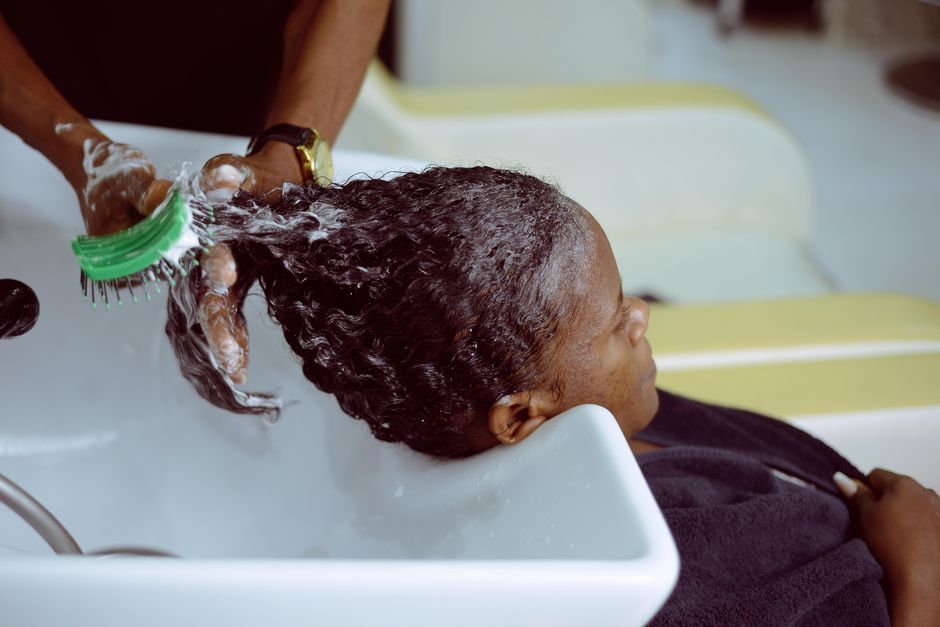
If your hair is growing slower than you expect, you are not imagining it. The short answer is that hair growth rate is largely determined by genetics, and the natural structure of Black hair plays a real role in how quickly it appears to grow. But there is a key distinction to understand: the hair follicle itself grows at a similar speed for everyone, regardless of race. The visible difference comes down to the shape of the hair strand, how it behaves as it exits the scalp, and how easily it breaks off before it gets long.
Why Does Black Hair Grow So Slow The Real Reasons?
The most important fact is that the rate of growth from the follicle is roughly the same across all hair types. On average, scalp hair grows about half an inch per month, or about six inches per year. However, Black hair typically grows in a tightly curled or coiled shape. Because of that curl pattern, the hair does not fall straight down as it grows. It spirals and folds back on itself, so the actual length of the strand increases, but the distance from the scalp to the end of the hair stays short. This makes it look like the hair is growing slowly when it is actually growing at a normal speed.
Another major factor is breakage. The natural structure of curly and coily hair makes it more fragile. The bends and curves in the strand create weak points where the hair can snap, especially if it is dry or handled roughly. If hair breaks off at the same rate it grows, the overall length never increases. This is often mistaken for slow growth when the real problem is retention, not growth.
Does Hair Type Actually Change the Growth Rate?
Research has looked at whether the hair follicle itself behaves differently in people of African descent. Some studies suggest that the growth phase, known as anagen, may be shorter in tightly curled hair compared to straight hair. The anagen phase is the active growing period for each hair strand. For scalp hair, this phase typically lasts two to seven years. If the growth phase is shorter, the hair has less time to reach its maximum possible length before it sheds and starts over.
There is also evidence that the shape of the follicle matters. In straight hair, the follicle is round and the hair exits the scalp vertically. In curly and coily hair, the follicle is curved or oval-shaped, and the hair exits at an angle. This curved follicle structure is linked to the spiral shape of the strand, and it may also influence how the hair behaves during the growth cycle.
That said, the evidence here is not fully settled. Some research indicates a slightly slower linear growth rate for African hair, while other work finds the rate is comparable when measured carefully. What is clear is that even if there is a small difference in follicle-level growth, it is not the main reason your hair appears to stay the same length. Breakage and shrinkage are far bigger factors for most people.
Why Is Black Hair More Prone to Breakage?
The structure of the hair strand itself explains most of the fragility. Hair is made of a protein called keratin, arranged in layers. The outer layer, called the cuticle, acts as a protective shield. In straight hair, the cuticle lies flat and smooth. In curly and coily hair, the cuticle is often raised and uneven. This makes it easier for moisture to escape and for the hair to become dry and brittle.
Additionally, the natural oils produced by the scalp, called sebum, have a hard time traveling down a curly strand. Sebum is produced at the root and must travel along the hair shaft to coat the entire strand. In straight hair, this happens easily. In tightly curled hair, the bends and twists block the oil from moving down the strand. The result is that the ends of curly hair are naturally drier than the ends of straight hair, even without any styling or chemical treatment.
Dry hair is more prone to snapping, especially at the points where the hair bends. Every time you comb, brush, or manipulate the hair, you are putting stress on those weak points. Over time, this leads to breakage that prevents the hair from reaching longer lengths.




What Role Does Shrinkage Play?
Shrinkage is the difference between the length of the hair when it is stretched and its length when it is relaxed and dry. Tightly coiled hair can shrink by 30 to 50 percent of its actual length. This means hair that is truly twelve inches long may only appear to be six inches long when dry and unstretched.
Shrinkage is not damage. It is a natural property of curly hair. But it absolutely affects how growth is perceived. If you measure your hair while it is dry and curly, it will always look shorter than if you measure it while it is wet or stretched. Many people believe their hair is not growing because they are comparing the appearance of dry, shrunken hair over time without accounting for this factor.
To accurately track growth, it helps to measure the same way each time. Stretching the hair gently or measuring a small section while wet can give a more consistent picture of true length gains.
How Do Styling Practices Affect Hair Growth?
Styling choices can either protect hair or cause damage. Protective styles like braids, twists, and buns are designed to keep the ends of the hair tucked away and reduce manipulation. This can help with length retention because the fragile ends are not rubbing against clothing or being combed constantly.
However, protective styles can also cause harm if they are too tight. Traction alopecia is a type of hair loss caused by constant pulling on the hair follicle. Tight braids, weaves, and ponytails can pull hair out at the root, especially along the hairline. This is not slow growth. This is active hair loss, and it can be permanent if the tension continues over time.
Heat styling is another concern. Flat irons and curling irons can reach temperatures high enough to damage the hair shaft. Heat damage can cause the hair to lose its curl pattern and become weak and brittle. Chemical relaxers and texturizers break the bonds in the hair to straighten it, and this process weakens the strand permanently. Hair that has been chemically straightened will always be more fragile than untreated hair, and it requires careful maintenance to prevent breakage.
Can Diet or Supplements Speed Up Hair Growth?
Hair is a non-essential tissue. Your body prioritizes nutrients for vital organs before sending anything to the hair follicles. If you are deficient in certain nutrients, hair growth can slow down or hair can shed more than normal. Iron, vitamin D, zinc, and protein are among the nutrients most commonly linked to hair health.
However, if you are already eating a balanced diet, adding extra supplements will not make your hair grow faster. There is no evidence that biotin supplements accelerate growth in people who are not deficient. The marketing around hair growth supplements often overstates what the research actually shows. For most healthy people, a normal diet provides everything the hair needs.
If you suspect a deficiency, a blood test can tell you for sure. Supplementing without knowing your levels can be wasteful and, in some cases, harmful. For example, too much vitamin A or selenium can actually cause hair loss.
What Actually Helps Black Hair Grow Longer?
The evidence points to retention as the most controllable factor. You cannot change your genetics or the natural shape of your hair follicles. You can change how much hair you keep.
- Moisture management: Keeping hair hydrated reduces brittleness and breakage. Water-based moisturizers and leave-in conditioners are common approaches.
- Gentle handling: Avoiding tight brushing and harsh combing reduces stress on the hair strand. Wide-tooth combs and finger detangling are gentler options.
- Regular trims: Trimming does not make hair grow faster, but it removes split ends before they travel up the strand and cause more breakage.
- Sleep protection: Cotton pillowcases absorb moisture and create friction. Satin or silk pillowcases reduce friction and help preserve moisture overnight.
- Low manipulation: Styles that keep hair tucked away and untouched for days or weeks reduce daily wear and tear.
There is no product that can change the rate at which your hair grows. Growth happens at the follicle, beneath the scalp, and no topical oil or cream can reach that area. Products can improve the condition of the hair you already have, which helps you keep more of it, but they do not alter the biological growth rate.
When Should You See a Doctor About Hair Issues?
If your hair is shedding in clumps, developing bald patches, or thinning noticeably, that is different from slow growth. These signs can point to an underlying medical condition, such as thyroid disease, anemia, or a type of hair loss called alopecia areata. A dermatologist can evaluate your scalp and run tests to identify the cause.
Sudden changes in hair density are worth investigating. Slow growth that has been consistent your whole life is usually just your natural hair pattern. A sudden increase in shedding, or hair that breaks off much more easily than before, may indicate a health issue or a reaction to a product or styling practice.
Frequently Asked Questions
How long does it take for Black hair to grow an inch?
On average, scalp hair grows about half an inch per month, so it typically takes about two months to grow an inch. However, breakage and shrinkage can make the visible length gain seem much smaller.
Does protective styling help Black hair grow faster?
Protective styles do not speed up growth, but they help retain length by reducing manipulation and protecting the ends. Retaining more of what grows is what allows the hair to appear longer over time.
Can biotin make Black hair grow faster?
Biotin only helps if you have a biotin deficiency, which is rare. For people with normal levels, there is no evidence that biotin supplements increase hair growth rate.
