
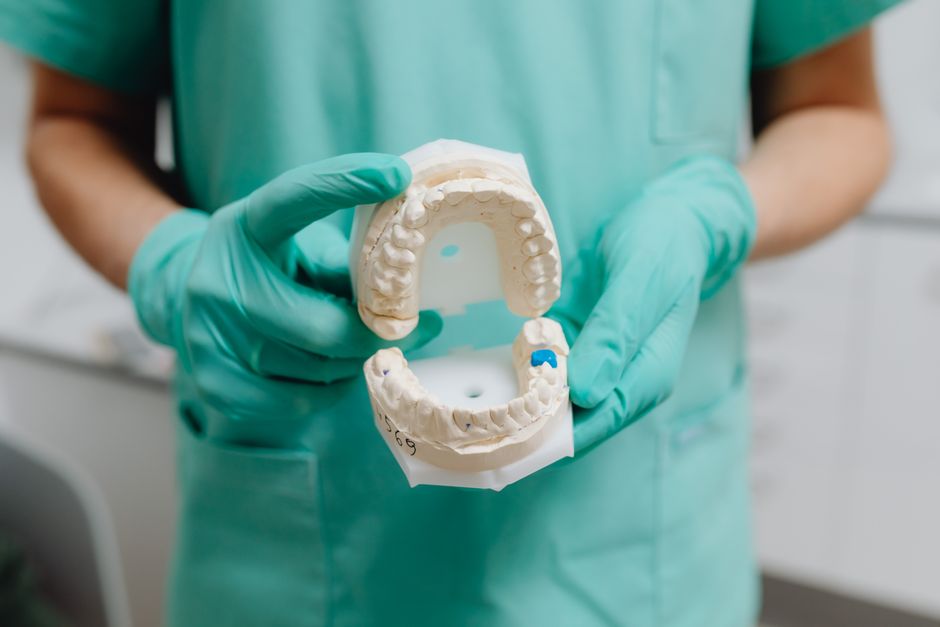
You can get a night guard from your dentist or through an online kit. A dentist-fitted guard is custom-made from a professional mold of your teeth. Online options send you a take-home impression kit that you mail in. The right choice depends on your needs, budget, and how well each option fits your mouth.
What Is a Night Guard and Who Needs One?
A night guard is a removable dental appliance worn while sleeping. It creates a barrier between your upper and lower teeth. This prevents damage from grinding or clenching, a condition called bruxism.
Many people grind their teeth at night without knowing it. Signs include morning jaw pain, headache, tooth sensitivity, or worn-down enamel. A dentist may recommend a night guard to protect your teeth and reduce strain on the jaw joint.
Night guards are not used for sleep apnea or snoring unless specifically designed for that purpose. They are primarily for bruxism. If you have sleep apnea, a night guard alone will not treat it.
How Does a Dentist-Fitted Night Guard Work?
A dentist starts with an exam. They check your teeth, bite, and jaw joint. If bruxism is suspected, they take an impression or digital scan of your teeth. This sends exact measurements to a dental lab.
The lab creates a guard from hard or soft acrylic material. It fits snugly over your teeth. When you return, the dentist checks the fit and makes adjustments if needed. This process ensures the guard does not shift or cause bite problems.
Dentist-fitted guards can be harder or softer depending on your grinding severity. A hard guard distributes force evenly. A soft guard may be more comfortable but can wear down faster. Your dentist chooses the material based on your needs.
How Do Online Night Guard Kits Work?
Online companies mail you a do-it-yourself impression kit. You mix a putty-like material, bite down in a tray, and send it back. A lab uses that impression to make your guard. The whole process happens without a dentist visit.
Some online services use a digital scan instead. You attach a scanning device to your phone and follow instructions. But most are still impression-based.
The guard arrives by mail in one to two weeks. There is no in-person fitting or adjustment. You try it at home. If it does not fit, the company may offer a replacement.




How Much Do Night Guards Cost – Dentist vs Online?
Cost is one of the biggest differences. A dentist-fitted night guard typically ranges from $300 to $800 or more. This includes the exam, impression, lab work, and adjustments. Some dental insurance plans cover part of the cost. Check your benefits for coverage limits.
Online night guards usually cost between $100 and $200. This includes the impression kit and the finished guard. No office visit or insurance is involved. Shipping is often free. Reorder replacements may be cheaper.
But lower upfront cost does not guarantee a good fit. A poorly fitting guard can cause problems that cost more to fix later.
Is a Dentist-Fitted Night Guard Better Than an Online One?
For most people, a dentist-fitted guard is more reliable. The main reason is fit. A professional impression or digital scan captures your bite relationship more accurately than a home kit. The dentist verifies the guard before you use it and can adjust pressure points.
Improper fit can lead to discomfort, jaw pain, or bite changes. Some studies suggest that poorly fitted online guards may worsen TMJ symptoms. The evidence is not large, but the risk is real.
Dentist-fitted guards also use stronger materials in some cases. Hard acrylic guards last longer than many online options. However, a well-made online guard can still protect teeth if it fits correctly.
There is no large clinical trial directly comparing dentist-made and online guards. The advantage of professional fitting is based on established dental principles and common clinical experience.
Can a Night Guard Cause Problems?
Yes, if it does not fit properly. A night guard that is too loose can fall out. A guard that is too tight can shift your teeth over time. A poor bite relationship can increase clenching rather than reduce it.
Some people experience increased jaw soreness, drooling, or gagging with any guard. These are usually temporary. But if they persist, the fit or material may need to change. Dentist-fitted guards can be adjusted in person. Online guards require mailing back and waiting.
Another risk is that a night guard may mask underlying issues. Bruxism can be linked to stress, sleep disorders, or medication side effects. A guard treats the symptom, not the cause. If you have unexplained jaw pain or worn teeth, a dentist should evaluate you first.
How to Choose Between Dentist and Online Options
Start with a dental exam. If you have not seen a dentist recently, do that before ordering any guard. A dentist can confirm you need one and rule out other problems such as cavities, gum disease, or TMJ disorder.
If you have straightforward bruxism and no bite issues, an online guard may be a reasonable choice. It is much cheaper and can still protect teeth if your impression is accurate. But be honest about your ability to follow the kit instructions. A poor impression means a poor-fitting guard.
If you have a complex bite, jaw pain, or a history of dental work, a dentist-fitted guard is safer. The same applies if you grind heavily and need a hard guard. Your dentist knows your history and can adjust the guard over time.
Insurance coverage matters. Many dental plans cover one night guard every few years from a dentist. Online guards are almost never covered. Factor in the out-of-pocket cost and potential extra visits if the online guard does not work.
Finally, consider returns and warranties. Dentists typically guarantee their work. Online companies vary. Read the fine print about replacements and refunds.
Can You Try Online First and Switch to a Dentist Later?
Yes, many people do this. If you buy an online guard and it works well, you may not need a dentist version. If it causes problems, you have not lost a large amount of money compared to a dentist guard.
Keep in mind that using a poorly fitting guard for months could cause bite changes. Do not ignore pain or looseness. If you try online, be prepared to stop using the guard and see a dentist if issues arise.
Some dentists offer a lower-cost night guard if you are willing to have a basic hard guard without extensive adjustments. Ask about options. Prices vary widely by location and practice.
Frequently Asked Questions
Are online night guards safe?
They are generally safe if they fit properly, but the risk of poor fit is higher than with a dentist. An ill-fitting guard can cause jaw pain or bite changes.
Will insurance cover a night guard?
Many dental insurance plans cover part of the cost for a dentist-provided night guard. Online guards are rarely covered.
How long does a night guard last?
Most night guards last one to three years. Dentist-fitted hard guards tend to last longer than softer online options.
Can a night guard damage my teeth?
A properly fitted guard protects teeth. A poorly fitted one can shift teeth or worsen grinding. Regular dental checkups can catch problems early.
