
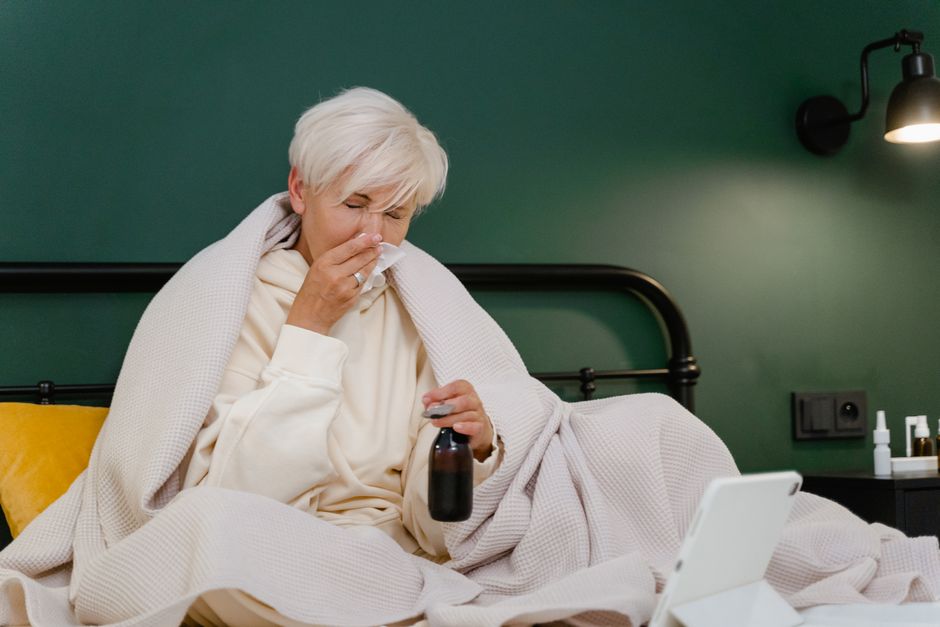
You wake up coughing. Your nose is completely blocked. Your throat feels like sandpaper. But yesterday afternoon you felt fine enough to make dinner. This pattern is not your imagination. Colds genuinely get worse at night because of how your body’s internal clock, immune system, and sleeping position interact. Your circadian rhythm deliberately changes how your body fights infection after dark. And gravity works against you when you lie flat. Here is what the science actually says about why this happens and what you can do about it.
What Does Your Circadian Rhythm Have To Do With Cold Symptoms?
Your body runs on a 24-hour internal clock called the circadian rhythm. This clock controls when you feel awake and when you feel sleepy. It also controls how your immune system behaves. Research published in the journal Sleep has found that immune cells called cytokines peak at night. These cells are your body’s frontline defense against viruses.
Cytokines also cause inflammation. That inflammation is what makes your nose swell up and your throat feel sore. So at night your immune system is working harder. That means more symptoms. During the day your body naturally suppresses some of this immune activity to keep you functional. When the sun goes down that suppression lifts. Your symptoms feel worse because your body is fighting harder.
Your adrenal glands also produce less cortisol at night. Cortisol is a natural anti-inflammatory. Lower cortisol means less control over swelling and pain. This combination of higher immune activity and lower anti-inflammatory hormones is a one-two punch that makes nighttime the worst time for cold symptoms.
Why Does A Cold Get Worse At Night When You Lie Down?
Gravity is working against you when you lie flat. During the day you are upright. Mucus drains down the back of your throat and you swallow it without noticing. At night that same mucus pools in your nasal passages and sinuses. It has nowhere to go. This causes congestion that feels much worse than it did hours earlier.
Postnasal drip also triggers coughing. When mucus accumulates at the back of your throat it irritates the tissue there. Your body tries to clear it by coughing. This is why many people wake up coughing in the middle of the night or first thing in the morning. The mucus has been sitting there for hours.
Lying flat also changes how your lungs work. Your lung volume decreases slightly when you are horizontal. This can make breathing feel more labored especially if your nose is already blocked. Some people find that propping themselves up with an extra pillow helps reduce this sensation significantly.
What Does Research On Nighttime Cold Symptoms Actually Show?
Several well-designed studies have confirmed that cold symptoms follow a daily pattern. A study published in Annals of Internal Medicine tracked people infected with rhinovirus the most common cold virus. Participants reported their symptoms every few hours. The results showed that congestion cough and sore throat were consistently worse in the evening and early morning hours compared to midday.
Another study from Brigham and Women’s Hospital looked at how the immune system responds to viruses at different times of day. Researchers found that the body’s antiviral response is stronger at night. This sounds like good news but the stronger response also causes more symptoms. The immune system is essentially causing collateral damage to your own tissue while fighting the virus.
The CDC also acknowledges that cold symptoms often peak at night. They recommend keeping a glass of water on your nightstand and using a humidifier to add moisture to the air. These are simple interventions but they are based on real physiological mechanisms not old wives tales.



Does Your Sleep Environment Make Cold Symptoms Worse?
Your bedroom might be making things worse without you realizing it. Dry air especially common in winter when heaters are running dries out your nasal passages. When the mucus membranes in your nose dry out they become irritated and produce even more mucus to compensate. This creates a cycle of dryness followed by excess congestion.
Dust mites pet dander and other allergens in your bedding can also amplify your symptoms. Your immune system is already on high alert because of the cold virus. Add an allergen on top and your body reacts even more strongly. This is not the same as having allergies. It is just your immune system being overwhelmed by multiple triggers at once.
Temperature changes during the night can also play a role. Your body temperature naturally drops when you sleep. Some research suggests that cooler temperatures can make nasal congestion feel worse because blood vessels in your nose constrict and then dilate rapidly. This vascular response can increase the sensation of stuffiness even if the actual amount of mucus has not changed.
What Actually Helps Reduce Nighttime Cold Symptoms?
There is no cure for the common cold. But there are evidence-based strategies that can make sleeping easier. The most effective ones target the specific mechanisms that make symptoms worse at night.
| Strategy | What It Does | Evidence Level |
|---|---|---|
| Elevate your head | Uses gravity to reduce mucus pooling | Strong – supported by physiology studies |
| Use a humidifier | Keeps nasal passages from drying out | Moderate – some clinical trials show benefit |
| Saline nasal spray | Thins mucus and moisturizes tissue | Strong – widely recommended by ENTs |
| Honey before bed | Coats throat and may reduce cough frequency | Moderate – small studies show improvement |
| Steam inhalation | Moistens airways and loosens mucus | Weak – feels good but limited clinical evidence |
Honey is worth a closer look. A study published in Pediatrics found that a small dose of honey before bed reduced nighttime cough in children more effectively than over-the-counter cough medicine. Adults likely benefit similarly. Do not give honey to infants under one year old due to botulism risk.
Over-the-counter decongestants like pseudoephedrine can help but they have trade-offs. They shrink blood vessels in your nasal passages which reduces swelling and congestion. But they can also raise your heart rate and keep you awake. Taking them too late in the day can backfire by making it harder to fall asleep. Antihistamines like diphenhydramine make many people drowsy which can help with sleep but they also dry out mucus membranes potentially making congestion worse the next day.
What Should You Avoid When Trying To Sleep With A Cold?
Some common remedies do more harm than good. Alcohol is a major one. A nightcap might make you feel drowsy initially but alcohol disrupts your sleep cycle. It suppresses REM sleep and can cause you to wake up more frequently during the night. Alcohol also dehydrates you which thickens mucus and makes congestion worse. The temporary relaxation is not worth the disrupted sleep and worse symptoms a few hours later.
Nasal decongestant sprays like oxymetazoline work quickly but they have a serious downside. Using them for more than three days in a row can cause rebound congestion. Your nasal passages become dependent on the spray to stay open. When you stop using it the swelling comes back even worse than before. This is called rhinitis medicamentosa and it is a well-documented problem. Limit these sprays to short-term use only.
Some people try to sleep with a heating pad on their face or chest. Heat can temporarily soothe sore muscles but it does not help with congestion. In fact heat can dilate blood vessels and increase swelling in your nasal passages. A warm compress on your sinuses might feel nice for a few minutes but it is unlikely to help you breathe better through the night.
Here is a quick checklist of what to avoid:
- Alcohol before bed – disrupts sleep and dehydrates you
- Decongestant sprays for more than three days – causes rebound congestion
- Heavy meals close to bedtime – diverts blood flow to digestion
- Sleeping completely flat – allows mucus to pool in sinuses
- Cold medications with multiple ingredients – you may not need all of them
Frequently Asked Questions
Why do cold symptoms peak at night?
Your circadian rhythm causes your immune system to release more cytokines at night which increases inflammation and makes symptoms feel worse.
Does lying down make a cold worse?
Yes lying flat allows mucus to pool in your nasal passages and sinuses which increases congestion and triggers coughing.
Is it better to sleep sitting up with a cold?
Propping your head up with an extra pillow can reduce mucus buildup and make breathing easier through the night.
Can honey help with nighttime cough?
Research published in Pediatrics found that honey reduces nighttime cough frequency in children and likely helps adults as well.
