
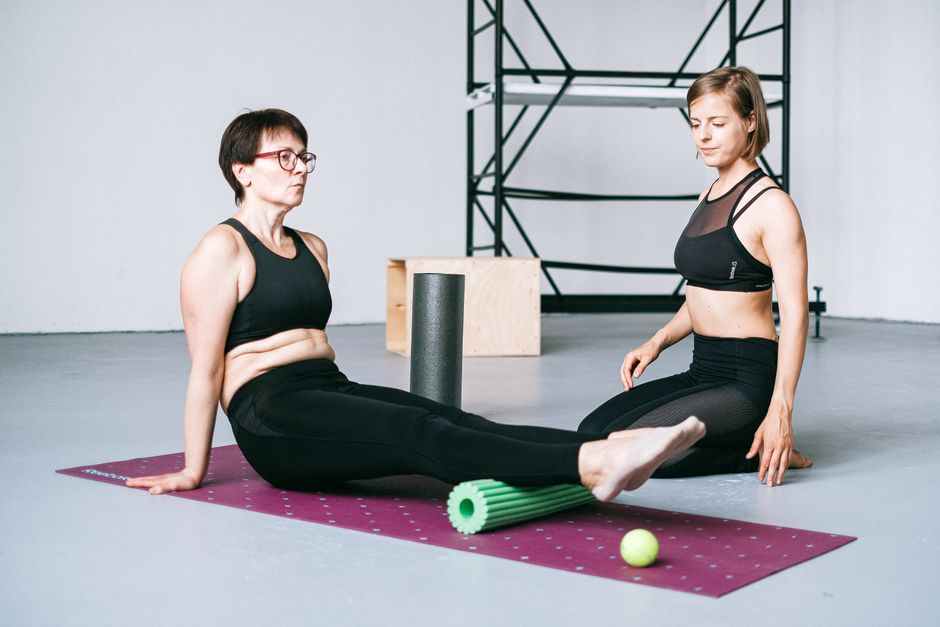
Foam rolling your legs can ease muscle soreness and improve how your legs feel before or after a workout. The key is to roll slowly, breathe through tight spots, and avoid rolling directly over bones or joints. Most people make mistakes with speed, pressure, and timing — and fixing those three things makes the biggest difference.
What Does Foam Rolling Actually Do to Your Leg Muscles?
Foam rolling is a form of self-myofascial release. That term sounds technical, but the idea is simple: you apply pressure to muscle tissue to release tension and improve blood flow.
Research consistently shows that foam rolling can temporarily increase range of motion without reducing muscle strength. That makes it useful before a workout. Some studies also suggest it can reduce delayed onset muscle soreness — the achiness you feel a day or two after hard exercise.
What foam rolling does not do is permanently “break up” scar tissue or adhesions. That claim is common in marketing, but the science does not support it. The pressure likely affects blood flow, nerve signaling, and how your brain perceives tension in the muscle.
How Long Should You Foam Roll Each Leg Muscle?
For each muscle group, aim for 30 to 60 seconds of rolling. That is enough time to feel a change in tissue tension without causing excessive bruising or irritation.
Rolling longer than two minutes on one spot rarely adds benefit. In fact, it can increase muscle tenderness and leave you sorer than when you started. If a muscle feels particularly tight, spend the full 60 seconds there, but do not camp on one point for minutes at a time.
A full leg session should take about 5 to 10 minutes total. That covers your calves, hamstrings, quadriceps, glutes, and outer thighs. You do not need to roll every muscle every day. Focus on the muscles that feel tight or that you worked most recently.
When Is the Best Time to Foam Roll Your Legs?
Foam rolling works well both before and after exercise, but the purpose differs.
Before a workout, rolling for 30 to 60 seconds per muscle group can temporarily increase range of motion. This makes it a useful warm-up tool, especially before squats, lunges, or running. Keep the intensity light to moderate so you do not fatigue the muscle before you train.
After a workout, foam rolling may help reduce soreness in the following days. The effect is modest but real. Some research indicates that rolling after exercise can reduce muscle soreness by a noticeable amount compared to no recovery at all.
On rest days, foam rolling is safe and can help with general muscle tightness. There is no evidence that rolling on rest days interferes with recovery. Listen to your body — if a muscle is very sore, gentle rolling is fine, but avoid intense pressure on already damaged tissue.





How To Foam Roll Legs Timing Technique Mistakes: The Most Common Errors
Most people make the same mistakes when foam rolling their legs. Here are the ones that matter most.
Rolling Too Fast
Fast rolling feels productive but does little. If you sweep over a muscle in one second, you do not give the tissue enough time to respond. Slow down to about one inch per second. When you find a tender spot, pause and hold steady pressure for 20 to 30 seconds rather than bouncing over it.
Using Too Much Pressure
More pressure is not better. If you are wincing or holding your breath, you are pressing too hard. The muscle will tense up in response, which defeats the purpose. You should feel a strong but tolerable sensation — sometimes described as “good pain” — not sharp pain or numbness.
Rolling Directly Over Joints and Bones
Foam rollers are for muscle tissue, not bones. Rolling over your kneecap, shin bone, or hip bone can cause bruising and nerve irritation. Stay on the muscle bellies — the thick, fleshy parts of the muscle — and avoid bony landmarks entirely.
Rolling the Lower Back With a Straight Roller
This is a common mistake that extends beyond the legs. Rolling your lower back directly on a hard foam roller can put excessive pressure on your spine and surrounding structures. For leg-focused rolling, this is less of a concern, but if you move up to your glutes or hips, keep the roller under the muscle tissue, not under your spinal column.
Breathing Shallowly or Holding Your Breath
When you hit a tender spot, your natural reaction is to tense up and hold your breath. That increases muscle tension. Instead, take slow, deep breaths and try to relax the muscle you are rolling. Exhale as you apply more pressure, and inhale as you ease off.
How To Foam Roll Each Major Leg Muscle
Each muscle group requires slightly different positioning. Here is how to target the major muscles of the legs correctly.
Quadriceps (Front of Thigh)
Lie face down with the roller under your thighs, just above your knees. Support your upper body on your forearms. Roll from just above the knee up to the hip. To increase pressure, stack one leg over the other. To target the outer quad, turn your leg slightly inward.
Hamstrings (Back of Thigh)
Sit on the floor with the roller under your thighs, just above the back of the knee. Place your hands behind you for support. Lift your hips slightly to add pressure, then roll from the knee area up toward the glutes. Avoid rolling directly on the back of the knee joint.
Calves
Sit with the roller under one calf, just above the ankle. Cross the other leg over for added pressure if needed. Support yourself on your hands. Roll from the ankle area up to just below the knee. Turn your foot slightly inward and outward to catch different parts of the calf muscle.
Glutes
Sit on the roller with it positioned under one buttock. Lean back onto your hands and cross the ankle of the leg you are rolling over the opposite knee. Shift your weight to one side and roll slowly over the glute muscle. Avoid sitting directly on the tailbone.
Iliotibial (IT) Band
The IT band runs along the outside of your thigh. This area is a common source of confusion. The IT band itself is dense connective tissue, not muscle, and rolling it directly is often painful without clear benefit. Some clinicians recommend rolling the muscles around the IT band — the glutes and outer quad — rather than the band itself. If you do roll directly over the outer thigh, keep pressure light and avoid rolling over the hip bone or knee joint.
What Does the Research Say About Foam Rolling Effectiveness?
The evidence base for foam rolling is growing but still limited in some areas. What is well established is that foam rolling can temporarily increase joint range of motion. This effect appears to last anywhere from 10 to 30 minutes after rolling, which is why it works well as part of a warm-up.
Research on soreness reduction is promising but not unanimous. Some studies show a measurable decrease in muscle soreness after exercise when foam rolling is used. Others show minimal difference. The overall picture suggests that foam rolling helps some people some of the time, and it is unlikely to cause harm when done correctly.
What the research does not support is the claim that foam rolling permanently changes muscle tissue structure or breaks up fascia. Those claims come from marketing, not science. The temporary benefits — improved range of motion, reduced perceived soreness — are enough to justify including foam rolling in your routine if you enjoy it.
When Should You Not Foam Roll Your Legs?
Foam rolling is generally safe for healthy adults, but there are situations where you should skip it.
Do not roll over an area with a recent acute injury — a muscle strain, ligament sprain, or deep bruise. Rolling over freshly injured tissue can increase bleeding and delay healing. Wait until the acute phase has passed, usually a few days to a week, before resuming rolling.
Avoid rolling if you have a blood clot or a history of deep vein thrombosis in your legs. The pressure could dislodge a clot, which is a medical emergency. If you have any history of blood clots, talk to your doctor before using a foam roller on your legs.
If you have a skin condition, open wound, or infection in the area you plan to roll, skip that area. The roller can spread bacteria and irritate the skin.
People taking blood thinners should use lighter pressure and check with their doctor first. Foam rolling can cause bruising, and blood thinners increase that risk.
How Often Should You Foam Roll Your Legs?
There is no single correct frequency that works for everyone. Daily rolling is safe for most people if you keep sessions short and pressure moderate. Some people find daily rolling helps them feel less stiff. Others only roll when they feel tight or after hard workouts.
A reasonable starting point is 3 to 4 times per week, especially on days when you exercise your legs. If you are using foam rolling to address a specific tightness issue, daily rolling for a few minutes is acceptable as long as you are not causing pain or excessive bruising.
Pay attention to how your body responds. If your legs feel more sore or tender after rolling, reduce the frequency or pressure. If rolling feels good and helps you move better, there is no reason to stop.
Frequently Asked Questions
How long should I foam roll each leg muscle?
Roll each muscle group for 30 to 60 seconds. Spending more than two minutes on one area rarely adds benefit and can increase soreness.
Is it better to foam roll before or after a workout?
Both work, but for different reasons. Before a workout, rolling can temporarily improve range of motion. After a workout, it may help reduce soreness in the following days.
Can foam rolling cause bruising?
Yes, especially if you use too much pressure or roll over bony areas. If you bruise easily, use lighter pressure and avoid rolling directly over bones and joints.
Should I roll my IT band directly?
Many clinicians recommend rolling the muscles around the IT band instead of the band itself. Direct IT band rolling is often painful, and evidence for its benefit is limited.
