
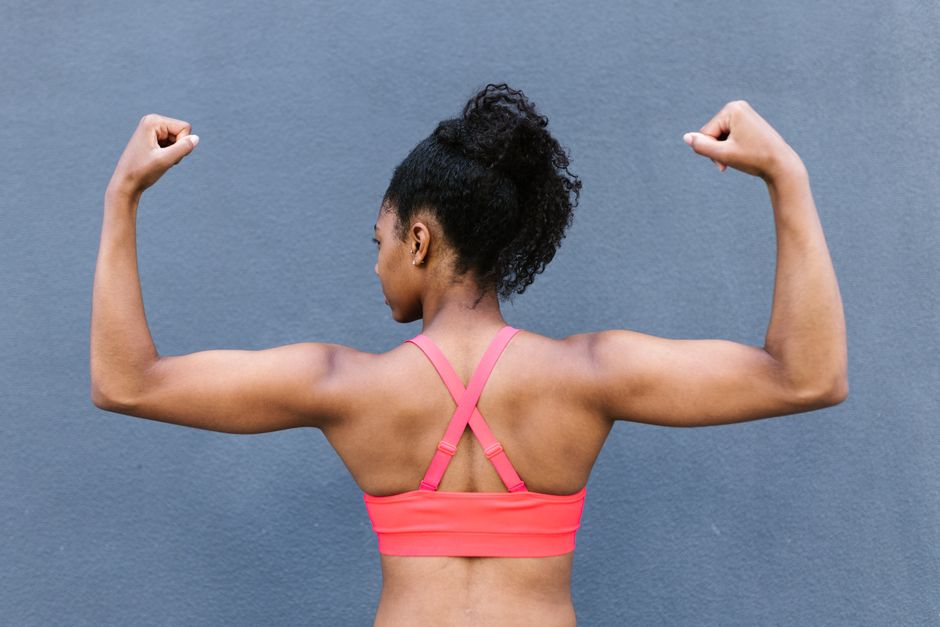
Flexing your back muscles is a skill that takes practice, not just strength. Most people cannot flex their back on command because they have never trained that specific mind-muscle connection. The key is learning to activate the latissimus dorsi and rhomboids separately from your arms and shoulders. Start by practicing in front of a mirror, focusing on pulling your shoulder blades down and together while keeping your arms relaxed.
What Muscles Are You Actually Flexing?
Your back is not one single muscle. It is a group of muscles that work together for different movements. Understanding which ones you want to flex helps you target them properly.
The latissimus dorsi are the large wing-shaped muscles on the sides of your mid-back. These are the muscles that give you that V-taper look. The rhomboids sit between your shoulder blades and pull them together. The erector spinae run along your spine and help with extension and posture. The trapezius covers your upper back and neck area.
When most people say they want to flex their back, they mean the lats and rhomboids. These are the muscles visible in a classic back double-biceps pose or a rear lat spread.
How To Flex Back Muscles: Step-by-Step Technique
Flexing your back is not about squeezing everything at once. It is about isolating specific muscle groups. Here is a reliable sequence to learn the movement.
Stand with your feet shoulder-width apart. Keep your knees slightly bent and your chest up. Let your arms hang naturally at your sides. This is your starting position.
First, focus on your rhomboids. Imagine you are holding a pencil between your shoulder blades. Squeeze them together gently without raising your shoulders toward your ears. Hold this squeeze for two seconds, then release completely.
Next, work on your lats. Imagine you are trying to crush something in your armpits. Pull your elbows down and slightly back without actually moving your arms. You should feel a tightness along the sides of your torso, just below your armpits. This is the lat contraction.
Finally, practice the full back flex. Combine both movements — shoulder blades together and elbows pulling down. Add a slight arch in your lower back by tilting your pelvis forward. This engages the erector spinae. Hold the full contraction for three to five seconds, then release completely.
Practice this sequence daily for five minutes. Most people notice improvement within one to two weeks of consistent practice.
Why Can’t You Flex Your Back Yet?
If you cannot flex your back despite trying, you are not alone. There are several common reasons this happens.
The most common reason is a weak mind-muscle connection. Your brain knows how to fire your biceps or chest because you use those muscles in daily life. The back muscles are often underused in everyday movement. Your brain simply has not built the neural pathway to activate them on command.
Another reason is overreliance on your arms. When people try to flex their back, they instinctively tense their biceps and shoulders. This creates a general upper-body tightness that feels like a flex but does not actually contract the back muscles. Watch yourself in a mirror. If your shoulders rise toward your ears or your arms curl, you are using the wrong muscles.
Poor posture also interferes. If you sit hunched at a desk all day, your chest muscles tighten and your back muscles lengthen and weaken. This makes it harder for your brain to find and activate those back muscles.





Exercises That Build the Mind-Muscle Connection
Practicing the flex in front of a mirror is helpful, but specific exercises can accelerate the learning process. These movements force your back muscles to work through their full range of motion.
Lat pulldowns are one of the best exercises for learning to feel your lats. Sit at the machine, grip the bar with hands slightly wider than shoulder-width, and pull it down toward your chest. Focus on pulling with your elbows rather than your hands. Imagine your elbows are hooks and your hands are just along for the ride.
Seated cable rows teach you to engage your rhomboids. Sit with your back straight, grab the handle, and pull it toward your stomach. Squeeze your shoulder blades together at the end of the movement. Pause for one second before returning to the start position.
Dead hangs are surprisingly effective for lat activation. Hang from a pull-up bar with your arms fully extended. Then, without bending your elbows, pull your shoulder blades down and together. You should feel your lats engage as your body rises slightly. This is called a scapular pull and it directly trains the mind-muscle connection for your back.
Face pulls target the rear deltoids and upper back muscles. Set a cable at face height, grab the rope attachment, and pull it toward your face while keeping your elbows high. This helps with the rhomboid squeeze and improves posture over time.
Use light weight when practicing these movements. The goal is not to build muscle yet. The goal is to teach your brain how to find these muscles. Heavy weight makes it harder to isolate the contraction because other muscles compensate.
Common Mistakes That Block Your Back Flex
Several errors keep people stuck when learning to flex their back. Recognizing them is half the battle.
Shrugging your shoulders is the most common mistake. This activates the upper traps instead of the lats and rhomboids. Keep your shoulders down and away from your ears throughout the entire movement.
Holding your breath is another issue. Flexing requires a steady breath to maintain the contraction. Exhale as you squeeze, then breathe normally while holding the flex. Holding your breath creates tension but not targeted muscle contraction.
Flexing everything at once does not work for the back. Unlike flexing your biceps, where one muscle does most of the work, the back requires coordinated contraction of multiple groups. If you tense your entire upper body, you get a generalized tightness that does not look or feel like a proper back flex.
Rushing the movement prevents learning. Each rep should take at least five seconds. Squeeze slowly, hold the position, then release slowly. Fast, jerky movements train your brain to use momentum, not muscle control.
How Long Does It Take To Learn?
There is no universal timeline for learning to flex your back. Some people get it within a few days. Others need several weeks of daily practice.
Your fitness history plays a role. People who have done any form of pulling exercise — rows, pull-ups, or swimming — typically learn faster because they already have some neural connection to these muscles. Complete beginners may need more time.
Consistency matters more than duration. Five minutes of focused practice daily beats thirty minutes once a week. The brain builds neural pathways through repetition, not intensity.
If you practice daily for two weeks and still cannot feel your lats or rhomboids contracting, consider working with a personal trainer. A professional can provide tactile cues — touching the muscle you are trying to activate — which often helps people find the contraction faster.
Does Flexing Your Back Build Muscle?
Flexing alone will not build significant muscle mass. Muscle growth requires progressive overload — gradually increasing the weight or resistance your muscles work against. Flexing is an isometric contraction, which means the muscle length does not change. Isometric contractions build strength at that specific joint angle but do not stimulate much muscle growth on their own.
What flexing does do is improve your ability to activate your back muscles during actual exercises. This is valuable because better activation during rows, pulldowns, and deadlifts means those exercises become more effective. You get more muscle recruitment from the same weight.
Some bodybuilders practice flexing as part of their posing routine. This is not for muscle growth but for stage presentation. The ability to contract muscles on command is essential for competitive bodybuilding but is not a substitute for resistance training.
Can Anyone Learn To Flex Their Back?
Yes, nearly everyone can learn to flex their back with practice. There is no genetic requirement for this skill.
Certain conditions can make it harder. If you have a shoulder injury, rotator cuff issues, or chronic back pain, you should be cautious. Flexing places tension on the shoulder joint and spine. If you experience sharp pain — not muscle fatigue but actual joint pain — stop and consult a healthcare provider.
Neurological conditions that affect muscle control can also interfere. In these cases, working with a physical therapist is the safest approach. They can assess your specific limitations and design a safe progression.
For everyone else, the answer is simple: keep practicing. The mind-muscle connection is trainable, just like any other skill. Your brain is capable of learning to activate any muscle you have. It just needs the right cues and enough repetitions.
When To See a Professional
Most people can learn to flex their back without professional help. But there are situations where expert guidance is genuinely useful.
If you experience persistent pain in your shoulder, neck, or lower back during practice, stop immediately. Muscle soreness is normal, but joint pain is not. A physical therapist or sports medicine physician can evaluate whether an underlying issue is interfering with your movement patterns.
If you have a history of shoulder dislocations, rotator cuff tears, or spinal surgery, get clearance from your doctor before practicing back flexing. The contraction places stress on these areas, and you want to know your body can handle it safely.
If you have been practicing consistently for two months and still cannot feel or see a back contraction, a professional assessment may reveal an anatomical or postural issue you cannot see on your own.
Frequently Asked Questions
How do I activate my back muscles when flexing?
Pull your shoulder blades down and together while imagining you are crushing something in your armpits. Keep your arms relaxed and your shoulders away from your ears.
Why can I feel my back muscles during exercise but not when flexing?
Exercises provide external resistance that forces muscle activation, while flexing requires voluntary contraction without that feedback. Daily mirror practice builds the neural pathway for voluntary control.
How long should I hold a back flex?
Hold each contraction for three to five seconds, then release completely before the next rep. Longer holds do not improve the mind-muscle connection and can cause unnecessary fatigue.
Does flexing my back help with posture?
Practicing the rhomboid squeeze can reinforce the muscle pattern needed for good posture, but flexing alone will not correct postural issues. Consistent strength training and ergonomic changes are more effective long-term.
