
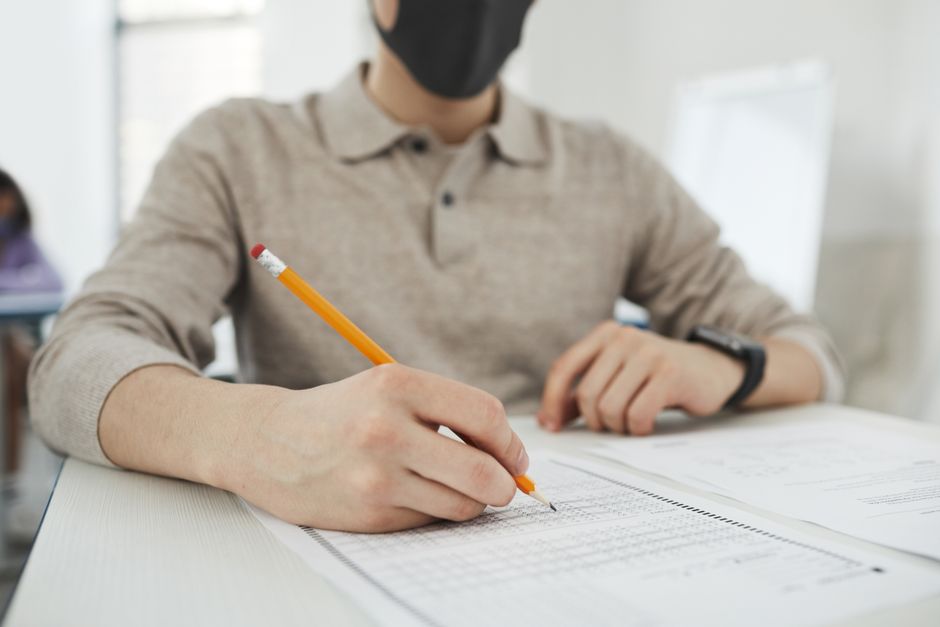
Holding a pencil correctly means resting it against the web of your hand between thumb and index finger, pinching it with the thumb and index finger, and letting the middle finger support it from underneath. The ring and pinky fingers curl loosely into the palm for stability. This is called the tripod grip, and it lets the fingers move the pencil while the wrist stays relaxed. It is the grip most handwriting specialists consider the most efficient for writing by hand.
A pencil grip is a small thing until you watch someone write for an hour. Then it becomes a story about stamina, speed, and hand pain. Children who develop an awkward grip often carry it into adulthood. Adults who never fixed theirs sometimes wonder why their hand aches after signing a stack of forms. The mechanics matter more than most people realize, and the good news is that grip can be changed at almost any age with patience.
What Is the Correct Way To Hold a Pencil?
The tripod grip uses three fingers in a specific arrangement. The thumb and index finger pinch the pencil near the tip, and the middle finger rests beneath it, forming a stable triangle.
Here is what the hand looks like when the grip is correct:
- The pencil rests on the web space, the soft area between thumb and index finger
- The thumb and index finger pinch the barrel, with the thumb slightly behind the index finger
- The middle finger supports the pencil from below
- The ring and pinky fingers curve into the palm, not gripping the pencil
- The wrist stays straight and relaxed, not bent sharply
- The hand rests on its side, with the pinky edge touching the paper
The pencil tip should extend past the fingertips by roughly an inch. If you grip too close to the tip, your fingers block your view of the paper. Grip too far back and you lose control.
Pressure matters as much as position. A correct grip uses light pressure. The pencil should glide, not dig. If the paper tears or the writing indents several sheets below, the grip is too tight.
How Do You Hold a Pencil Step by Step?
These steps work for children learning for the first time and for adults retraining an old habit. Go slowly. Speed comes later.
- Pick up the pencil with your dominant hand, holding it near the middle.
- Place it on the web space between your thumb and index finger. Let the back end rest against the curve where the thumb meets the hand.
- Pinch the pencil between thumb and index finger, about an inch above the tip. The thumb pad faces the index finger pad.
- Slide your middle finger under the pencil so it supports the barrel from below.
- Curl your ring and pinky fingers loosely into your palm. They should not touch the pencil.
- Check your wrist. It should be straight or slightly extended, resting on its side.
- Test the pressure. Wiggle the pencil gently. If it moves easily, your grip is too loose. If your fingertips turn white, it is too tight.
Practice on blank paper first. Draw loops, waves, and circles before writing letters. The goal is to feel the pencil move from your fingers, not from your whole arm.
Why Does Grip Matter So Much?
The tripod grip lets the small muscles of the fingers and thumb do the work of forming letters. A poor grip shifts that work to the wrist, forearm, or shoulder. That shift is why some people tire quickly when writing.
When the fingers control the pencil, handwriting tends to be faster and more legible. When the whole arm controls it, letters get larger and less consistent, and the hand fatigues sooner. This is well established in handwriting research and occupational therapy practice.
Grip also affects how long someone can write comfortably. A tight, awkward grip means constant muscle tension. Over time, that tension can lead to soreness in the fingers, hand, and wrist. For most people this is discomfort, not injury. But for anyone who writes or draws for hours, the difference between a good grip and a bad one is the difference between finishing the work and stopping early.
One point worth clarifying: there is no single grip that every person must use. The tripod grip is the most common and most studied, but some people write well with variations. The question is not whether your grip looks textbook. It is whether it lets you write comfortably and legibly without pain.




Is the Tripod Grip the Only Correct Grip?
No. The tripod grip is the most efficient for most people, but it is not the only grip that works.
Other grips that appear in research and clinical practice include:
- Quadrupod grip: four fingers on the pencil instead of three, with the thumb, index, and middle fingers pinching and the ring finger supporting. Many people use this and write perfectly well.
- Lateral or thumb-wrap grip: the thumb crosses over the pencil rather than pinching. This is common in young children and sometimes persists.
- Dynamic tripod with a slight variation: small differences in finger placement that still allow finger-driven movement.
What matters most is whether the grip is functional. A functional grip allows the fingers to move the pencil, keeps the wrist relaxed, and does not cause pain. A grip that locks the fingers in place and forces the wrist or arm to do all the work is the one worth changing.
Some grips that look unusual are perfectly functional. Others that look close to correct still cause problems because of excess tension. Appearance is not the best measure. Comfort and control are.
When Should a Child Learn To Hold a Pencil?
Children develop the hand strength and coordination for a mature pencil grip gradually. Most children move through several stages before settling into a tripod or quadrupod grip.
Around age one to two, children grip crayons with a whole fist. By age three to four, many use a four-finger grip. Between ages four and six, most children develop the finger control needed for a tripod grip. Some take longer, and that is usually normal.
Pushing a toddler to hold a pencil correctly before their hands are ready rarely works and can create frustration. The better approach is to build hand strength first through play. Activities like squeezing clay, threading beads, tearing paper, and using tweezers all develop the small muscles that support a mature grip.
If a child is still using a fist grip at age six or older, or if writing causes pain or fatigue, it may be worth talking to a teacher or an occupational therapist. Early support is easier than correcting a habit years later.
How Can Adults Change an Old Grip?
Adults can change their grip, but it takes deliberate practice. The old habit will feel natural and the new one will feel wrong for a while. That is expected.
Start by practicing the new grip for short periods, maybe five to ten minutes a day. Write something simple, like your name or a grocery list. Do not try to write a long letter with the new grip on day one. Your hand will tire quickly because you are using muscles in a new way.
Expect the new grip to feel clumsy for weeks, not days. Muscle memory built over decades does not rewrite itself quickly. Some adults find that switching to a slightly thicker pen or adding a grip aid helps during the transition.
One practical trick: practice the new grip with your non-dominant hand first. It sounds odd, but it lets you feel the correct position without your dominant hand fighting its old habit. Then switch back and try to copy that feeling.
If you have hand pain, numbness, or tingling that does not go away, see a doctor. Grip changes can help with discomfort from writing, but they are not a treatment for nerve or joint conditions.
Do Pencil Grips and Aids Actually Help?
Pencil grips are small attachments that slide onto a pencil to guide finger placement. They are widely used, but the evidence on whether they improve handwriting is mixed.
Some studies suggest that grip aids can help children who are learning to hold a pencil, especially when combined with instruction. Other studies find little difference between using a grip aid and simply practicing. The results vary, and no single aid works for everyone.
What the research does support is that grip aids are most useful as a temporary teaching tool, not a permanent solution. The goal is to build the habit, then remove the aid. Relying on a grip aid long-term can prevent the hand from developing its own control.
If you or your child wants to try a grip aid, it is reasonable to do so. Just do not expect it to fix the grip on its own. Practice and instruction do most of the work.
What About Left-Handed Writers?
Left-handed writers use the same basic tripod grip, but they face a different challenge. Writing left to right means the hand drags across fresh ink or graphite, which can smudge the page and force an awkward wrist position.
Many left-handed writers hold the pencil slightly farther back and angle the paper differently. Rotating the paper clockwise, so the top right corner is higher, lets the hand rest below the writing line instead of over it. This reduces smudging and keeps the wrist straighter.
The grip itself does not need to change. The paper position does most of the work. Some left-handed writers also prefer a faster-drying pen to reduce smudging.
Frequently Asked Questions
What is the correct pencil grip called?
The most common correct grip is called the tripod grip, which uses the thumb, index finger, and middle finger. Some people use a quadrupod grip with four fingers and write just as well.
At what age should a child hold a pencil correctly?
Most children develop the finger control for a tripod grip between ages four and six. Some take longer, and that is usually normal as long as hand strength is developing through play.
Can adults change their pencil grip?
Yes, adults can change their grip with deliberate daily practice, though it may feel awkward for weeks. Short practice sessions work better than long ones at first.
Do pencil grips help with handwriting?
The evidence is mixed. Some studies suggest grip aids can help children learning to hold a pencil, but they work best as a temporary teaching tool rather than a permanent fix.
