
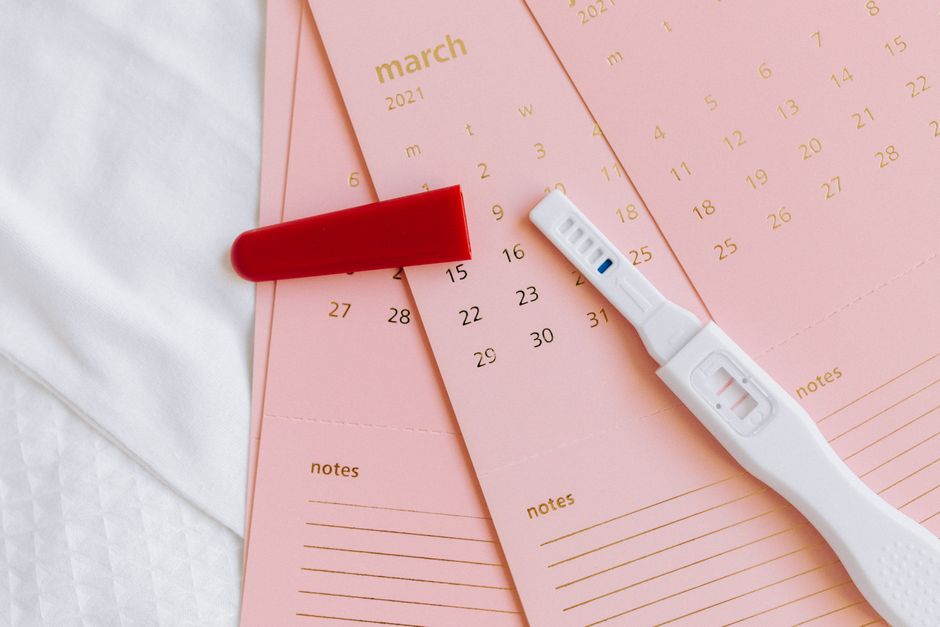
To use a Clearblue ovulation test correctly, you test once daily with first morning urine starting on the day specified for your cycle length. The test detects the luteinizing hormone (LH) surge that triggers ovulation. A digital test shows a clear smiley face when the surge is detected. For the Advanced Digital test, a flashing smiley means high fertility (rising estrogen) and a static smiley means peak fertility (LH surge). Testing at the same time each day and not drinking too much fluid before testing helps ensure accurate results.
How Does a Clearblue Ovulation Test Work?
All Clearblue ovulation tests measure luteinizing hormone (LH) in your urine. LH levels rise sharply about 24 to 36 hours before ovulation. This is called the LH surge. Detecting this surge helps you identify your most fertile days.
The Clearblue Advanced Digital test also measures estrogen. Rising estrogen signals that your body is preparing to ovulate. The test shows a flashing smiley face during the “high fertility” window. Once the LH surge is detected, it shows a static smiley face for “peak fertility.” This gives you up to four fertile days instead of just two.
Standard Clearblue tests (Rapid Detection and Digital) only measure LH. They show a positive result when the surge is detected.
When Should You Start Testing?
The right start day depends on your cycle length. Clearblue provides a table in the package insert. If your cycle is consistently 28 days, you start testing on day 6 (counting day 1 as the first day of your period). For shorter or longer cycles, the start day changes.
Here is the standard guideline from the manufacturer:
- 21‑day cycle: start day 6
- 22‑day cycle: start day 5
- 23‑day cycle: start day 4
- 24‑day cycle: start day 3
- 25‑day cycle: start day 2
- 26‑day cycle: start day 1
- 27‑day cycle: start day 1
- 28‑day cycle: start day 6
- 29‑day cycle: start day 6
- 30‑day cycle: start day 7
- 31‑day cycle: start day 7
- 32‑day cycle: start day 8
- 33‑day cycle: start day 8
- 34‑day cycle: start day 9
- 35‑day cycle: start day 9
- 36‑day cycle: start day 10
- 37‑day cycle: start day 10
- 38‑day cycle: start day 11
- 39‑day cycle: start day 11
- 40‑day cycle: start day 12
If your cycles vary by more than 3 days, use your shortest cycle to determine the start day. If your cycles are irregular, a fertility monitor or your doctor can help with timing.
How Do You Use the Test Correctly?
Follow the instructions for your specific Clearblue test. Steps are similar across the product line.
First, remove the test stick from its foil wrapper. Hold the absorbent tip pointing downward. Place it in your urine stream for 5 to 7 seconds. Or you can collect urine in a clean cup and dip the test for 15 seconds. The instructions for each test specify the exact time.
Lay the test flat with the result window facing up. Wait for the timer shown on the digital screen or for the lines to appear. Digital tests usually give a result in 3 minutes. Rapid Detection tests take about 5 minutes.
Do not read the result after 10 minutes. This can give a false positive because the test may dry and create an evaporation line.
Use first morning urine if possible. If you test later in the day, hold your urine for at least 4 hours and avoid drinking large amounts of fluid beforehand. Diluted urine can lower LH concentration and cause a false negative.
Test at the same time each day for the most consistent results.


How Do You Read the Results?
Reading the result depends on which Clearblue test you use.
Clearblue Rapid Detection: Two colored lines in the result window. If the test line is as dark as or darker than the control line, the result is positive. The LH surge is detected. If the test line is lighter, continue testing.
Clearblue Digital: A smiley face appears when the LH surge is detected. An empty circle means no surge. The digital display removes guesswork about line darkness.
Clearblue Advanced Digital: A flashing smiley face means high fertility (estrogen rise). A static smiley face that stays on without blinking means peak fertility (LH surge). An empty circle means low fertility.
Once you get a static smiley face, you have ovulated or will ovulate within the next 24 to 36 hours. This is your most fertile time. Some research suggests the best time for intercourse is the day of the peak reading and the day after.
What Common Mistakes Affect Accuracy?
Several errors can give wrong results.
- Testing too early or too late in your cycle. Starting on the wrong day increases the chance of missing the surge.
- Testing at different times each day. LH surge can be brief. Inconsistent testing may miss it.
- Drinking too much fluid before testing. This dilutes urine and lowers LH concentration.
- Reading the result after the recommended time. A dried test can show an evaporation line that looks like a positive.
- Using an expired test. The chemicals may not work correctly after the expiration date.
- Interpreting line darkness subjectively. For Rapid Detection tests, the test line must be as dark as the control line. Any lighter line means not yet positive.
If you have a condition like polycystic ovary syndrome (PCOS), you may have persistently high LH levels. This can cause frequent false positives. Talk to your doctor if you suspect this.
How Accurate Are Clearblue Ovulation Tests?
Clearblue ovulation tests are highly accurate at detecting the LH surge. Manufacturer data shows over 99% accuracy in laboratory tests. In home use, accuracy depends on following the instructions carefully.
These tests detect the LH surge, but they do not confirm that ovulation actually occurs. A small percentage of people have an LH surge without releasing an egg. This is called luteinized unruptured follicle syndrome (LUFS). The test can show a positive result, but ovulation does not happen. If you are not getting pregnant after several months of positive tests, see your doctor.
Some evidence suggests that using a combined estrogen and LH test (like Advanced Digital) may identify more fertile days than LH-only tests. But not all studies agree on higher pregnancy rates. The main advantage is knowing the wider fertile window.
These tests are not birth control devices. They predict fertility, not prevent pregnancy.
When Should You Stop Testing?
Stop testing once you get a positive result (smiley face for digital, peak reading for Advanced, or a positive line for Rapid Detection). You do not need to test again that cycle. The surge only happens once per cycle.
If you do not get a positive result after testing for the number of days recommended in the package, consider your cycle may be anovulatory this month. It can happen occasionally even in healthy people. If you miss the surge multiple months in a row, talk to your doctor.
Frequently Asked Questions
How long after a positive Clearblue test do you ovulate?
Ovulation typically occurs within 24 to 36 hours after the LH surge is detected. The most fertile days are the day of the positive test and the next day.
Can you get a positive Clearblue test and not ovulate?
Yes. A positive test means the LH surge is present, but ovulation may not always follow. Conditions like luteinized unruptured follicle syndrome (LUFS) can cause a surge without egg release.
What time of day should you take a Clearblue ovulation test?
First morning urine is recommended because it is most concentrated. If you test later, hold urine for at least 4 hours and avoid drinking large amounts of fluid before testing.
How many days should you test with Clearblue?
Testing continues until you get a positive result or until you reach the last testing day specified for your cycle length. Most people test for 5 to 10 days per cycle.
