
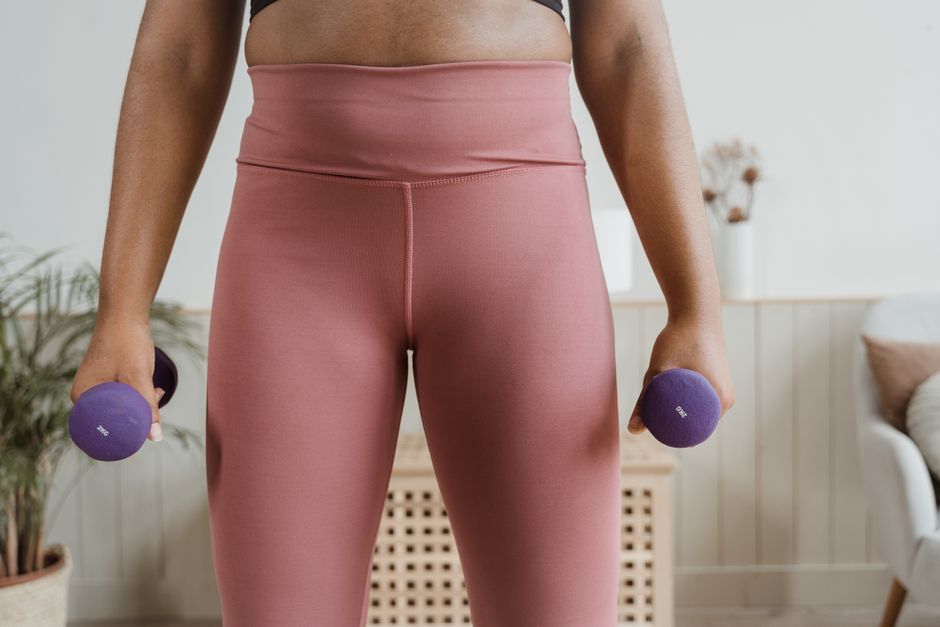
Arm contouring at home comes down to two things: reducing the fat layer over the muscle and building the muscle underneath it. You cannot spot-reduce fat from your arms with any exercise — that is established physiology, not opinion. What you can do is create a calorie deficit to lower overall body fat, train the triceps, biceps, and shoulders with resistance, and let the shape follow over months, not weeks.
This guide walks through exactly how to do that, step by step, using equipment most people already own. It also covers what does not work, so you do not waste months on it.
Why Can’t You Target Fat Loss In Your Arms?
Your body does not burn fat from the muscle you happen to be working. Fat is released from fat cells across the whole body in response to a calorie deficit, and the pattern of where it comes off is largely genetic and hormonal.
This is one of the most persistent myths in fitness. Doing 500 triceps extensions will strengthen and fatigue your triceps. It will not preferentially strip fat off the back of your arms. Research on spot reduction has repeatedly failed to show a localized fat-loss effect from exercising a specific body part.
What this means practically: arm appearance is driven mostly by overall body fat percentage. Two people can do identical arm workouts and get very different results because their starting fat levels and fat-distribution genetics differ.
There is one honest caveat. As you lose overall fat, the arms do tend to show change, because the upper arm is a common storage site. But the timing and degree vary a lot between people. Anyone promising a fixed timeline is guessing.
What Does “Contouring” Actually Change?
Contouring is not one change. It is two separate processes happening at once, and they move at different speeds.
- Fat loss reduces the layer sitting over the muscle. This is driven by diet and overall energy balance.
- Muscle growth adds shape and firmness underneath. This is driven by resistance training and adequate protein.
Fat loss tends to be faster and more visible early. Muscle growth is slower — measurable strength gains can show up within a few weeks, but visible size changes typically take longer. Building muscle also requires eating enough, which can temporarily conflict with fat loss. That tension is real and worth understanding before you start.
Skin tone and age matter too. Skin elasticity declines with age, and significant weight loss can leave loose skin that no exercise will tighten. That is a structural limit, not a training failure.
How To Contour Arms At Home Step By Step
Here is the sequence that makes sense. Do the steps in this order, because each one supports the next.
Step 1: Set Your Calorie Target
Fat loss requires eating fewer calories than you burn. There is no way around this. A moderate deficit — roughly 300 to 500 calories below your maintenance level — is the standard approach and is generally considered more sustainable than aggressive cuts.
You do not need to track forever. Many people track for a few weeks to learn portion sizes, then eyeball it. What matters is the direction of the trend over weeks, not any single day.
Step 2: Get Your Protein Up
Protein preserves muscle while you lose fat and supports muscle growth. General guidance for adults doing resistance training is roughly 1.2 to 1.6 grams per kilogram of body weight per day. For a 150-pound (68 kg) adult, that is about 82 to 109 grams daily.
Spread it across meals rather than loading it all at dinner. Eggs, chicken, fish, Greek yogurt, beans, lentils, and tofu all work.
Step 3: Train Arms Two to Three Times Per Week
Two to three sessions per week is enough for most people. More is not better here — muscle grows during recovery, not during the workout.
Pick movements that hit the three main areas:
- Triceps (back of the arm, the largest muscle): chair dips, overhead extensions with a water bottle or dumbbell, close-grip push-ups.
- Biceps (front of the arm): curls with dumbbells, resistance bands, or a loaded backpack.
- Shoulders (the deltoid caps the arm and changes its silhouette): lateral raises, overhead presses, pike push-ups.
Do not neglect the shoulders. A lot of what reads as “toned arms” is actually shoulder shape. Training only the biceps and triceps misses this.
Step 4: Progress The Resistance
Muscle adapts to demand. If you use the same weight for the same reps forever, you stop changing. Add a little resistance or a rep or two every week or two.
At home, progression can mean a heavier water bottle, a fuller backpack, a thicker resistance band, or slowing the movement down. Slow, controlled reps with a pause at the end range are genuinely harder than fast ones.
Step 5: Add Walking or Cardio
Cardio helps create the calorie deficit and supports heart health. It does not need to be intense. Brisk walking most days is enough for many people. This step supports fat loss — it does not replace the resistance training.
Step 6: Sleep and Repeat
Short sleep is associated with worse appetite regulation and poorer training recovery. Aim for the standard adult recommendation of 7 or more hours. This is not a minor detail — it affects both how you eat and how well you recover.





How Long Does It Take To See Results?
Honest answer: weeks for strength, months for visible shape change. Strength often improves within a few weeks. Visible changes in arm appearance usually take longer and depend heavily on how much fat you have to lose.
A commonly cited guideline is that sustainable fat loss runs around 1 to 2 pounds per week, though this varies with starting weight, diet, and activity. Anyone promising visible arm contouring in two weeks is selling something.
Progress is also not linear. Fat loss stalls, then resumes. Measurements and photos taken every few weeks tell you more than the scale does day to day.
What Does Not Work For Arm Contouring
Several things are widely marketed and do not hold up.
- Spot-reduction exercises alone. No exercise burns fat only from the arms.
- Arm “toning” gadgets and vibration belts. No clinical evidence confirms these change fat or muscle.
- Waist trainers, arm wraps, and sweat suits. These cause temporary water loss, not fat loss.
- Fat-burning creams. The evidence does not support topical creams reducing arm fat.
- Very low-calorie crash diets. These often cause muscle loss alongside fat loss, which works against the goal.
One clarification worth making: “toning” is not a distinct physical process. What people call toning is simply having enough muscle to give shape and little enough fat to see it. There is no separate toning mechanism to train.
When Home Contouring Is Not The Right Answer
Some arm concerns are not about fat or muscle at all, and no home routine will fix them.
Loose skin after major weight loss is a structural issue. Significant skin laxity generally requires surgical evaluation, not exercise. Some clinicians perform arm contouring procedures for this, though candidacy and outcomes vary and should be discussed with a qualified professional.
If you notice a new lump, asymmetry, skin dimpling, or a change in one arm that is not explained by training or weight change, see a doctor. Those findings need medical evaluation and are outside the scope of any exercise plan.
Also worth noting: if you have a shoulder, elbow, or wrist injury, get clearance before starting resistance work. Pain during exercise is a signal to stop, not push through.
Putting It Together
Contouring arms at home is not complicated, but it is not quick. Eat in a moderate calorie deficit. Get enough protein. Train triceps, biceps, and shoulders two to three times a week. Progress the resistance. Walk. Sleep. Repeat for several months.
The parts people skip are usually the diet and the patience. The exercises are the easy part. If you only do the workouts and ignore the calorie side, you will build muscle under a fat layer you are not reducing — and you may not see the change you want.
Frequently Asked Questions
Can you really lose arm fat with exercise alone?
No — spot reduction does not work, so arm exercises alone will not strip fat from your arms. Fat loss requires an overall calorie deficit, while arm training builds the muscle underneath.
How often should I train my arms at home?
Two to three sessions per week is enough for most people, with rest days in between. Muscle grows during recovery, so training arms daily is not more effective and can hinder progress.
Do I need weights to contour my arms at home?
No, but you need resistance that challenges the muscle. Water bottles, resistance bands, a loaded backpack, or your own body weight all work if you progressively make the movement harder over time.
Why are my arms not changing even though I am exercising?
The most common reasons are not eating in a calorie deficit, not getting enough protein, or not progressing the resistance over time. Age-related skin laxity can also limit visible change regardless of training.
