
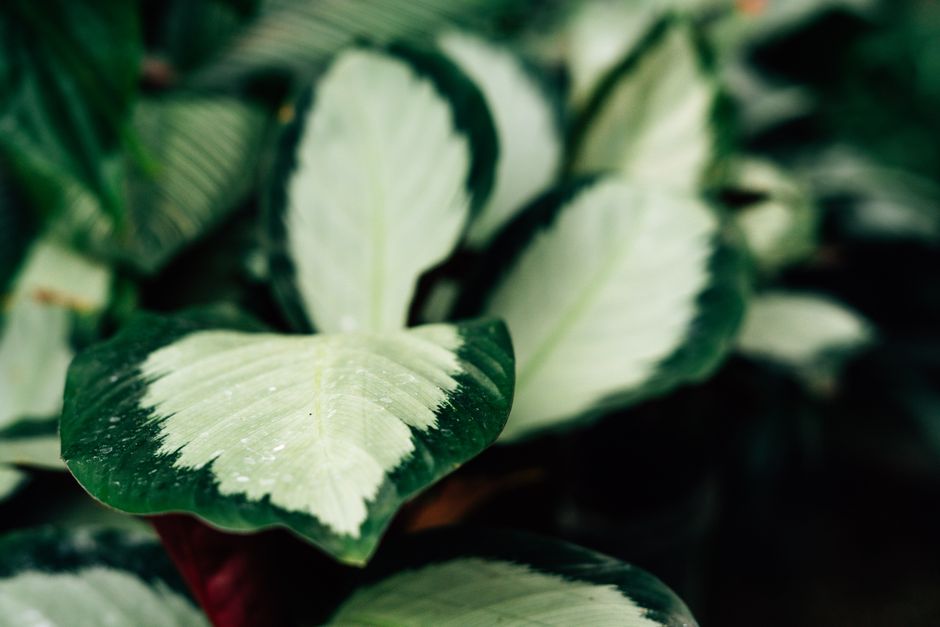
A moisture meter takes the guesswork out of watering your calathea. Insert the metal probe into the soil, wait for the reading, and water only when the meter shows the soil is dry. This simple tool prevents the two most common calathea problems: root rot from overwatering and crispy leaves from underwatering.
Why Calatheas Need Precise Watering
Calatheas are native to the understory of tropical rainforests. They grow in soil that stays consistently moist but never soggy. Their roots are sensitive and will rot quickly if left sitting in waterlogged soil.
At the same time, calatheas have large, thin leaves that lose water fast. If the soil dries out completely, the leaves will curl and develop brown, crispy edges. The plant has a narrow window between too wet and too dry.
This is where a moisture meter helps. Your finger can only feel the top inch of soil. A moisture meter reads deeper, where the roots actually live. It tells you what is happening below the surface before the plant shows visible stress.
How To Use A Moisture Meter For Calathea: Step-By-Step
Using a moisture meter correctly matters more than owning one. Here is the process that gives accurate readings.
Step 1: Insert the probe. Push the metal probe straight down into the soil. Aim for the midpoint between the plant’s stem and the edge of the pot. This area has the densest root mass.
Step 2: Reach the right depth. Insert the probe at least halfway into the pot. For a 6-inch pot, that means about 3 inches deep. For larger pots, go deeper. Most of the roots live in the middle and lower portions of the container.
Step 3: Wait for the reading. Leave the probe in place for 30 to 60 seconds. The needle or digital display needs time to stabilize. A quick reading can give you a false number.
Step 4: Take multiple readings. Test the soil in two or three different spots around the pot. Moisture is rarely distributed evenly. One side may be wet while the other is dry.
Step 5: Interpret the scale. Most meters use a scale from 1 to 10, with 1 being bone dry and 10 being fully saturated. The ideal range for calathea is between 3 and 5. Water when the meter reads 3 or below.
Step 6: Clean the probe. Wipe the metal probe clean after each use. This prevents mineral buildup and keeps the meter accurate over time.
What Moisture Meter Reading Means For Calathea
Understanding the numbers on the scale is the key to using the tool well. Different ranges tell you different things about your plant’s needs.
Reading of 1 to 2: The soil is very dry. Water your calathea soon. If the leaves are already curling or drooping, the plant is stressed and needs water immediately.
Reading of 3 to 5: This is the target zone for calatheas. The soil is moist but not saturated. Roots have access to water and oxygen. No action needed.
Reading of 6 to 7: The soil is wet. Do not water yet. Wait a few days and test again.
Reading of 8 to 10: The soil is saturated. This is dangerous for calatheas. The roots cannot get oxygen in these conditions. If the reading stays this high for several days, root rot is likely developing. Allow the soil to dry out significantly before watering again.
One important note: the scale is relative, not absolute. A reading of 4 in a dense, compacted soil is wetter than a reading of 4 in a light, airy mix. Calatheas do best in a well-draining potting mix that contains perlite or orchid bark. This helps the soil hold moisture without staying soggy.




When To Water Your Calathea Based On The Meter
Check the moisture meter once or twice a week during the growing season. Calatheas grow actively in spring and summer, and they use more water during this time.
Water when the meter reads 3 or below. At this point, the soil has dried out enough that the roots need moisture, but the plant has not yet suffered stress.
During fall and winter, calatheas slow their growth. They need less water. The meter will often read 3 or below less frequently. Check the soil every 7 to 10 days during the dormant season. Water only when the meter confirms dryness.
Several factors change how fast the soil dries out. Bright light, warm rooms, and low humidity all dry soil faster. Dark corners, cool rooms, and high humidity slow drying. A calathea in a bright, warm room may need water twice a week. The same plant in a cool, dim room may need water only every 10 days. The moisture meter accounts for all these variables automatically.
Common Mistakes When Using A Moisture Meter
Moisture meters are simple tools, but people make predictable errors that lead to bad readings.
The biggest mistake is testing only the top inch of soil. The surface dries out much faster than the deeper soil. If you insert the probe only shallowly, you will think the plant needs water when the roots are still sitting in moist soil. Always push the probe deep enough to reach the root zone.
Another common error is reading the meter too quickly. The needle takes time to move. If you pull the probe out after a few seconds, you may catch it before it has settled on the true reading. Give it a full minute.
Testing right after watering gives misleading results. Freshly watered soil will read very high, often near 8 or 9. This is normal. Do not test again until a day or two has passed.
Some people press the probe against the side of the pot. This gives a false reading because the probe may be touching plastic or ceramic instead of soil. Keep the probe fully surrounded by soil.
Digital meters can drift over time. If your readings suddenly seem inconsistent, replace the battery. For analog meters, check that the needle returns to zero when the probe is clean and dry.
Calathea Water Quality And Moisture Meter Accuracy
Calatheas are sensitive to the minerals in tap water. Many species develop brown leaf tips when exposed to fluoride, chlorine, or high levels of dissolved salts. This is a separate issue from soil moisture, but it affects how you interpret your watering routine.
If you water with tap water, the minerals can build up in the soil over time. This buildup can affect how a moisture meter reads, especially if salts coat the probe. Clean the probe regularly with a damp cloth to keep readings accurate.
Many calathea owners use filtered, distilled, or rainwater to avoid mineral damage. This is not strictly necessary for the plant to survive, but it does prevent leaf tip burn in sensitive varieties. The moisture meter works the same way regardless of water type.
When A Moisture Meter Is Not Enough
A moisture meter measures water in the soil. It does not measure humidity in the air. Calatheas need both. These plants come from tropical forests where humidity often exceeds 60 percent. In typical homes, indoor humidity drops to 30 to 40 percent, especially in winter.
Low humidity causes calathea leaves to develop brown, crispy edges even when the soil moisture is perfect. The meter cannot help you with this problem. You need a hygrometer to measure air moisture, or you can use a humidifier, pebble tray, or group plants together to raise local humidity.
Also, the meter does not tell you about soil structure. If your calathea is planted in heavy, compacted soil that holds too much water, the meter will show wet conditions for days after watering. The fix is not to water less, but to repot into a better-draining mix. Some growers recommend repotting calatheas every 12 to 18 months to refresh the soil.
A moisture meter is a useful tool, but it is not a substitute for paying attention to your plant. Look at the leaves. If they are curling, the plant needs water. If the stems are mushy at the base, the roots are rotting. The meter helps you act before these symptoms appear, but it should not replace visual inspection.
Frequently Asked Questions
How deep should I insert a moisture meter into calathea soil?
Insert the probe at least halfway into the pot, which means about 3 inches deep for a 6-inch pot. This reaches the root zone where moisture levels matter most.
What number should a moisture meter read before watering calathea?
Water your calathea when the meter reads 3 or below on the 1-to-10 scale. The ideal range for calathea soil is between 3 and 5.
Can a moisture meter damage calathea roots?
Inserting the probe carefully is unlikely to cause significant damage to established roots. Avoid pushing the probe in with force, and insert it straight down into the soil rather than wiggling it side to side.
Why does my moisture meter show wet when the soil looks dry?
The surface soil dries out faster than the deeper soil, so the meter is reading moisture that you cannot see. This is normal and is exactly why the meter is more reliable than visual inspection alone.
