
Blackheads form when a pore gets clogged with oil and dead skin cells, and the top stays open so the contents turn dark from exposure to air. The most effective way to clean them out is to use a salicylic acid cleanser regularly, apply a retinoid at night to speed up skin cell turnover, and never squeeze or pick at them with your fingers. If you want faster results, a dermatologist can perform extractions or prescribe stronger treatments that work better than anything you can buy at the drugstore.
What Exactly Causes Blackheads to Form?
Blackheads are a mild form of acne called open comedones. Your skin naturally produces sebum, an oily substance that keeps it lubricated. But when dead skin cells shed unevenly, they can mix with sebum and block a pore.
Unlike whiteheads, the top of a blackhead stays open. The dark color is not dirt. It is the oil and skin cells reacting with oxygen in the air. The American Academy of Dermatology explains that oxidation causes the dark appearance, not poor hygiene. You cannot scrub blackheads away because the problem starts inside the pore.
Hormones play a big role. Androgens tell your oil glands to produce more sebum. This is why blackheads often appear during puberty, pregnancy, or times of high stress. Some people are simply more prone to them because their skin produces more oil or sheds dead cells at a faster rate.
Does Salicylic Acid Actually Work for Blackheads?
Salicylic acid is one of the few ingredients with solid evidence behind it for blackhead removal. It is a beta hydroxy acid that is oil-soluble, meaning it can penetrate deep into the pore and dissolve the buildup of sebum and dead skin cells.
Research published in the Journal of the American Academy of Dermatology supports salicylic acid as an effective treatment for comedonal acne. It works best when used consistently, not as a one-time spot treatment. You want a cleanser or leave-on product with 0.5% to 2% salicylic acid.
One common mistake is using too much too often. Salicylic acid can dry out skin, which causes your oil glands to overcompensate and produce even more sebum. Start with once daily and increase to twice daily only if your skin tolerates it. If your skin feels tight or flaky, back off.
How To Clean Out Blackheads Safely Without Damaging Skin
The safest approach is consistent chemical exfoliation combined with gentle physical methods. Salicylic acid and retinoids do the heavy lifting by loosening the material inside the pore. Once the blackhead is softened, you can use a sterile extractor tool to gently press it out.
Never use your fingernails. Squeezing with fingers damages the pore lining, pushes bacteria deeper, and causes inflammation. That is how a simple blackhead turns into a red, painful pimple that leaves a scar.
If you want to use an extractor tool, follow these steps exactly. Steam your face for five minutes to open the pores. Clean the tool with rubbing alcohol. Place the loop around the blackhead and press down gently. If it does not come out with light pressure, stop. The blackhead is not ready and forcing it will cause damage.
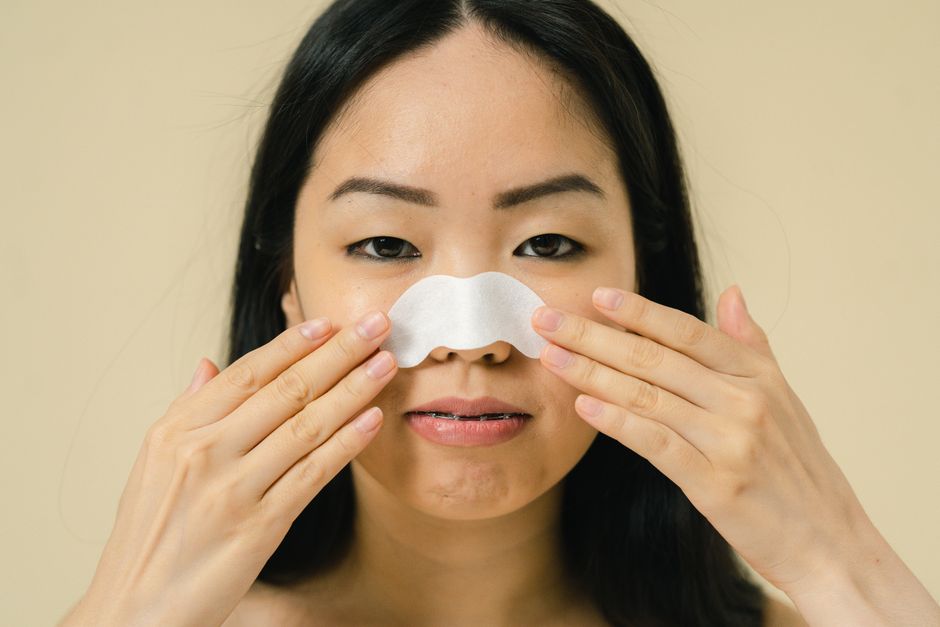
Some people report success with pore strips, though strong evidence is limited. Pore strips remove the top layer of the blackhead but leave the deeper contents inside. The pore fills back up quickly, often within a few days. They are a temporary fix, not a solution.





What Does Research Say About Retinoids for Blackheads?
Retinoids are vitamin A derivatives that speed up skin cell turnover. They tell your skin to shed dead cells faster and more evenly, which prevents the buildup that causes blackheads in the first place. The evidence here is strong.
The American Academy of Dermatology recommends retinoids as first-line treatment for comedonal acne. Adapalene, available over the counter as Differin, has been studied extensively. A clinical trial published in the Journal of Drugs in Dermatology found that adapalene significantly reduced blackhead counts after 12 weeks of use.
Retinoids take time. You will not see results overnight. Most people notice improvement after 8 to 12 weeks. The first few weeks can be rough because retinoids cause purging — existing blackheads come to the surface faster, making things look worse before they get better.
Start with a pea-sized amount three times per week at night. Apply it after cleansing and wait 20 minutes for your skin to dry completely. Wet skin absorbs retinoids too quickly and increases irritation. Use sunscreen every morning because retinoids make skin more sensitive to the sun.
Are Clay Masks and Charcoal Masks Helpful?
Clay masks absorb excess oil from the surface of your skin. Kaolin and bentonite clays are the most common types. They can make your skin feel less greasy temporarily and help reduce the appearance of blackheads.
But there is a limit to what they can do. Clay masks do not penetrate the pore. They pull oil from the surface, not from deep inside. A review in the Journal of Clinical and Aesthetic Dermatology noted that while clay masks can improve the look of oily skin, their effect on existing blackheads is minimal.
Charcoal masks work the same way. Activated charcoal is advertised as a magnet for impurities, but the evidence does not support this claim. As of 2026, there is no clinical evidence that charcoal masks remove blackheads more effectively than a basic salicylic acid cleanser.
Use clay masks once or twice per week if you enjoy them. Just do not expect them to clear out blackheads on their own. They are a supporting player, not the main treatment.
Comparison of Common Blackhead Treatments
| Treatment | How It Works | Time to Results | Evidence Level |
|---|---|---|---|
| Salicylic Acid | Dissolves oil and dead skin inside the pore | 2-4 weeks | Strong |
| Retinoids (Adapalene) | Speeds up skin cell turnover | 8-12 weeks | Strong |
| Pore Strips | Removes surface of blackhead only | Immediate but temporary | Weak |
| Clay Masks | Absorbs surface oil | Temporary | Moderate for oil, weak for blackheads |
| Professional Extractions | Physically removes blackhead with sterile tools | Immediate | Strong when done by a professional |
What to Avoid When Trying to Clean Out Blackheads
Harsh physical scrubs are a common mistake. Scrubbing with apricot kernel scrubs or sugar scrubs does not remove blackheads. It damages the skin barrier and causes micro-tears. The American Academy of Dermatology advises against physical exfoliants for acne-prone skin.
Baking soda is another myth that will not die. Some people mix it with water and use it as a scrub. Baking soda has a high pH of around 9, while your skin’s natural pH is around 5. Applying baking soda disrupts your acid mantle and leads to irritation, dryness, and more breakouts. There is zero clinical evidence supporting its use for blackheads.
Lemon juice is equally bad. The citric acid can cause chemical burns on skin, especially when you go into the sun afterward. It is not a treatment, it is a risk.
Do not use toothpaste on blackheads. Toothpaste contains ingredients like fluoride and baking soda that dry out the skin, but it also contains detergents and flavoring agents that cause contact dermatitis. Your skin will get red and irritated, and the blackhead will still be there.
When Should You See a Dermatologist for Blackheads?
If over-the-counter products have not worked after three months of consistent use, it is time to see a professional. A dermatologist can prescribe stronger retinoids like tretinoin or tazarotene, which are more potent than anything available without a prescription.
Professional extractions are also an option. A dermatologist or licensed esthetician uses sterile tools to remove blackheads without damaging the surrounding skin. This is the fastest way to get clear pores, but it still requires maintenance at home to prevent new blackheads from forming.
Some dermatologists offer chemical peels with higher concentrations of salicylic acid or glycolic acid. Research published in Dermatologic Surgery found that chemical peels can reduce blackhead counts significantly, especially when combined with a home care routine.
Insurance often covers dermatology visits for acne treatment. Even if yours does not, a single visit for extractions and a prescription can be more cost-effective than buying dozens of products that do not work.
Common Misconceptions About Blackheads
One of the most persistent myths is that blackheads are caused by dirt. This is false. The dark color comes from oxidation, not from external grime. Washing your face more often will not remove blackheads and can actually make them worse by stripping your skin and triggering more oil production.
Another misconception is that blackheads mean your skin is dirty. Many people with excellent hygiene have blackheads because the cause is internal — hormone-driven oil production and cell turnover rate. It is not a reflection of how well you clean your face.
Some people believe that blackheads can be permanently removed. They cannot. Your skin is a living organ that constantly produces oil and sheds cells. Blackheads can be managed and reduced, but they will return if you stop treatment. The goal is ongoing control, not a one-time cure.
Frequently Asked Questions
Can you permanently get rid of blackheads?
No, blackheads cannot be permanently removed because your skin continuously produces oil and sheds cells. Consistent treatment keeps them under control but does not cure them forever.
Is it okay to pop blackheads at home?
No, popping blackheads with your fingers damages the pore lining and causes inflammation. If you must remove them, use a sterile extractor tool after steaming your face.
How often should I use salicylic acid for blackheads?
Start with once daily and increase to twice daily only if your skin tolerates it without dryness or irritation. Consistency matters more than frequency.
Do pore strips work for blackheads?
Pore strips remove the top surface of the blackhead but leave the deeper contents inside, so the pore refills quickly. They provide temporary cosmetic improvement but do not solve the problem.
