
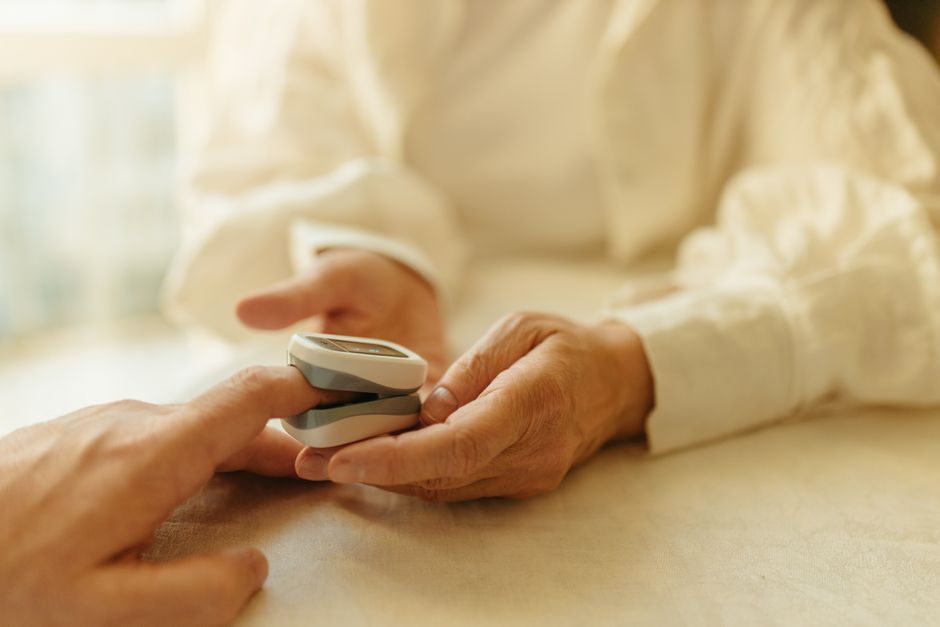
Checking your pulse is one of the simplest ways to learn about your heart. You can do it at home in under a minute using just your fingers and a watch. To check your pulse, place two fingers on the inside of your wrist below your thumb, press gently, and count the beats for 30 seconds. Multiply that number by two to get your heart rate in beats per minute.
Why Would You Want to Check Your Pulse?
Your pulse rate tells you how many times your heart beats each minute. A normal resting heart rate for most adults falls between 60 and 100 beats per minute. Athletes often have lower resting rates, sometimes in the 40s or 50s, because their hearts pump more efficiently.
People check their pulse for many reasons. Some track it during exercise to measure workout intensity. Others monitor it because they take medications that affect heart rate, such as beta-blockers. Some simply want a baseline number to share with their doctor.
Knowing your resting heart rate can also help you notice changes. If your rate is suddenly much higher or lower than usual and you feel unwell, that is useful information for a medical visit.
How To Check Your Pulse at the Wrist
The wrist is the most common place to check a pulse. The artery there, called the radial artery, sits close to the skin and is easy to find.
Here is the step-by-step method:
- Sit quietly for a few minutes before checking. Movement and stress raise your heart rate.
- Turn one hand palm-up.
- Place the index and middle fingers of your other hand on the inside of your wrist, just below the base of the thumb.
- Press down gently until you feel a rhythmic beat. You may need to move your fingers slightly to find the spot.
- Do not press too hard. Firm pressure can block the pulse altogether.
- Using a clock or phone timer, count the beats for 30 seconds.
- Multiply that number by 2. That is your heart rate in beats per minute.
If your pulse feels irregular, count for a full 60 seconds instead. A full minute gives a more accurate picture of an uneven rhythm.
How To Check Your Pulse at the Neck
The carotid artery in your neck is another reliable spot. It carries blood from the heart to the brain and sits on either side of your windpipe.
To find it, place your index and middle fingers in the groove beside your windpipe, just below your jawline. Press gently until you feel the beat.
There is an important safety rule here. Never press on both sides of your neck at once. Pressing both carotid arteries can reduce blood flow to your brain and cause fainting. Check one side at a time.
Also avoid pressing hard or massaging the area. The carotid sinus, a small structure in that region, can trigger a sudden drop in heart rate if stimulated too firmly.





Other Places You Can Feel a Pulse
Your pulse is not limited to your wrist and neck. Any artery that runs close to the skin can be felt. These spots are less commonly used for routine checks but are useful in specific situations.
- Behind the knee: The popliteal artery can be felt deep in the bend of your knee. Doctors sometimes check this in people with leg circulation problems.
- Top of the foot: The dorsalis pedis artery runs along the top of your foot. A weak pulse here can signal circulation issues in the lower leg.
- Inside of the elbow: The brachial artery is felt here. This is the artery used when taking blood pressure with a cuff.
- Temple: The temporal artery runs along the side of your forehead. It is sometimes checked in people with certain headaches or jaw pain.
For everyday heart rate tracking, the wrist is usually the best choice. It is easy to reach and comfortable to hold for 30 to 60 seconds.
What Is a Normal Pulse Rate?
A normal resting heart rate for adults ranges from 60 to 100 beats per minute. This range is well established in medical practice and appears in standard clinical guidelines.
Several factors influence where your rate falls within that range:
- Age: Children naturally have faster heart rates than adults. A newborn may have a resting rate of 100 to 150 beats per minute.
- Fitness level: Regular aerobic exercise strengthens the heart, allowing it to pump more blood with each beat. This lowers resting heart rate.
- Body size: Larger bodies may require more blood flow, which can raise heart rate.
- Medications: Some drugs lower heart rate, including beta-blockers and certain calcium channel blockers. Others, like thyroid medication, can raise it.
- Emotions and stress: Anxiety, excitement, and fear activate the sympathetic nervous system, which speeds up the heart.
- Temperature: When you are hot, your heart pumps more blood to the skin to release heat.
- Body position: Your heart rate may be slightly higher when standing than when lying down.
A single reading outside the normal range is not automatically a problem. Many healthy people have rates below 60, especially young adults and athletes. What matters more is your overall pattern and how you feel.
When Should You Be Concerned About Your Pulse?
An occasional unusual reading is rarely a cause for alarm. But certain patterns deserve attention.
See a doctor if you have any of the following:
- A resting heart rate consistently above 100 beats per minute
- A resting heart rate below 50 beats per minute that causes dizziness, fatigue, or fainting
- A pulse that feels irregular, with skipped beats or an uneven rhythm
- Chest pain, shortness of breath, or fainting along with any heart rate change
- A pulse that is very weak or hard to find on one side of the body
A rapid resting heart rate, called tachycardia, can be a normal response to stress, fever, dehydration, or exercise. It can also signal an underlying condition such as anemia, thyroid disease, or a heart rhythm problem.
A slow heart rate, called bradycardia, is common in athletes and often harmless. But if it causes symptoms like lightheadedness or fatigue, it warrants medical evaluation.
If your pulse feels irregular, do not try to diagnose yourself. Some irregular rhythms are harmless, but others, like atrial fibrillation, increase the risk of stroke. A doctor can determine which type you have with an electrocardiogram, commonly called an ECG.
Tips for Getting an Accurate Reading
Small mistakes can throw off your pulse reading. These tips help you get a number you can trust.
- Rest for at least five minutes before checking your resting heart rate.
- Check at the same time each day for consistency. Morning, before getting out of bed, is a good time.
- Avoid caffeine and nicotine for at least 30 minutes before checking. Both raise heart rate.
- Use a timer rather than estimating seconds.
- Count for a full 60 seconds if your pulse is irregular.
- Do not use your thumb to check the pulse. The thumb has its own pulse, which can confuse the count.
Wearable devices like smartwatches and fitness trackers can measure heart rate continuously. These devices use optical sensors that shine light through the skin to detect blood flow. They are generally accurate for steady-state heart rates but can be less reliable during intense exercise or on darker skin tones. For a precise clinical measurement, the manual method or a medical-grade device is better.
How Your Pulse Relates to Exercise
Your heart rate rises during exercise to deliver more oxygen to working muscles. Tracking it can help you gauge exercise intensity.
A common formula estimates your maximum heart rate as 220 minus your age. For a 40-year-old, that would be 180 beats per minute. This formula is a rough estimate and varies widely between individuals. It is not precise enough to guide medical decisions but can be useful for general fitness planning.
Moderate-intensity exercise typically raises heart rate to about 50 to 70 percent of maximum. Vigorous exercise pushes it to 70 to 85 percent. These percentages are general guidelines used in fitness contexts, not strict clinical thresholds.
If you take medications that lower heart rate, like beta-blockers, your heart may not reach these predicted levels during exercise. In that case, perceived exertion — how hard the workout feels — is a more reliable guide.
Frequently Asked Questions
How do I check my pulse with two fingers?
Place your index and middle fingers on the inside of your wrist below the thumb and press gently until you feel the beat. Count the beats for 30 seconds and multiply by two.
What is a good resting heart rate by age?
For adults, a normal resting heart rate is 60 to 100 beats per minute. Children and teens naturally have faster resting rates, and well-conditioned athletes often fall below 60.
Is it better to check your pulse for 15 or 30 seconds?
Thirty seconds is more accurate than 15 seconds because it reduces the impact of counting errors. If your pulse is irregular, count for a full 60 seconds.
Can you check your pulse on your phone?
Yes, many smartphone apps use the camera to detect your pulse by measuring color changes in your fingertip. These apps can be convenient, but they are not medical devices and may be less accurate than manual counting.
