
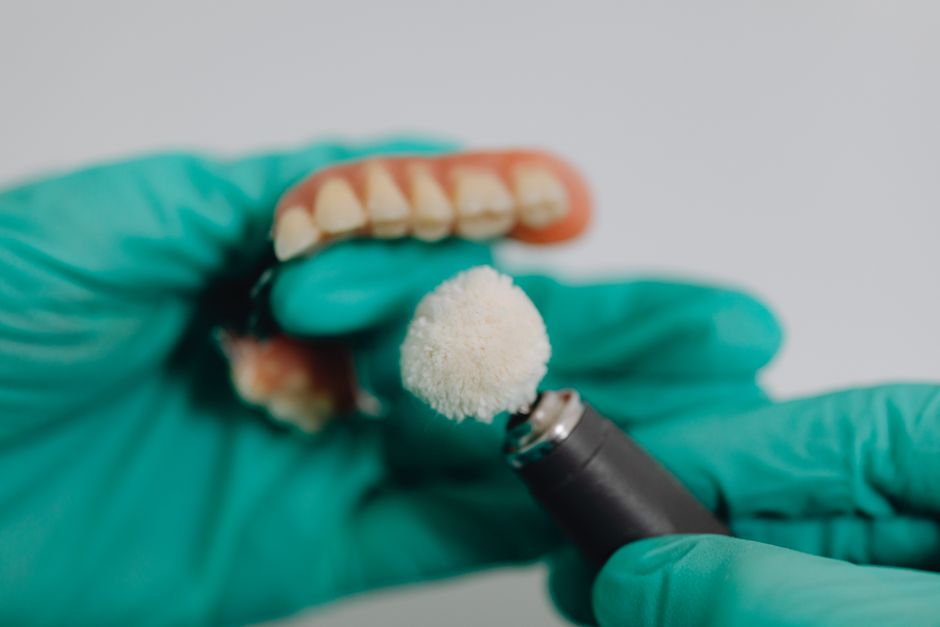
Dentures need daily cleaning just like natural teeth, even though they are not alive. Plaque, food particles, and bacteria build up on denture surfaces and can cause gum irritation, bad breath, and infections if left unchecked. Proper care involves brushing them daily, soaking them overnight, and handling them carefully to avoid damage.
How To Care For Dentures: The Daily Routine
Clean your dentures at least once a day. Many dentists recommend cleaning them twice daily — once in the morning and once before bed. This removes food and plaque and helps prevent stains from setting in.
Use a soft-bristled toothbrush made specifically for dentures or a regular soft toothbrush. Hard bristles can scratch the denture surface. Scratches create tiny grooves where bacteria and food collect, making the denture harder to keep clean.
Use a mild dish soap, hand soap, or a commercial denture cleanser. Regular toothpaste is often too abrasive for dentures. It can wear down the acrylic over time and leave microscopic scratches. If you use toothpaste, choose one labeled as safe for dentures.
Rinse your dentures thoroughly under running water after brushing. Residual cleanser can irritate your gums or cause an unpleasant taste.
Brush your gums, tongue, and the roof of your mouth every day with a soft brush. This removes plaque from natural tissues and stimulates circulation. It also helps reduce the risk of oral thrush, a fungal infection more common in denture wearers.
What To Use And What To Avoid
Stick with products designed for dentures. Here is what works and what does not:
- Soft denture brush — safe for daily use
- Mild dish soap — effective and inexpensive
- Denture cleanser tablets or paste — follow package directions
- Ultrasonic cleaners — can be useful but do not replace daily brushing
Avoid these common mistakes:
- Bleach or harsh household cleaners — they can damage the acrylic and may leave harmful residue
- Boiling water — heat warps dentures and changes their fit
- Regular toothpaste — too abrasive for most denture materials
- Whitening toothpaste — does not whiten dentures and can damage them
Denture cleansers containing bleach should not be used on dentures with metal parts. Bleach can corrode or discolor metal attachments. Check the product label for warnings about metal components.
If you are not sure whether a product is safe for your specific denture, ask your dentist. They know what material your denture is made from and what it can tolerate.
Soaking Dentures Overnight
Dentures need to stay moist when not in your mouth. If they dry out, they can warp and lose their shape. A warped denture no longer fits properly and may cause sore spots or difficulty chewing.
Soak your dentures overnight in water or a denture soaking solution. Most dentists recommend a commercial denture cleanser solution for regular soaking because it helps kill bacteria and loosen plaque. Plain water also works if you prefer it.
Never soak dentures in hot water. Hot water can warp the acrylic base. Use cool or room-temperature water only.
Some people need to wear their dentures while sleeping. Your dentist will tell you if this applies to you. For most people, removing dentures at night gives the gums and jawbone a chance to rest. This reduces the risk of bone loss and soft tissue irritation over time.
If you remove your dentures and do not plan to wear them for several days, keep them in water. Change the water daily to prevent bacterial growth.





Handling Dentures With Care
Dentures break easily. A drop onto a hard bathroom sink or tile floor can crack the acrylic or bend metal clasps.
Fill the sink with water or place a folded towel in the sink before you handle your dentures. If you drop them, the water or towel cushions the fall. This simple habit prevents many broken dentures.
Hold dentures firmly but gently when brushing. Use both hands when removing or inserting them. Never force a denture into place. If it does not seat properly, see your dentist — do not try to adjust it yourself.
Handle partial dentures carefully at the clasps. Bending the metal framework can change how the partial fits against your natural teeth.
When To See Your Dentist
See your dentist at least once a year for a denture check. They examine your gums, remaining natural teeth, and the fit of your denture. Over time, your jawbone changes shape, and dentures that once fit well become loose.
See your dentist sooner if you notice any of these signs:
- Denture feels loose or slips when you talk or eat
- Sore spots or redness on your gums
- Difficulty chewing food you used to eat comfortably
- Cracks, chips, or rough spots on the denture
- Bad breath that does not go away with cleaning
Do not try to fix a broken denture yourself. Over-the-counter repair kits and household glues are not safe. They contain chemicals that can irritate your mouth, and the repair rarely holds. A dentist can repair most dentures properly, sometimes within a day or two.
Loose dentures are not just annoying. They cause friction against the gums, which leads to sore spots and can increase the risk of oral infections. Ill-fitting dentures also make chewing less efficient, which may affect your diet and nutrition.
Denture adhesive can help with minor looseness. But adhesive is a short-term solution, not a fix. If you need adhesive every day to keep your denture in place, your denture likely needs relining or replacement.
Common Denture Problems And Solutions
Stains. Coffee, tea, red wine, and tobacco stain dentures over time. Daily brushing removes surface stains before they set. For stubborn stains, soak the denture in a commercial denture cleanser. If stains remain, ask your dentist about professional cleaning. Some stains cannot be removed at home.
Odor. A denture that smells even after cleaning is usually not clean enough. Bacteria build up in tiny pores and scratches. Review your cleaning routine. Make sure you are brushing all surfaces, including the part that touches your gums. If odor persists, see your dentist — it may signal an infection in your mouth.
Sore spots. New dentures often cause sore spots during the adjustment period. This is normal for the first few weeks. Your dentist can adjust the denture to relieve pressure points. Do not try to sand or file the denture yourself. You can damage it beyond repair.
Clicking sounds. Dentures that click when you talk are usually loose. The denture moves slightly against your gums with each word. This is a fit issue. See your dentist for an adjustment or reline rather than living with the noise.
Difficulty eating. It takes time to adapt to eating with dentures. Start with soft foods cut into small pieces. Chew slowly using both sides of your mouth at once. This keeps the denture stable. Most people adapt within a few weeks, but some need more time.
Frequently Asked Questions
How often should I clean my dentures?
Clean your dentures at least once daily, though twice daily is better. Morning and evening brushing removes plaque and food before they cause irritation or stains.
Can I use regular toothpaste on dentures?
Regular toothpaste is generally too abrasive for dentures and can create microscopic scratches. Use a soft brush with mild dish soap or a cleaner made specifically for dentures.
Should I soak my dentures every night?
Yes, dentures should stay moist when not worn or they can dry out and warp. Soak them overnight in room-temperature water or a denture soaking solution, never hot water.
How long do dentures last?
Most dentures last 5 to 7 years before needing replacement, but they often need relining sooner. Your jawbone changes shape over time, affecting how well the denture fits.
