

You can cut body fat while keeping muscle if you slow your weight loss to 0.5-1% of body weight per week, keep protein high at 0.7-1.0 grams per pound of body weight, and continue lifting heavy weights. Crash diets and excessive cardio are the fastest way to lose muscle, not fat. The research is clear: a moderate calorie deficit combined with resistance training preserves lean mass better than any other approach.
How Much of a Calorie Deficit Is Safe for Muscle Preservation?
A small deficit is the single most important factor. Research published in the Journal of the International Society of Sports Nutrition found that athletes who cut calories by 300-500 per day lost mostly fat while maintaining strength. Those who cut by 700-1000 calories lost significant muscle alongside fat.
Your maintenance calories are what you need to stay the same weight. Subtract 300-500 from that number. Do not go below 1,200 calories for women or 1,500 for men unless under medical supervision. The body interprets very low calories as starvation and breaks down muscle for energy.
Track your weight weekly. If you lose more than 1% of body weight per week — that is 2 pounds for a 200-pound person — you are losing muscle. Slow down. Add 100-200 calories back until the rate stabilizes.
How Much Protein Do You Actually Need While Cutting?
Protein needs go up during a cut. A review in Sports Medicine concluded that 0.7-1.0 grams per pound of body weight is optimal for preserving lean mass in a calorie deficit. For a 180-pound person that means 126-180 grams of protein daily.
Spread protein across 3-5 meals. A study in the Journal of Nutrition showed that consuming 30-40 grams of protein per meal stimulates muscle protein synthesis more effectively than eating most of your protein in one sitting. This matters more during a cut than a bulk because your body is already in a catabolic state.
Good sources include chicken breast, lean beef, eggs, Greek yogurt, cottage cheese, and whey or plant-based protein powders. If you are struggling to hit your protein target, a shake is better than skipping.
| Body Weight (lbs) | Minimum Protein (g) | Optimal Protein (g) |
|---|---|---|
| 150 | 105 | 150 |
| 180 | 126 | 180 |
| 210 | 147 | 210 |
| 240 | 168 | 240 |
Should You Keep Lifting Heavy While Cutting Calories?
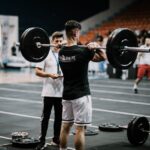
Yes. Lifting heavy signals your body to keep muscle even when calories are low. Research from the American College of Sports Medicine shows that resistance training during a calorie deficit preserves lean mass better than diet alone or diet plus cardio only.
Keep your rep range at 6-12 reps per set with weights that feel challenging by the last two reps. Do not drop to high reps with light weights just because you are cutting. That approach tells your body it does not need the muscle anymore.
Reduce volume slightly if needed. Instead of 4 sets per exercise try 3. Keep intensity high. If you feel weak on a cut, that is normal. Your body has less energy available. But if strength drops more than 10% on multiple lifts over several weeks, your deficit is too large or your protein is too low.




How Does Cardio Affect Muscle Loss During a Cut?
Too much cardio is a common mistake. Studies show that adding more than 4-5 hours of moderate to intense cardio per week while in a calorie deficit increases muscle breakdown. Your body does not distinguish between fat and muscle for fuel — it burns whatever is available.
Limit cardio to 2-4 sessions per week of 20-30 minutes. Walking is an exception. Walking 8,000-10,000 steps daily does not raise cortisol or trigger muscle breakdown the way running or cycling does. Many bodybuilders use walking as their primary cardio during a cut for this reason.
High intensity interval training (HIIT) can work but keep sessions short — 15-20 minutes max. HIIT is stressful on the central nervous system and combined with calorie restriction can impair recovery.
How To Cut Without Losing Muscle Or Strength: Practical Steps
Here is a straightforward plan based on the evidence:
- Calculate maintenance calories and subtract 300-500
- Eat 0.7-1.0 grams of protein per pound of body weight daily
- Lift weights 3-4 times per week in the 6-12 rep range
- Walk 8,000-10,000 steps daily for low-stress calorie burn
- Limit high-intensity cardio to 2-3 sessions of 20 minutes
- Weigh yourself weekly — lose 0.5-1% of body weight per week
- Sleep 7-9 hours per night. Poor sleep raises cortisol and increases muscle breakdown
Track your strength on key lifts like bench press, squat, or deadlift. If numbers hold steady for 3-4 weeks while weight drops, you are on track. If strength drops significantly, adjust calories or protein upward.
Many people also benefit from refeed days. A refeed is one day per week where you eat at maintenance calories or slightly above, with extra carbohydrates. Research suggests this can restore glycogen, improve training performance, and lower cortisol without causing fat gain.
Common Misconceptions About Cutting and Muscle Loss
Some people believe you cannot build muscle while cutting. This is not entirely true. Beginners and people returning after a break can gain muscle in a deficit — this is called body recomposition. For experienced lifters, maintaining muscle while losing fat is a realistic goal. Gaining significant muscle in a deficit is unlikely.
Another misconception is that fat burners or supplements prevent muscle loss. The evidence does not support this. Caffeine and green tea extract have modest effects on fat oxidation but do not spare muscle. No supplement replaces adequate protein and resistance training.
Some people think intermittent fasting causes muscle loss. Research comparing intermittent fasting to standard calorie restriction found no difference in muscle preservation when protein intake and training were matched. The method of calorie restriction matters less than the total deficit and protein amount.
Frequently Asked Questions
How fast can I cut without losing muscle?
Lose 0.5-1% of your body weight per week. For a 180-pound person that is about 0.9-1.8 pounds weekly.
Do I need to eat carbs while cutting to keep muscle?
Carbs are not essential for muscle preservation but help with training performance and recovery. Aim for 1-2 grams per pound of body weight.
Can I do intermittent fasting and still keep muscle?
Yes, as long as total calories and protein are adequate. The evidence shows no muscle loss disadvantage compared to frequent meals.
Should I take BCAAs or creatine while cutting?
Creatine is supported by research for strength preservation during a cut. BCAAs are unnecessary if you eat enough complete protein.
