
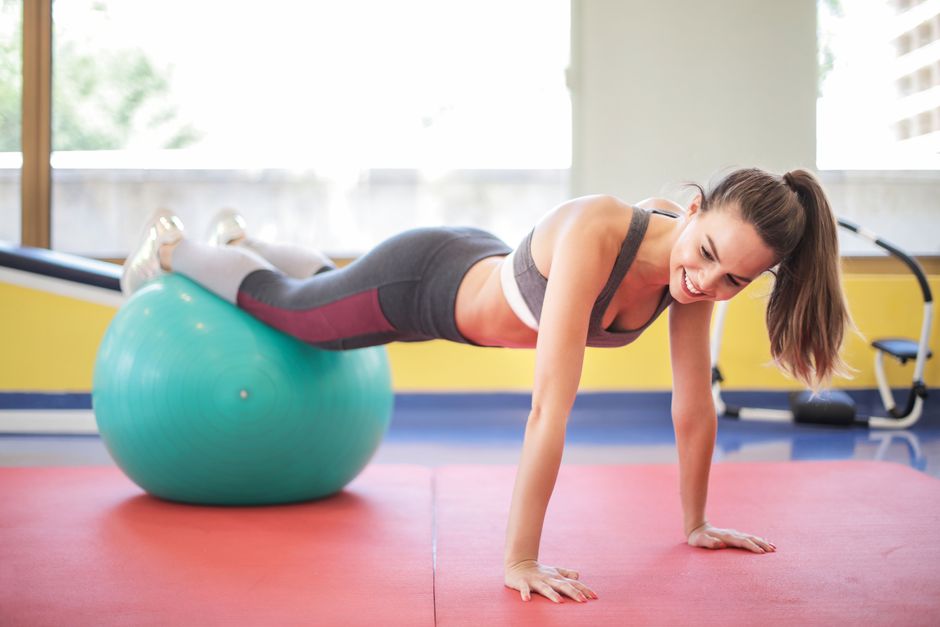
Rebuilding core strength after pregnancy starts with reconnecting to your deep abdominal muscles and pelvic floor before doing any crunches or planks. Most women need to heal diastasis recti (abdominal separation) first, then progress through three stages: breath work, stability exercises, and finally full strength training. The process takes 6 to 12 months, and rushing it usually leads to back pain or pelvic floor issues.
What happens to your core during pregnancy and birth?
Your abdominal muscles stretch and separate to make room for the baby. This separation is called diastasis recti, and it happens to nearly all pregnant women to some degree. The connective tissue between your six-pack muscles thins out.
Your pelvic floor muscles carry extra weight for months. They stretch, weaken, and sometimes tear during delivery. Your deep core stabilizer (the transverse abdominis) gets lazy because it is no longer holding things in tight.
These changes do not snap back after birth. The tissue needs time to heal and retrain. For most women, some separation remains at 8 weeks postpartum. That is normal.
How do you know if you have diastasis recti?
Lie on your back with knees bent and feet flat. Place two fingers just above your belly button, pointing down toward your toes. Lift your head and shoulders slightly off the floor like a mini crunch.
Feel for a gap between the left and right abdominal muscles. A gap wider than two finger widths is considered diastasis recti. Check again two inches below your belly button and two inches above it.
You might also notice a doming or coning shape in your belly when you sit up from lying down. This is a clear sign your core is not working together properly. If you see this, avoid crunches and sit-ups for now.
Stage one: reconnect with your breath
Your first core exercise after pregnancy is breathing. Specifically, you need to relearn how to use your diaphragm and pelvic floor together. This is not optional — it is the foundation everything else builds on.
Lie on your back with knees bent. Place one hand on your chest and one on your belly. Breathe in through your nose and feel your belly rise like a balloon. Breathe out through your mouth and gently draw your belly button toward your spine.
On the exhale, also gently lift your pelvic floor muscles as if stopping urine flow. This coordinated contraction is called the core engagement. Practice this 10 to 15 breaths, twice a day. Do not hold your breath.
Research consistently shows that this breathing pattern activates the transverse abdominis better than any crunch. It also reduces intra-abdominal pressure, which protects your healing connective tissue.


Stage two: stability exercises that actually work
Once you can engage your core with breathing, add movement. The goal here is not to feel the burn. It is to teach your deep muscles to fire automatically during daily activities.
Heel slides: Lie on your back with knees bent. Engage your core on an exhale. Slowly slide one heel away from you until your leg is almost straight. Slide it back. Repeat 8 to 10 times per leg. Your belly should stay flat — no doming.
Dead bug: Lie on your back with arms reaching toward the ceiling and knees at 90 degrees. Engage your core. Slowly lower one arm overhead and the opposite leg toward the floor. Return to start. Do 6 to 8 reps per side. Stop if your back arches off the floor.
Side-lying leg lift: Lie on your side with knees bent. Engage your core. Lift your top knee while keeping feet together. Lower slowly. This targets the obliques without stressing the midline. Do 10 to 12 reps per side.
Do these exercises every other day. Stop if you feel pain or see coning. Progress only when you can do all reps with perfect form.
Stage three: building real core strength
After 4 to 8 weeks of stability work, most women can start more challenging exercises. The key is to test your core during each move. If your belly domes or your lower back hurts, go back a stage.
Modified planks: Start on your forearms and knees, not toes. Keep your body in a straight line from shoulders to knees. Engage your core and hold for 15 to 30 seconds. Do not let your hips sag or rise.
Bird dog: Start on hands and knees. Engage your core. Extend one arm forward and the opposite leg back simultaneously. Keep your hips square to the floor. Hold for 2 seconds. Return slowly. Do 6 to 8 reps per side.
Glute bridge: Lie on your back with knees bent. Engage your core. Lift your hips toward the ceiling by squeezing your glutes. Hold at the top for 2 seconds. Lower slowly. Do 10 to 12 reps.
Add these exercises gradually. One set of each is enough at first. Build to three sets over several weeks. You should feel your glutes and deep abs working, not your lower back.
When can you do crunches and planks again?
Most women can return to traditional core exercises around 4 to 6 months postpartum, but this varies widely. The timeline depends on whether your diastasis recti has closed, your pelvic floor is strong, and you can maintain core engagement during movement.
A simple test: lie on your back with knees bent. Do a full crunch. Look at your belly. If you see a dome or ridge, your core is not ready for that movement yet. Go back to stage two exercises for another few weeks.
When you do return to planks, start with a 20-second hold. Work up to 60 seconds over several weeks. Never hold a plank if you feel pressure in your pelvic floor or lower back.
High-intensity core work like sit-ups, leg lowers, and heavy rotational exercises should wait until at least 6 months postpartum. Some women need longer. That is fine.
What about pelvic floor exercises?
Kegels are only part of the picture. You also need to learn how to relax your pelvic floor. Many women have tight pelvic floors after birth, not just weak ones. Doing only Kegels can make this worse.
The full approach is called the knack. Squeeze your pelvic floor muscles just before you cough, sneeze, laugh, or lift something heavy. This trains your body to protect your pelvic floor during real-life pressure moments.
If you have pelvic pain, heaviness in your vagina, or leaking that does not improve after 3 months of exercises, see a pelvic floor physical therapist. Evidence indicates that guided therapy works better than doing exercises alone for moderate to severe issues.
How long does it take to rebuild core strength?
Expect noticeable improvement in 8 to 12 weeks of consistent practice. Full recovery of core strength and function typically takes 6 to 12 months. Some women take up to 18 months, especially after multiple pregnancies or C-sections.
Your core will never look exactly like it did before pregnancy, and that is normal. The connective tissue does not fully tighten back to its original state. But you can absolutely regain functional strength — the kind that lets you carry your child, lift groceries, and exercise without pain.
Be patient with the process. Every woman recovers at her own pace. Comparing yourself to someone else is not helpful. Your only job is to do the right exercises consistently and listen to your body.
What exercises should you avoid in the first 12 weeks?
Avoid crunches, sit-ups, full planks, push-ups, leg raises, Russian twists, and heavy lifting. These all increase intra-abdominal pressure and can worsen diastasis recti. Also avoid anything that makes your belly dome or cone.
Avoid high-impact exercise like running, jumping, or burpees until your pelvic floor can handle the load. A simple test: jump in place once. If you leak urine or feel pelvic pressure, your pelvic floor is not ready.
Avoid deep twisting movements and exercises that arch your lower back excessively. These put strain on the connective tissue and pelvic floor. Stick to the stability exercises listed above until your body tells you it is ready for more.
How to check your progress
Check your diastasis recti gap every 4 to 6 weeks using the finger test described earlier. The gap should gradually narrow. You should also notice less doming during movement.
Pay attention to how your body feels during daily activities. Can you carry your baby without lower back pain? Can you get up from the floor without using your hands? Can you sneeze without leaking? These are real measures of progress.
Your pelvic floor should feel stronger. You should be able to stop urine flow midstream and hold a Kegel for 10 seconds. If you cannot, keep working on your breathing and stability exercises.
Some women notice that their belly looks flatter or their waist feels smaller as the diastasis recti closes. This is a nice side effect, but do not use appearance as your main measure of success. Function matters more.
Frequently Asked Questions
How soon after birth can I start core exercises?
You can start breathing exercises and gentle pelvic floor work within days of a vaginal birth. Wait until your 6-week postpartum checkup to begin more active core exercises, and longer if you had a C-section.
Can I rebuild core strength after a C-section?
Yes, but you need to wait 8 to 12 weeks for your incision to heal fully. Start with breathing and pelvic floor exercises, then progress through the same stages as vaginal birth. Scar tissue massage can also help.
Will core exercises help with back pain after pregnancy?
Yes, rebuilding your deep core muscles reduces lower back pain by improving spinal support. Research consistently shows that core stabilization exercises are one of the most effective treatments for postpartum back pain.
How do I know if I am doing the exercises correctly?
Your belly should stay flat and still during every exercise. If you see doming, coning, or feel pressure in your pelvic floor, you are using too much force. Go back to easier exercises until you can maintain a neutral core.
