
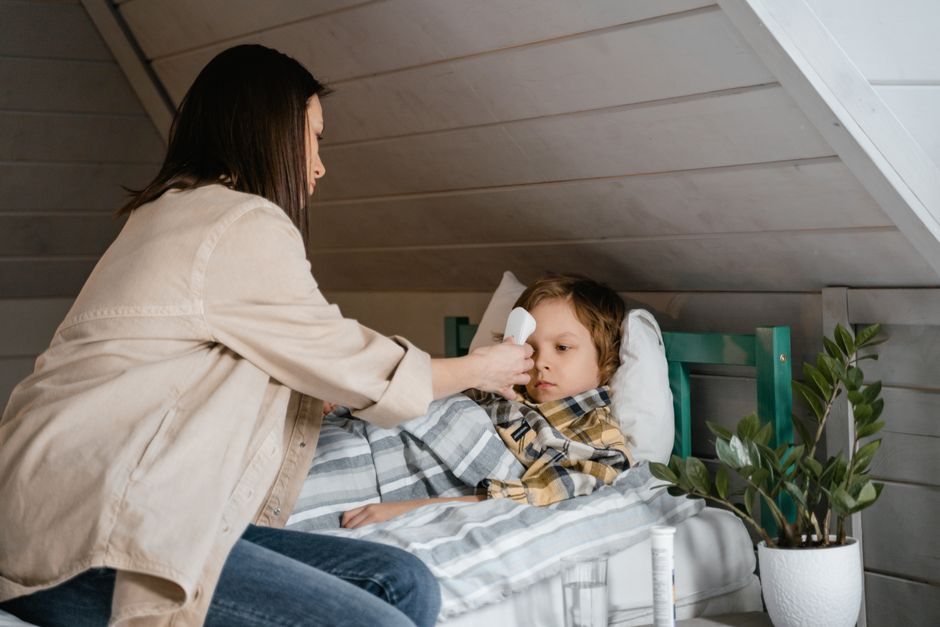
A fever in a child is often more frightening for parents than it is harmful for the child. The goal is not always to bring the temperature to normal, but to make your child comfortable. To break a fever quickly and safely, you should focus on hydration, appropriate clothing, and using a fever-reducing medication like acetaminophen or ibuprofen when needed. The fastest and safest approach combines these methods while monitoring your child’s overall behavior rather than just the number on the thermometer.
What Counts as a Fever in a Child?
A fever is generally defined as a rectal temperature of 100.4°F (38°C) or higher. For older children, an oral temperature of 100°F (37.8°C) or higher also indicates a fever. The number itself is less important than how your child looks and acts.
Fever is a natural immune response. It is the body raising its internal temperature to fight off infections. Most fevers in children are caused by viral infections that resolve on their own. The height of a fever does not always correlate with the severity of the illness. A child with a mild cold can spike a high fever, while a child with a serious infection may have only a low-grade temperature.
How To Break A Childs Fever Quickly And Safely: Medication
Fever-reducing medications are the most reliable way to lower a child’s temperature. Two medications are commonly used for children: acetaminophen (Tylenol) and ibuprofen (Motrin or Advil). Both are effective, but they work differently and have different dosing schedules.
Acetaminophen can be given every 4 to 6 hours. It is safe for children as young as 2 months old. Ibuprofen can be given every 6 to 8 hours. It is only approved for children 6 months and older. Do not give aspirin to a child or teenager. Aspirin use in children is linked to Reye’s syndrome, a rare but serious condition that causes swelling in the liver and brain.
Always dose by weight, not by age, whenever possible. The correct dose of acetaminophen is 10 to 15 mg per kilogram of body weight. The correct dose of ibuprofen is 5 to 10 mg per kilogram of body weight. Check the label on the package and use the measuring device that comes with the medication. Do not use a kitchen spoon.
If your child is vomiting or cannot keep fluids down, call your pediatrician before giving any oral medication. There are suppository forms of acetaminophen available, but you should only use these under medical guidance.
Comfort Measures That Help Break a Fever
Medication works faster when combined with simple comfort measures. Remove excess clothing and blankets. Dress your child in a single layer of light clothing. Overbundling traps body heat and keeps the fever elevated.
Keep the room at a comfortable temperature, typically between 68°F and 72°F (20°C to 22°C). A cool, well-ventilated room helps the body release heat. Do not use cold water baths or ice packs. These cause shivering, which actually raises the body’s core temperature. They also make a child miserable. A lukewarm bath can be soothing if your child is uncomfortable, but it is not necessary for reducing fever.
Encourage rest, but do not force your child to stay in bed. A child who wants to play can play quietly. Activity will not make the fever worse, but it does increase body heat. Let your child set the pace.





Hydration: The Most Important Step
Fever increases fluid loss through sweating and faster breathing. Dehydration can make a fever harder to break and can make your child feel worse. Offer fluids frequently. For infants, this means breast milk or formula. For older children, water, diluted juice, or oral rehydration solutions like Pedialyte work well.
Do not force fluids. Offer small amounts often. If your child is urinating less than usual, has a dry mouth, or is crying without tears, these are signs of dehydration. Contact your pediatrician if you notice any of these signs.
When a Fever Is an Emergency
Most fevers are harmless and resolve in a few days. Some situations require immediate medical attention. Call your pediatrician or seek emergency care in these cases:
- An infant under 3 months old with a rectal temperature of 100.4°F (38°C) or higher
- A child of any age with a temperature above 104°F (40°C) that does not come down with medication
- A fever lasting more than 3 days in a child of any age
- Your child is lethargic, difficult to wake, or unusually irritable
- Your child has difficulty breathing, a stiff neck, or a seizure
- Your child shows signs of dehydration, such as no wet diapers for 8 hours or no urination for 6 hours in an older child
- Your child has a fever and a rash, especially if the rash looks like small purple or red spots
- Your child has an underlying medical condition such as heart disease, cancer, or an immune disorder
Febrile seizures occur in about 2% to 5% of children between 6 months and 5 years of age. They look frightening but are usually brief and do not cause brain damage. If your child has a seizure associated with fever, place them on their side, do not put anything in their mouth, and call 911.
What Not to Do When Your Child Has a Fever
There are several outdated practices that are not safe and do not work. Never give your child an alcohol rub. Alcohol is absorbed through the skin and can cause serious poisoning. Never use ice baths or cold water immersion. These cause shivering and can drop the temperature too fast, which can be dangerous.
Do not alternate acetaminophen and ibuprofen unless your pediatrician specifically instructs you to do so. Alternating medications increases the risk of dosing errors and accidental overdose. If you give one medication, stick with it and track the time of each dose carefully.
Do not wake a sleeping child to give fever medication. Sleep is important for recovery. If your child is sleeping comfortably, let them sleep. You can give the next dose when they wake up.
Understanding Fever Phobia in Parents
Many parents worry that a high fever will cause brain damage. This is a common misconception. Fever itself does not cause brain damage. The body’s thermostat regulates fever and naturally keeps it below 107.6°F (42°C). Only environmental overheating, such as a child left in a hot car, can push the body temperature to dangerous levels.
The real danger with fever is dehydration and the underlying infection, not the fever itself. Focus on keeping your child hydrated and comfortable. Watch for signs of serious illness. A child who is drinking, urinating, and interacting normally is generally not in danger, even with a high fever.
How Long Does a Fever Last?
Most viral fevers last 2 to 3 days. Some can last up to 5 days. The fever may come and go, spiking in the evening and dropping in the morning. This pattern is normal and does not mean the infection is getting worse.
If the fever persists beyond 3 days, or if your child’s condition worsens, contact your pediatrician. A fever that breaks and then returns after several days of normal temperature can sometimes indicate a secondary bacterial infection, such as an ear infection or pneumonia.
Frequently Asked Questions
What is the fastest way to reduce a child’s fever?
The fastest safe method is giving an appropriate dose of acetaminophen or ibuprofen based on your child’s weight. Combine this with light clothing and plenty of fluids.
Can I alternate Tylenol and Motrin for a fever?
Only if your pediatrician specifically instructs you to. Alternating medications increases the risk of dosing errors, so it is safer to use one medication consistently.
Should I let a fever run its course without medication?
If your child is comfortable, drinking fluids, and sleeping well, medication is not required. Use fever medication when your child is uncomfortable, fussy, or in pain.
What temperature is too high for a child?
A temperature above 104°F (40°C) that does not respond to medication warrants a call to your pediatrician. Any fever in an infant under 3 months old is a medical emergency.
