
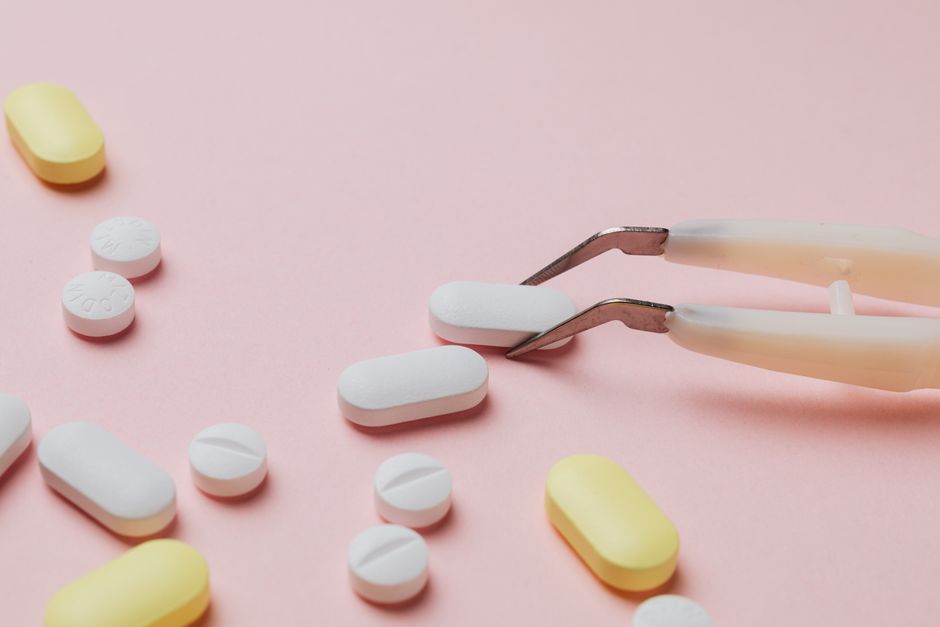
You can cut a pill without a pill cutter using a clean, single-edge razor blade or a sharp kitchen knife on a hard, non-slip surface, but only if the tablet is scored and not a capsule, and only after checking with a pharmacist that the drug is safe to split. Many pills can be divided this way. Some cannot be split at all — doing so can release a full day’s dose at once or destroy the drug’s protective coating. Getting this right matters more than most people realize.
How To Cut A Pill Without A Pill Cutter Safely
The safest improvised method uses a clean blade and a stable surface. The goal is one clean break along the score line, not a crumbled tablet with uneven halves.
Here is the method many pharmacists describe:
- Wash and dry your hands. Wipe the blade with rubbing alcohol and let it dry.
- Place the tablet on a hard surface — a cutting board works well. Avoid soft surfaces like a paper towel, which let the pill slide.
- Line the blade up with the score line, if there is one.
- Press down firmly and evenly with one quick motion. Do not saw back and forth.
- Use a pill splitter or mortar and pestle if the tablet shatters into pieces.
A sharp knife or single-edge razor blade is the common tool for this. A pill cutter is still the better choice when you have one, because the guide holds the tablet steady and the blade comes down straight. Without that guide, the pill can shift, and you end up with a 70/30 split instead of a 50/50 one.
One point people miss: the two halves are rarely exactly equal. For most drugs this small difference does not matter. For a few — thyroid medication, blood thinners, and some heart drugs — it can. That is a question for your pharmacist, not a guess.
Which Pills Should Never Be Cut
Some tablets are designed to release their drug slowly, and cutting them defeats that design. These include extended-release, controlled-release, sustained-release, and delayed-release products. The label often carries letters like ER, XR, XL, CR, SR, or DR after the drug name.
When you cut one of these, the full dose can be released at once instead of over many hours. That can cause a stronger effect than intended, including serious side effects. The evidence for this is well established in pharmacology — it is not a rare edge case.
Other pills that should not be split:
- Capsules — these hold powder, pellets, or liquid and cannot be divided evenly by cutting.
- Enteric-coated tablets — the coating protects the drug from stomach acid or protects the stomach from the drug. Cutting removes that protection.
- Tablets with no score line — many can still be split, but the manufacturer did not design them to be, so ask first.
- Chemotherapy and hormonal drugs — these may require special handling. Do not cut them at home without specific instructions.
If a pill has a score line, that is a good sign it can be split. It is not a guarantee. The score only tells you the maker intended a break point — it does not tell you the drug is safe to break. Check with a pharmacist before you cut anything.
Why Cutting Pills Is Riskier Than It Looks
The main problem is dose accuracy. A study in a peer-reviewed journal found that manually split tablets often varied widely from the intended dose — some halves were far from equal. The variation was large enough that for certain drugs it could matter clinically.
There is a second problem: loss. Cutting creates dust and small fragments. Over time, that lost material adds up, and you may get less drug than prescribed.
A third issue is contamination. A blade used for other purposes can carry residue. A surface used for food can carry bacteria. Neither belongs on a pill you are about to swallow.
None of this means you should never split a pill. It means the method matters, and some drugs are poor candidates for splitting no matter how careful you are.




When Splitting A Pill Is Actually Appropriate
Splitting is reasonable when a pharmacist or prescriber confirms the drug is safe to split and the tablet is scored. It is also reasonable when the goal is to save money — some insurers and clinicians support splitting certain drugs to reduce cost, provided the drug qualifies.
It is not appropriate when:
- The drug is extended-release, delayed-release, or enteric-coated.
- The drug has a narrow therapeutic window — meaning small dose changes cause big effects.
- The tablet crumbles no matter what you try.
- You are splitting to stretch a prescription without medical guidance.
That last point is worth pausing on. People sometimes split pills to make a supply last longer, or to avoid a refill. That can lead to underdosing, which for some conditions — infections, blood pressure, seizures — carries real risk. If cost is the issue, tell your prescriber. There are often better options than cutting corners.
Better Tools And Alternatives To Consider
A pill cutter costs a few dollars and does the job more reliably than a knife. If you split pills regularly, it is worth having one. A mortar and pestle works for some tablets, but it turns the pill into powder, which is harder to divide evenly and may not be appropriate for all drugs.
Some pharmacies will split pills for you or dispense a different strength so no cutting is needed. If you take half a tablet every day, ask whether a lower-strength tablet exists. Often it does.
For liquid medications, an oral syringe gives far more accurate dosing than cutting a tablet ever could. If a liquid form exists for your drug, that is worth asking about.
Compounding pharmacies can also prepare custom doses in some cases. This is not available for every drug, and insurance coverage varies, but it is a real option when precise dosing matters.
How To Store And Handle Split Pills
Once a pill is cut, it is exposed. The cut surface can absorb moisture from the air, and some drugs degrade faster once the protective outer layer is gone. Store split halves in a clean, dry, airtight container — not loose in a pill organizer for weeks.
Try to split only what you need for a short period. Splitting a month’s supply at once and letting the halves sit exposed is not ideal. If you must pre-split, keep them in a sealed container away from heat and light.
Wash your hands before and after handling split pills. If the drug is one that requires special handling — certain hormones, chemotherapy agents, or drugs with known skin effects — talk to your pharmacist about gloves and disposal. This is not common, but it applies to some medications.
Finally, keep the blade or knife you use for pills separate from kitchen tools. Store it where children cannot reach it. A pill cutter avoids this problem entirely, which is one more reason it is the better default.
Frequently Asked Questions
Can I cut a pill in half with a knife?
Yes, you can cut a scored, immediate-release tablet with a clean, sharp knife or single-edge razor blade on a hard surface. Do not use this method on extended-release, delayed-release, or enteric-coated tablets, and check with a pharmacist first.
What happens if I cut an extended-release pill?
Cutting an extended-release tablet can release the full dose at once instead of slowly over hours, which may cause stronger effects or side effects than intended. This is a well-established risk, not a rare one.
Are both halves of a cut pill the same dose?
Not always. Manual splitting often produces uneven halves, and the difference can be large enough to matter for some drugs. A pill cutter gives a more even split, but no home method is perfectly accurate.
Can I split a pill to save money?
Only if a pharmacist or prescriber confirms the drug is safe to split and the tablet is scored. Splitting without guidance can lead to underdosing, which carries real risk for some conditions.
