
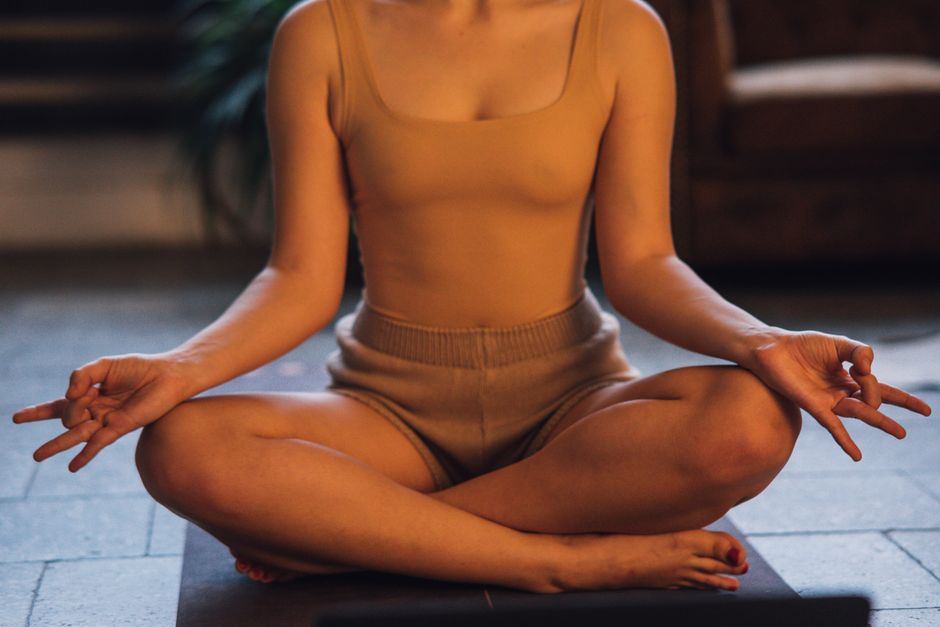
You have likely seen the sacral chakra described as a spinning wheel of orange light sitting just below your navel. In yoga and Ayurvedic traditions, this energy center is linked to creativity, pleasure, and emotional flow. The practices used to “balance” it — meditation, breathwork, movement, and lifestyle changes — are generally safe and can support relaxation and focus. What those practices cannot do is treat a medical condition, and no clinical trial has measured a chakra directly.
What Is The Sacral Chakra In Traditional Practice?
The sacral chakra is a concept from yogic and Ayurvedic traditions, not from Western anatomy. It is called Svadhisthana in Sanskrit, which translates roughly to “the dwelling place of the self.” It is described as the second of seven major chakras, located in the lower abdomen, and associated with the element of water.
In these traditions, the sacral center governs pleasure, emotion, creativity, and connection with others. An imbalance is said to show up as creative block, emotional numbness, guilt, or difficulty with intimacy. None of this is measurable in a lab. There is no imaging study, blood test, or physical exam that can detect a chakra, balanced or otherwise.
That does not make the practices worthless. It means the framework is a traditional map of experience, not a diagnostic system. People who use it often find it a useful way to think about their emotional and creative life. That is a different claim than saying a chakra is a physical structure.
How To Balance Your Sacral Chakra For Creativity And Flow
Traditional approaches combine physical movement, breath, sound, and reflection. These are the practices most often recommended, and most are low risk.
Movement and yoga
Hip-opening poses are the most common recommendation. Poses like pigeon, bound angle, and wide-legged forward fold are said to release tension stored in the pelvis. Whether tension is “stored” there in the way the tradition describes is not established. What is established is that regular physical activity supports mood and cognitive function, and hip-focused stretching can improve flexibility and reduce stiffness.
Breathwork
Slow, diaphragmatic breathing activates the parasympathetic nervous system, which lowers heart rate and can reduce feelings of stress. Placing a hand on the lower belly and breathing slowly into that area is a simple version. This effect on the nervous system is well documented. Its effect on creativity specifically is not well studied.
Sound and chanting
The traditional seed sound for this center is “vam.” Chanting is used in many contemplative traditions. Some research suggests that rhythmic vocalization and slow breathing can support relaxation. Whether a specific syllable matters more than any other is not something studies have tested.
Journaling and reflection
Writing about emotions, desires, and creative blocks is a common recommendation. Expressive writing has been studied as a tool for emotional processing, with mixed but generally favorable results. It is a reasonable practice regardless of what you call it.
Color and environment
Orange is the traditional color. Wearing it, using it in art, or placing it in your space is a symbolic practice. There is no evidence that a color balances an energy center. Color does affect mood and perception in modest ways, which is a separate and better-supported finding.
Does Science Support Chakra Balancing?
No clinical evidence currently confirms that chakras exist as measurable structures, or that balancing them produces specific health or creative outcomes. This is the honest position, and it is worth stating plainly.
What is supported is that the individual practices often bundled under “chakra balancing” have their own evidence base:
- Physical activity supports mood, sleep, and cognitive function
- Slow breathing reduces physiological stress markers
- Meditation and mindfulness have been studied for stress and anxiety, with generally positive but variable results
- Expressive writing has been studied for emotional processing
None of these studies measured a chakra. They measured stress, mood, or performance. If you feel better after these practices, the benefit is real to you. The explanation may simply be exercise, relaxation, and reflection rather than energy flow.
A useful distinction: a practice can help you feel better without its stated mechanism being correct. That is true of many traditional practices, and it does not require you to accept or reject the whole framework.



What Might Actually Be Blocking Your Creativity?
If you are stuck creatively, a chakra imbalance is one possible explanation in a traditional framework. Several well-understood factors can also produce the same experience, and they are worth ruling out first.
- Sleep debt. Short sleep impairs attention, memory, and divergent thinking.
- Depression or anxiety. Both commonly reduce motivation and the ability to generate ideas. These are treatable conditions, not spiritual problems.
- Chronic stress. Sustained stress narrows attention and makes open-ended thinking harder.
- Medication side effects. Some medications affect mood, energy, or cognition.
- Thyroid or hormonal issues. Fatigue and low mood can have medical causes.
If creative block comes with persistent low mood, loss of interest, sleep changes, or fatigue lasting weeks, that pattern deserves a medical evaluation. Chakra practices are not a substitute for that.
Is Chakra Balancing Safe?
The practices themselves are low risk for most healthy adults. Meditation, gentle yoga, breathing exercises, and journaling rarely cause harm.
A few cautions are worth knowing. Intense breathwork can cause dizziness, tingling, or fainting in some people, and it is not appropriate for everyone. People with certain heart or lung conditions, or who are pregnant, should check with a clinician before doing forceful breathing practices. Deep hip-opening poses can aggravate existing hip or back injuries.
The bigger risk is substitution. If someone uses chakra work instead of getting evaluated for depression, chronic pain, or another treatable condition, that delay can matter. Energy practices can sit alongside medical care. They should not replace it.
How Long Does It Take To Notice A Difference?
There is no established timeline for chakra balancing, because the outcome is not something that can be measured. Anyone who gives you a specific number of days or sessions is stating an opinion, not a finding.
What can be described is how the individual practices tend to work. A single session of slow breathing can lower heart rate within minutes. Regular physical activity tends to affect mood over weeks. Meditation and journaling effects are usually described over weeks of consistent practice, with wide variation between people.
If a practice helps you feel calmer or more open, that is a reasonable reason to keep doing it. If it is not helping after a fair trial, there is no rule that says you must continue.
Frequently Asked Questions
Where is the sacral chakra located?
In traditional practice, it is described as sitting in the lower abdomen, roughly between the navel and the pubic bone. It has no corresponding physical structure that can be located by medical imaging.
What are the signs of a blocked sacral chakra?
Traditional sources describe creative block, emotional numbness, guilt, and difficulty with intimacy. These same experiences can also come from depression, anxiety, poor sleep, or medical conditions, so they are worth evaluating on their own terms.
Can balancing your sacral chakra really improve creativity?
No clinical evidence confirms that balancing a chakra improves creativity. The practices often used — movement, breathing, meditation, and journaling — may support mood and focus, which can help creative work indirectly.
Do I need a practitioner to balance my sacral chakra?
No. Most traditional practices are self-directed and can be done at home. If you choose to see a practitioner, check their credentials and keep any medical concerns with a licensed clinician.
