
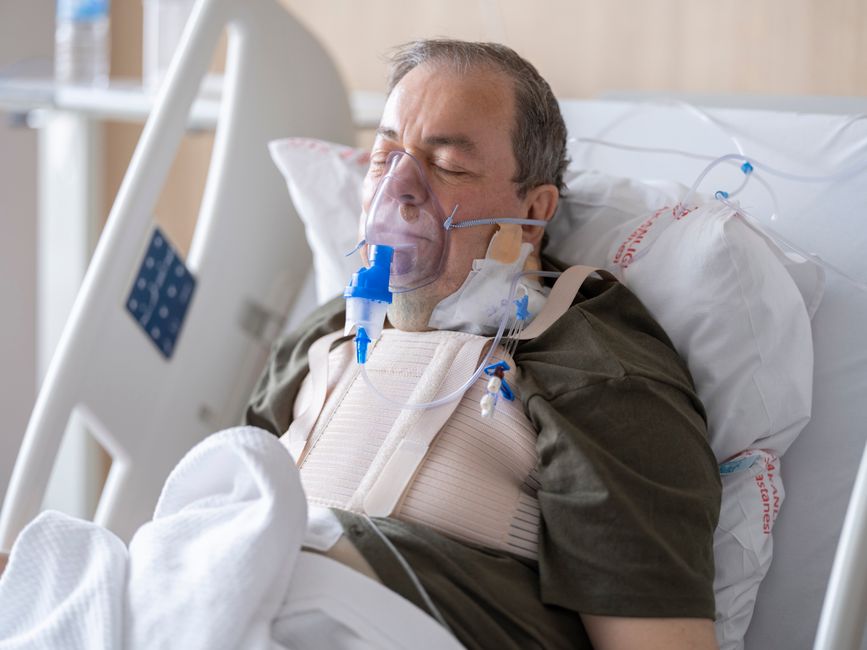
“Critical condition” is one of the most frightening phrases a family can hear. In hospital language, it means a patient has a life-threatening problem and is not stable. Their vital signs — breathing, blood pressure, heart rate, and oxygen levels — may be dangerously abnormal or only held in a safe range by machines and medications. The patient needs continuous monitoring and often care in an intensive care unit (ICU).
It is not a diagnosis. It is a description of how sick someone is right now. That distinction matters, because two patients in critical condition can have completely different illnesses and very different chances of recovery.
What Does Critical Condition Mean In A Hospital?
Critical condition means the patient’s body is failing in one or more important ways, and without intensive support they could die. The term describes instability, not a specific disease.
Hospitals and news outlets often use a standard set of words to describe a patient’s status. These are general descriptions, not official medical definitions, and different hospitals may apply them slightly differently.
- Critical: Vital signs are unstable and not within normal limits. The patient may be unconscious. They are receiving intensive treatment and the outcome is uncertain.
- Serious: Vital signs may be unstable and outside normal limits, but the patient is not expected to die immediately.
- Fair: Vital signs are stable and within normal limits. The patient is conscious but may be uncomfortable.
- Good: Vital signs are stable and within normal limits, and the patient is conscious and comfortable.
One important clarification: “critical” and “stable” are not opposites. A patient can be in critical but stable condition. That means they are still very sick, but their vital signs are not currently getting worse. It is a snapshot, not a prediction.
What Is the Difference Between Critical, Serious, and Stable Condition?
The main difference is how close the patient is to danger and how much support their body needs.
A patient in serious condition has a significant illness or injury, but their body is managing much of the work on its own. A patient in critical condition is relying on medical equipment or drugs to keep basic functions going — breathing, blood pressure, heart rhythm, or organ function.
“Stable” is a separate label that can be attached to any of these. A stable patient’s condition is not changing much right now. An unstable patient’s condition is changing, often quickly, and may be getting better or worse.
These labels are updated as the patient changes. A person can move from critical to serious, or from serious to critical, within hours. That is why families are often told the situation is “hour by hour.”
What Kinds of Problems Put Someone in Critical Condition?
Critical condition usually involves failure of one or more vital systems. The most common situations include severe infections, major organ failure, serious trauma, and complications after surgery.
Specific examples include:
- Sepsis and septic shock: a severe whole-body response to infection that can cause dangerously low blood pressure and organ damage.
- Respiratory failure: the lungs cannot get enough oxygen into the blood, often requiring a ventilator.
- Heart attack or dangerous heart rhythms: the heart cannot pump enough blood to the body.
- Stroke: blood flow to part of the brain is blocked or a blood vessel bleeds.
- Major trauma: severe injuries from a car crash, fall, burn, or other event.
- Kidney or liver failure: organs lose their ability to filter waste or perform other essential jobs.
- Severe bleeding: large blood loss that drops blood pressure and starves organs of oxygen.
Many critically ill patients have more than one of these problems at once. That overlap is part of why critical illness is so hard to treat.





What Happens to a Patient in Critical Condition?
Critically ill patients are usually cared for in an intensive care unit. The ICU has more staff per patient, more monitoring equipment, and faster access to life-support tools than a regular hospital floor.
Care often includes continuous monitoring of heart rhythm, blood pressure, oxygen levels, and breathing. Many patients need a breathing tube and ventilator. Others need medications called vasopressors to keep blood pressure high enough for organs to get blood. Some need dialysis if their kidneys have stopped working.
Doctors also run frequent blood tests and imaging to track what is happening inside the body. The goal is to support failing systems while treating the underlying cause — for example, antibiotics for infection or surgery for bleeding.
This level of care is intense and can look overwhelming to families. It is also temporary in many cases. Once the underlying problem is controlled and the patient stabilizes, support is gradually reduced.
Can Someone Recover From Critical Condition?
Yes. Many people survive critical illness and go home. But recovery is often slow, and the chance of survival depends heavily on the cause, the patient’s age, their other health conditions, and how quickly treatment started.
Some people recover fully. Others are left with lasting effects. These can include muscle weakness, fatigue, trouble thinking clearly, and emotional difficulties such as anxiety or depression. This cluster of problems is sometimes called post-intensive care syndrome, and it can persist for months or longer.
It is honest to say that outcomes vary widely. Some critical illnesses, such as certain severe infections or massive bleeding, carry a high risk of death. Others, when caught early and treated well, have much better odds. No one can give a reliable prognosis based on the word “critical” alone.
What Should Families Expect and Ask?
Families often want a clear answer about whether their loved one will survive. In critical illness, that answer is frequently not available yet. Doctors may be able to describe what is being done and how the patient is responding, without being able to promise an outcome.
It can help to ask specific questions rather than general ones. Useful questions include:
- What is the main problem right now?
- What treatments is the patient receiving, and why?
- How has the patient responded in the last few hours?
- What signs would tell you the patient is improving or getting worse?
- Who is the main doctor in charge, and when do they do rounds?
Updates may come at set times or when something changes. Asking when to expect the next update can reduce the strain of waiting. It is also reasonable to ask to speak with a doctor directly rather than only a nurse, if that has not already happened.
Is Critical Condition the Same as a Coma or Life Support?
No. These terms overlap but mean different things, and mixing them up causes a lot of confusion.
A coma is a state of deep unconsciousness. A patient can be in critical condition without being in a coma, and a patient in a coma is not always in critical condition.
Life support refers to the machines and treatments that keep vital functions going — a ventilator for breathing, dialysis for kidneys, or medications to support blood pressure and heart function. Many, but not all, patients in critical condition need some form of life support.
Being on life support does not automatically mean the situation is hopeless. It means the body needs help while it heals or while doctors treat the cause. Some patients come off life support and recover. Others do not. The outcome depends on the underlying problem.
Frequently Asked Questions
What does it mean when a patient is in critical condition?
It means the patient has a life-threatening problem and their vital signs are unstable or only maintained by medical support. They require continuous monitoring and often care in an intensive care unit.
What is the difference between critical and serious condition?
Serious condition means the patient is very ill but not expected to die immediately, while critical condition means their vital signs are unstable and their life is at risk. Both terms describe how sick a patient is, not a specific diagnosis.
Can a person recover from critical condition?
Yes, many people survive critical illness and go home, though recovery is often slow. The chance of survival depends on the cause, the patient’s age, other health conditions, and how quickly treatment began.
Does critical condition mean the person is dying?
No, it means the situation is life-threatening and the outcome is uncertain. Some patients in critical condition recover, while others do not, and doctors often cannot predict the result at the start.
