
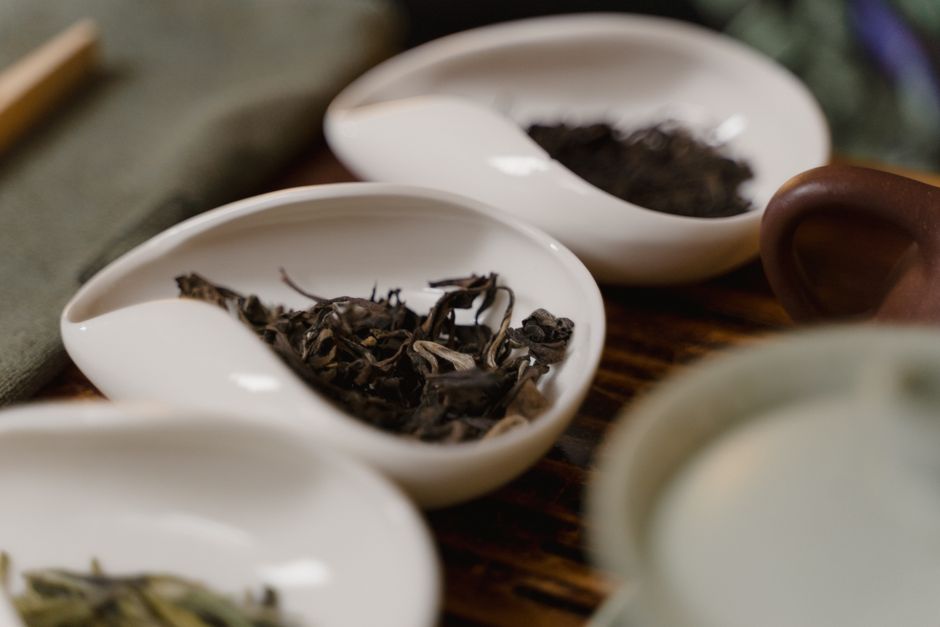
Oolong tea is not black tea. Both come from the same plant, Camellia sinensis, but they are processed differently, and that difference changes the color, the taste, and the chemistry of the leaves. Oolong sits somewhere between green and black tea. It is partially oxidized, while black tea is fully oxidized and green tea is barely oxidized at all.
That single variable — oxidation — explains almost everything people notice about oolong. The flavor, the aroma, the color of the brew, and even how much caffeine ends up in your cup all trace back to how long the leaves were allowed to react with oxygen before they were heated and dried.
What Makes Oolong Tea Different From Black Tea?
Oxidation is the defining step. After tea leaves are picked, enzymes inside them react with oxygen in the air, turning the leaves darker and shifting their flavor compounds. Tea makers control this process by timing how long the leaves sit before they are fired or steamed to stop the reaction.
Green tea is heated almost immediately, so oxidation barely begins. Black tea is allowed to oxidize fully, which is why the leaves turn dark and the brew comes out deep red-brown. Oolong is stopped somewhere in the middle. The result is a leaf that is partly green and partly dark, often rolled or twisted into distinctive shapes.
Because oolong covers such a wide middle ground, the category itself is broad. A lightly oxidized oolong can look and taste closer to a green tea. A heavily oxidized oolong can resemble black tea. That range is why oolong sometimes gets mistaken for black tea — and why the confusion is understandable.
The role of roasting
Many oolongs are also roasted after oxidation. Roasting adds toast, caramel, or nutty notes and further darkens the leaf. This is a separate step from oxidation, but it can make an oolong look even more like a black tea. Two oolongs processed the same way but roasted differently will taste noticeably different.
How Is Oolong Tea Processed?
Traditional oolong production involves several steps: withering, bruising or tossing, partial oxidation, firing, rolling, and often roasting. The bruising step matters more than most people realize. Leaves are shaken or tumbled in baskets, which bruises the edges and speeds up oxidation along the leaf margins.
This is why high-quality oolong leaves often show a “red border” — a rim of oxidized tissue around a greener center. That visual detail is a direct record of the partial oxidation process.
After oxidation is stopped, leaves are shaped. Some are rolled into tight balls, some twisted into long strips. The shaping affects how the tea brews and how many times the leaves can be steeped. Rolled oolongs tend to unfurl slowly, which is one reason they are often brewed multiple times.
Is Oolong Tea Black Tea — Or Something in Between?
Oolong is its own category, not a type of black tea. The three main tea types — green, oolong, and black — are distinguished by oxidation level. Green is unoxidized, oolong is partially oxidized, and black is fully oxidized.
The confusion likely comes from color. Some oolongs brew a dark amber or reddish cup that looks similar to black tea. But appearance in the cup is not the same as processing method, and processing is what defines the category.
| Tea Type | Oxidation Level | Typical Brew Color | Flavor Profile |
|---|---|---|---|
| Green | Minimal (near 0%) | Pale green to yellow | Grassy, vegetal, fresh |
| Oolong | Partial (roughly 10–70%) | Golden to amber | Floral, fruity, toasty, varies widely |
| Black | Full (near 100%) | Dark red-brown | Malty, bold, brisk |
The oxidation ranges above are general descriptions used in tea production, not fixed regulatory standards. Individual oolongs can fall outside these rough bands depending on the maker and the style.





Does Oolong Tea Have More Caffeine Than Black Tea?
Caffeine in tea depends on several factors, not just tea type. The leaf itself, how it was grown, the part of the plant used, how much tea you use, water temperature, and steeping time all matter. Because of that, oolong and black tea overlap considerably in caffeine content.
As a general point, fully oxidized teas are sometimes described as having slightly more caffeine than lightly oxidized ones, but the difference is not reliable enough to plan around. If caffeine intake matters to you — for sleep, anxiety, or a heart condition — the more useful variables are how strong you brew it and how much you drink.
For reference, brewed black tea commonly contains roughly 30–50 mg of caffeine per 8-ounce cup, and oolong falls in a similar range. Green tea is often a bit lower. These figures vary by brand and brewing method, so treat them as approximate.
What About the Health Effects?
All true teas — green, oolong, and black — contain polyphenols, a broad group of plant compounds that includes flavonoids. Oolong contains these compounds too, and its partial oxidation gives it a polyphenol profile that sits between green and black tea.
Where the evidence gets thinner is in claims about specific health outcomes. Some studies suggest tea polyphenols may have effects on cholesterol, blood sugar, or weight, but results across studies have been mixed, and the effects in human trials have generally been modest. No clinical evidence currently confirms that oolong tea treats or prevents any specific disease.
One point worth separating out: oolong is not a weight-loss product. Marketing around “oolong tea for fat burning” often leans on small studies or animal research. Larger, well-controlled human trials showing meaningful and lasting weight loss from oolong tea are lacking. Anyone presenting it as a proven fat burner is going beyond what the research supports.
What can be said with more confidence is that unsweetened tea is a reasonable alternative to sugary drinks. That benefit comes from what you are replacing, not from a special property of oolong.
How Does Oolong Tea Taste?
Oolong has the widest flavor range of any tea category. Lightly oxidized oolongs tend to be floral and creamy, sometimes with notes of orchid or gardenia. More oxidized oolongs lean toward honey, ripe fruit, or roasted nuts.
Roasted oolongs can carry toast, cocoa, or caramel notes. The same tea plant, grown in a different region or processed by a different maker, can produce something that tastes like an entirely different drink.
This range is why oolong is often recommended to people who think they do not like tea. There is a good chance one style will suit a given palate, even if another does not.
How Should You Brew Oolong Tea?
Oolong is usually brewed with water that is hotter than what you would use for green tea but not quite boiling for delicate styles. A common approach is water around 185–205°F, though traditional gongfu brewing often uses near-boiling water for heavily oxidized and roasted oolongs.
Leaf quantity matters more than most brewing guides admit. Oolong leaves are often large and unfurled, so a teaspoon of dry leaf may weigh much less than a teaspoon of broken black tea. Using too little leaf is a common reason oolong tastes weak.
Many oolongs can be steeped multiple times. Rolled oolongs in particular open gradually, releasing different flavors with each infusion. This is normal and expected, not a sign the tea is spent.
Is Oolong Tea the Same as Black Tea With Milk?
No. Adding milk does not turn oolong into black tea, and the two are not interchangeable in that way. Milk can be added to either, but it changes the flavor and can mask the delicate notes in lighter oolongs.
Some heavily roasted oolongs hold up well to milk, which is another reason they get confused with black tea. But the underlying tea is still oolong, defined by its partial oxidation, not by what you add to the cup.
Which Tea Should You Choose?
The choice comes down to flavor preference and caffeine tolerance, not to one tea being clearly better for you. Green, oolong, and black tea all come from the same plant and all contain polyphenols. The differences are in processing, taste, and how you brew them.
If you like a bolder, maltier cup, black tea may suit you. If you want something between green and black in character, oolong is worth trying. If you prefer lighter, grassier notes, green tea is the usual pick.
One practical note: the biggest health difference between teas is usually what you add to them. Sweetened bottled teas and tea drinks with added sugar or cream are a different product from plain brewed tea, regardless of which leaf they started with.
Frequently Asked Questions
Is oolong tea black tea?
No, oolong tea is not black tea. They come from the same plant but oolong is only partially oxidized, while black tea is fully oxidized.
Is oolong tea green or black?
Oolong is neither — it is its own category that sits between green and black tea. Its partial oxidation gives it characteristics of both, but it is classified separately.
Does oolong tea have caffeine?
Yes, oolong tea contains caffeine, typically in a range similar to black tea. The exact amount depends on the leaf, how much you use, and how long you steep it.
What does oolong tea taste like?
Oolong’s flavor varies widely, from floral and creamy to toasty and fruity, depending on how it was oxidized and roasted. This range is why oolongs can taste almost like different drinks from one another.
