
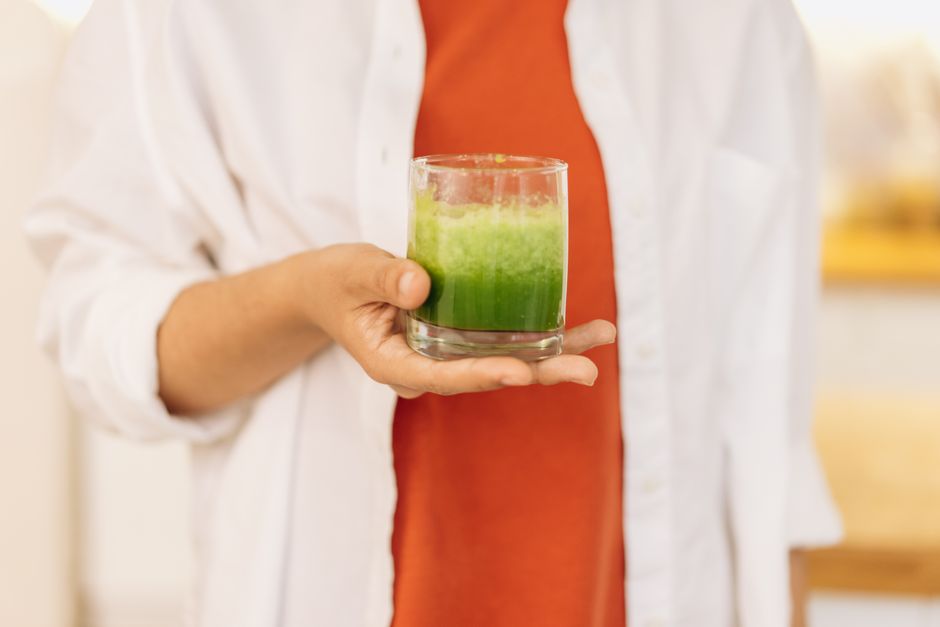
You do not need protein powder to make a high-protein smoothie. Cottage cheese, Greek yogurt, milk, tofu, nut butters, seeds, and even beans can add 15 to 30 grams of protein per serving. These whole food sources also bring fiber, healthy fats, and vitamins that powders often lack. The trick is knowing which ingredients work best and how to combine them without ruining the taste or texture.
What Are the Best Whole Food Protein Sources for Smoothies?
Greek yogurt is one of the easiest swaps. A half cup of plain nonfat Greek yogurt has about 12 grams of protein. It makes smoothies creamy and thick without adding much flavor. Cottage cheese is similar. A half cup gives you roughly 11 grams of protein. Blend it well and you will not taste the texture at all. Many people describe the result as similar to a milkshake.
Milk is another simple base. One cup of cow’s milk has 8 grams of protein. Soy milk is the only plant milk that matches that at 7 to 8 grams per cup. Almond milk has only 1 gram. Oat milk has 2 to 3 grams. If you avoid dairy, use soy milk as your liquid base.
Tofu is surprisingly effective. Silken tofu blends into a completely smooth texture. A quarter block (about 85 grams) provides 8 to 10 grams of protein. It has almost no taste, so it works with fruit or chocolate flavors. Firm tofu works too but creates a slightly grainier texture. Blend it longer if you use firm.
How Much Protein Can You Get From Seeds and Nut Butters?
Hemp seeds are the top choice among seeds. Three tablespoons provide 10 grams of protein. They also have omega-3 fatty acids and a mild nutty flavor. You will not notice them in the smoothie. Chia seeds offer 4 grams per two tablespoons but thicken the liquid significantly. Soak them first or your smoothie turns into pudding.
Peanut butter and almond butter add roughly 7 to 8 grams of protein per two tablespoons. They also add flavor and healthy fats. The calories add up quickly, so measure instead of eyeballing. One serving is fine. Three servings turn a snack into a meal replacement with 500 calories.
Pumpkin seeds are underused. A quarter cup provides about 9 grams of protein. They have a mild taste that pairs well with banana and cinnamon. Sunflower seeds work similarly. Grind them first if your blender is not high-powered.
Can You Really Put Beans in a Smoothie?
Yes, and you likely will not taste them. White beans and chickpeas are the best options. A half cup of canned white beans has about 8 grams of protein. They add creaminess without a strong flavor. The texture is similar to using banana as a thickener.
Chickpeas work the same way. Rinse them well to remove the canning liquid. One study published in the Journal of Food Science found that adding chickpeas to fruit smoothies did not change the taste perception for most people. The fiber content also increases, which helps with fullness and blood sugar control.
Black beans have a stronger flavor. They work in chocolate smoothies but not fruit-based ones. The color also turns the smoothie gray-brown. If that does not bother you, black beans add about 7 grams of protein per half cup.
Do not use raw beans. Use canned or fully cooked beans only. Raw beans contain lectins that can cause digestive upset.





What About Eggs and Other Unusual Additions?
Pasteurized liquid egg whites are safe to add raw. A quarter cup provides about 7 grams of protein. They have no flavor and blend completely. Do not use raw whole eggs. The yolk changes the taste and the risk of salmonella, while low, is not zero. The CDC advises against consuming raw eggs, especially for pregnant people and those with weakened immune systems.
Powdered milk is another option. Two tablespoons of nonfat dry milk powder add about 6 grams of protein. It mixes easily and does not change the flavor. It is not the same as protein powder. It is just dehydrated milk with the water removed.
Collagen peptides are technically a protein powder, but they are not the same as whey or plant protein powders. Collagen is a specific type of protein that supports skin and joint health. It dissolves completely in cold liquids. One scoop provides 10 to 12 grams of protein. However, collagen is not a complete protein. It lacks the amino acid tryptophan. Do not rely on it as your only protein source.
How To Combine Ingredients for Maximum Protein
The best strategy uses multiple sources. A single ingredient rarely provides enough protein on its own. Here is a sample combination that reaches 30 grams of protein:
- 1 cup soy milk (8g protein)
- 1/2 cup Greek yogurt (12g protein)
- 2 tablespoons hemp seeds (7g protein)
- 1 cup frozen berries (1g protein)
- 1 banana (1g protein)
Total: 29 grams of protein. No powder needed. The berries and banana mask any taste from the yogurt or seeds.
If you prefer a lower calorie option, use water as the base and increase the yogurt or cottage cheese. A half cup of cottage cheese plus two tablespoons of hemp seeds and a half cup of soy milk gives 24 grams of protein for about 200 calories.
The table below compares common whole food protein sources for smoothies. Use it to build your own combinations.
| Ingredient | Amount | Protein (grams) | Calories |
|---|---|---|---|
| Nonfat Greek yogurt | 1/2 cup | 12 | 65 |
| Cottage cheese (1%) | 1/2 cup | 11 | 80 |
| Hemp seeds | 3 tbsp | 10 | 165 |
| Silken tofu | 1/4 block | 9 | 70 |
| Pumpkin seeds | 1/4 cup | 9 | 180 |
| Soy milk | 1 cup | 8 | 80 |
| Cow’s milk | 1 cup | 8 | 120 |
| Peanut butter | 2 tbsp | 7 | 190 |
| White beans | 1/2 cup | 8 | 120 |
| Liquid egg whites | 1/4 cup | 7 | 25 |
What Are Common Mistakes When Adding Protein Without Powder?
Using too much liquid is the most frequent mistake. A thin smoothie cannot hold solid ingredients suspended. The protein sources sink to the bottom. Use less liquid than you think you need. You can always add more. Start with half a cup of liquid and add from there.
Not blending long enough is another issue. Silken tofu and cottage cheese need a full 60 seconds in a high-speed blender. Seeds need even longer. Stop too early and you get chunks. Blend until completely smooth, then blend for 15 more seconds.
Adding too many high-calorie ingredients without tracking can turn a healthy smoothie into a 600-calorie drink. Peanut butter, seeds, and full-fat yogurt add up fast. Measure everything at least once. After that you will know what a proper serving looks like.
Some people report that beans cause bloating. This is real. Beans contain fiber and certain carbohydrates that ferment in the gut. Start with a small amount, like two tablespoons, and increase gradually. Your digestive system adapts over a week or two.
Do not assume that more protein is always better. The body can only use about 20 to 30 grams of protein per meal for muscle synthesis, according to research published in the Journal of the International Society of Sports Nutrition. Extra protein is either excreted or stored as fat. A smoothie with 40 grams of protein is not twice as good as one with 20 grams.
Frequently Asked Questions
Can I use oatmeal to add protein to smoothies?
Oatmeal adds fiber and texture but only about 5 grams of protein per half cup. It is better for thickness than for protein.
How do I make a smoothie creamy without yogurt or banana?
Use silken tofu or half an avocado. Both blend completely smooth and add creaminess without strong flavors.
Is it safe to put raw eggs in a smoothie?
Only use pasteurized liquid egg whites. Raw whole eggs carry a small risk of salmonella that is not worth taking.
Will chia seeds add enough protein to my smoothie?
Chia seeds add about 4 grams per two tablespoons. They thicken the smoothie significantly so use them in combination with other protein sources.
