
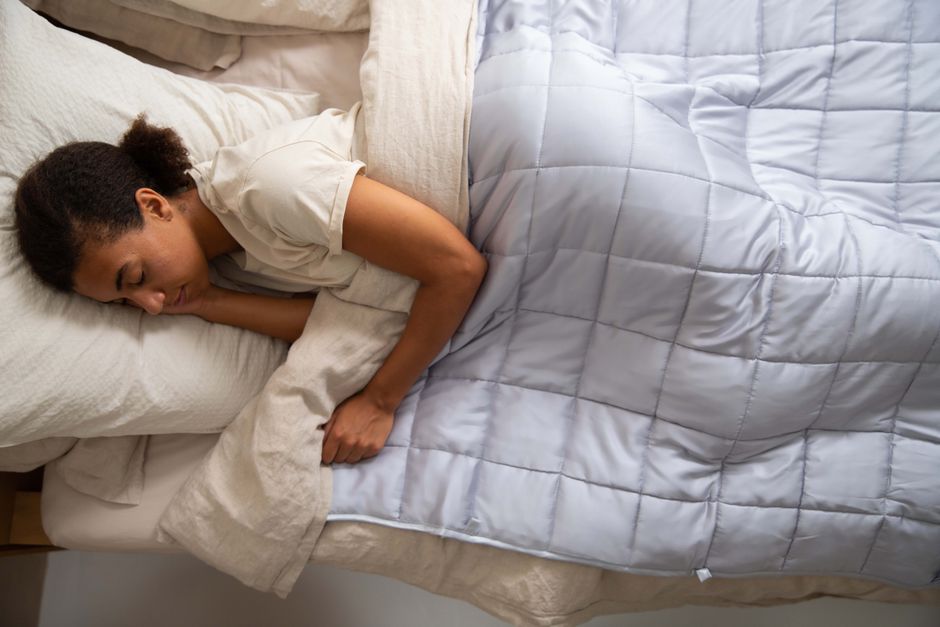
Deep sleep is the stage where your body repairs tissue, consolidates memory, and clears metabolic waste from the brain. You cannot force it directly, but you can create the conditions that make it more likely. The most reliable habits are consistent sleep and wake times, a cool dark bedroom, limited caffeine after midday, morning light exposure, and a wind-down period that lowers mental arousal before bed.
What Actually Happens During Deep Sleep?
Deep sleep is the third stage of non-REM sleep, often called slow-wave sleep. During this stage, your brain produces large, slow electrical waves. Heart rate and breathing slow. Blood pressure drops. Growth hormone is released, which supports tissue repair and muscle recovery.
This stage tends to cluster in the first half of the night. If you go to bed late or your sleep is fragmented, you lose deep sleep disproportionately because your body has less time to cycle through it.
One detail that surprises many people: sleep is not one uniform state. It moves in cycles of roughly 90 minutes, and each cycle contains lighter stages, deep sleep, and REM. Deep sleep is concentrated early. REM is concentrated later. This is why both going to bed on time and sleeping long enough matter.
The brain also uses deep sleep to flush out waste products through what researchers call the glymphatic system. This clearance appears to happen more efficiently during sleep than during wakefulness. The exact mechanics are still being studied, but the association between poor sleep and long-term cognitive decline is well documented.
How To Achieve Deep Sleep With Simple Habits?
The habits that support deep sleep are not complicated. They work by removing friction — things that keep your nervous system activated or disrupt your circadian rhythm.
Keep a fixed wake time. This is the single most effective habit. Your circadian rhythm, the internal clock that governs sleep timing, is set primarily by when you wake up and get light. Sleeping in on weekends by more than an hour can shift your rhythm and make Sunday night harder.
Get morning light. Natural light within the first hour of waking signals your brain to stop producing melatonin, the hormone that promotes sleep. It also helps set the timing of melatonin release the following evening. Ten to thirty minutes of outdoor light is generally enough on a clear day. Overcast conditions require more time.
Keep the bedroom cool. Core body temperature needs to drop for sleep to begin. A room around 65 to 68 degrees Fahrenheit supports this for most adults. The exact ideal varies by person, but a warm room works against the physiology of sleep onset.
Limit caffeine after early afternoon. Caffeine has a half-life of roughly five to six hours in most adults, meaning half of it is still circulating hours after your last cup. It blocks adenosine, a molecule that builds up during the day and creates sleep pressure. Even if you fall asleep, caffeine can reduce the amount of deep sleep you get.
Reduce alcohol. Alcohol is a sedative, so it can make you fall asleep faster. But it disrupts sleep architecture in the second half of the night. It tends to suppress REM sleep and increase awakenings. Many people who drink in the evening report sleeping through the night but waking unrefreshed.
Build a wind-down period. The transition from active to sleepy is not instant. Thirty to sixty minutes of lower stimulation — dim lights, no intense work, no stressful conversations — helps your nervous system shift gears.
Does Your Bedroom Environment Change Sleep Quality?
The bedroom environment affects sleep more than most people realize, and the changes are usually simple.
- Light: Even small amounts of light can suppress melatonin. Blackout curtains or a sleep mask help if your room is not fully dark.
- Noise: Sudden sounds fragment sleep even when you do not fully wake. Steady background noise, like a fan or white noise machine, can mask disruptive sounds.
- Temperature: A cool room supports the drop in core body temperature that precedes sleep.
- Bed comfort: A mattress or pillow that causes discomfort leads to position changes and micro-arousals you may not remember.
None of these are dramatic interventions. They remove small disruptions that add up over a night.





Why Does Screen Time Before Bed Matter?
Blue light from screens can suppress melatonin, but the effect size in most studies is modest compared to the effect of mental stimulation. The bigger issue is often what you are doing on the screen — scrolling news, answering messages, or watching something emotionally activating.
Some research suggests that the content and cognitive engagement matter more than the light itself. A calming video may affect sleep differently than a stressful email thread. The practical takeaway: reduce both brightness and mental activation in the hour before bed.
If you use your phone as an alarm, switching to a dedicated alarm clock removes the temptation entirely.
Can Food and Drink Habits Affect Deep Sleep?
What you eat and drink in the hours before bed can influence sleep quality, though the effects vary by person.
Large meals close to bedtime can cause discomfort and reflux when lying down, which fragments sleep. Eating two to three hours before bed is generally easier on digestion.
Alcohol is the most common self-prescribed sleep aid and one of the most disruptive to sleep architecture. It reduces deep sleep and REM sleep in the second half of the night.
Caffeine is covered above, but it is worth noting that it hides in tea, chocolate, some sodas, and certain pain medications. Reading labels helps if you are sensitive.
Heavy or spicy meals affect some people more than others. If you notice reflux or discomfort at night, adjusting dinner timing or content is worth trying.
There is no single food that reliably increases deep sleep. Claims about specific foods or supplements promoting deep sleep are mostly not supported by large human trials.
What About Exercise and Stress?
Regular physical activity is one of the most consistent predictors of better sleep quality. People who exercise regularly tend to fall asleep faster and report deeper sleep. The effect is not immediate for everyone — some people find vigorous exercise within a few hours of bed too activating. Morning or afternoon exercise tends to be easiest for sleep.
Stress is the most common reason people struggle to fall asleep and stay asleep. An activated nervous system works against the physiological changes needed for deep sleep. Habits that reduce baseline stress — even simple ones like a consistent wind-down routine, journaling, or breathing exercises — can make a difference over time.
If racing thoughts at bedtime are a recurring problem, writing them down before bed can help. The goal is to move them out of your head so your brain is not trying to hold onto them while you sleep.
When Should You Talk to a Doctor About Sleep?
Occasional poor sleep is normal. Persistent problems are not something to push through indefinitely.
Talk to a healthcare provider if you snore heavily, wake gasping, feel excessively sleepy during the day despite adequate time in bed, or have been struggling with sleep for more than a few weeks. These can point to conditions like sleep apnea, which is common and treatable but rarely resolves on its own.
Some clinicians recommend cognitive behavioral therapy for insomnia, known as CBT-I, as a first-line approach for chronic insomnia. It is more effective than sleep medication for long-term improvement in many cases. If your sleep problems are ongoing, this is worth asking about.
Supplements marketed for sleep, including melatonin and magnesium, have varying levels of evidence. Melatonin has some support for jet lag and shift work. Its effect on general insomnia is modest. Magnesium deficiency can affect sleep, but supplementing when you are not deficient has not been shown to reliably improve sleep in large trials.
Frequently Asked Questions
How many hours of deep sleep do you need?
Most adults get about 13 to 23 percent of total sleep time in deep sleep, which works out to roughly one to two hours per night for someone sleeping seven to nine hours. The exact amount varies by age, with deep sleep declining naturally as you get older.
What is the fastest way to increase deep sleep?
A consistent wake time combined with morning light exposure is the most reliable starting point because both directly influence your circadian rhythm. Adding a cool, dark bedroom and cutting caffeine after early afternoon supports the same goal.
Does melatonin increase deep sleep?
Melatonin primarily helps with sleep timing, not sleep depth. It can help you fall asleep earlier when your rhythm is shifted, but evidence that it increases deep sleep specifically is limited.
Can you catch up on lost deep sleep?
Some recovery is possible, but deep sleep lost from chronic short sleep is not fully recovered by sleeping in on weekends. Consistent sleep duration night to night is more effective than trying to make up for it later.
