
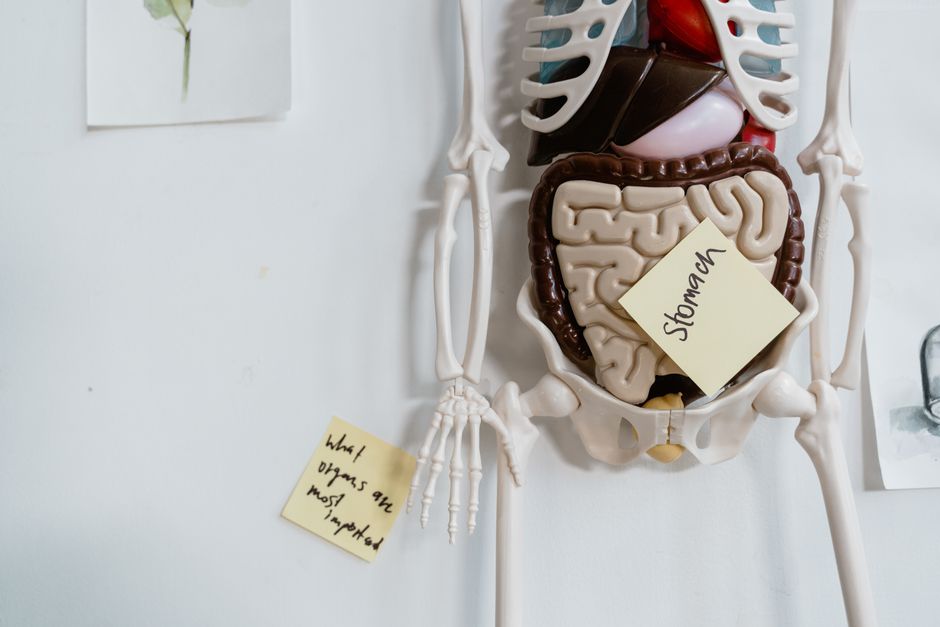
The digestive system turns the food you eat into the fuel your body needs to survive. It is a long, coordinated process that starts in your mouth and ends at the toilet. Each organ has a specific job, and when they work together, your body absorbs nutrients and removes waste. Here is how the digestive system works step by step, from the first bite to the final exit.
What Happens in the Mouth and Esophagus?
Digestion begins the moment food enters your mouth. Your teeth break food into smaller pieces, which increases the surface area for enzymes to work on. Your salivary glands release saliva, which contains an enzyme called amylase. Amylase starts breaking down carbohydrates into simpler sugars right there in your mouth.
Your tongue shapes the chewed food into a soft ball called a bolus. When you swallow, the bolus moves into your esophagus, the muscular tube connecting your throat to your stomach. The esophagus does not rely on gravity to move food. Muscles in its walls contract in wave-like motions called peristalsis, pushing the bolus downward. At the bottom of the esophagus, a ring of muscle called the lower esophageal sphincter opens to let food into the stomach, then closes to prevent stomach acid from flowing back up.
What Does the Stomach Do to Food?
The stomach is a muscular sac that acts as a mixing chamber and a holding tank. It receives the bolus and churns it with powerful contractions. These contractions physically break food into even smaller particles.
Your stomach lining secretes gastric juice, which is a mixture of hydrochloric acid and an enzyme called pepsin. The acid creates an environment that kills many bacteria you swallow and helps denature proteins, unfolding their complex structures. Pepsin then begins the chemical breakdown of proteins into smaller chains called peptides. The stomach also absorbs small amounts of water, alcohol, and some medications directly into the bloodstream.
After about two to four hours, the stomach has turned the food into a thick liquid called chyme. It releases chyme slowly into the small intestine through the pyloric sphincter. This slow release ensures the small intestine is not overwhelmed.
How the Small Intestine Absorbs Nutrients
The small intestine is where most digestion and almost all nutrient absorption occurs. It is roughly 20 feet long and has three sections: the duodenum, the jejunum, and the ileum. Despite its name, it is “small” only in diameter, not length.
The duodenum is the first section and receives chyme from the stomach. It also receives digestive juices from the pancreas and bile from the liver and gallbladder. The pancreas releases enzymes that break down carbohydrates, proteins, and fats. Bile, produced by the liver and stored in the gallbladder, acts like a detergent. It breaks large fat globules into smaller droplets so pancreatic enzymes can digest them more efficiently.
The inner lining of the small intestine is not smooth. It is covered with millions of tiny finger-like projections called villi. Each villus is covered with even smaller microvilli, forming a brush border. This structure massively increases the surface area available for absorption. Nutrients pass through the villi into your bloodstream or into your lymphatic system. Carbohydrates are absorbed as simple sugars, proteins as amino acids, and fats as fatty acids and glycerol. Vitamins, minerals, and water are also absorbed here.




What Role Does the Large Intestine Play?
By the time food reaches the large intestine, most nutrients have been absorbed. What remains is mostly water, indigestible fiber, and dead cells shed from the intestinal lining. The large intestine, also called the colon, is about five feet long.
The colon’s main job is to absorb water and electrolytes from the remaining liquid chyme. This process slowly turns the liquid into semi-solid stool. The colon also houses trillions of bacteria, collectively called the gut microbiota. These bacteria ferment undigested fiber, producing short-chain fatty acids that feed the cells of the colon and provide some energy. They also produce gases like hydrogen, methane, and carbon dioxide, which you release as flatulence.
The colon moves the stool toward the rectum through slow, segmental contractions. This process can take anywhere from 12 to 48 hours, depending on the person and their diet.
How Does the Body Eliminate Waste?
The rectum is the final storage chamber for stool. When stool stretches the rectal walls, nerve signals trigger the urge to defecate. Two sphincter muscles control the exit: an internal one you do not control voluntarily and an external one you do.
During a bowel movement, the muscles of the rectum contract and the sphincters relax. The abdominal muscles also help by increasing pressure. The final product, stool, is about 75 percent water. The rest is fiber, bacteria, dead cells, and waste products like bilirubin, which gives stool its brown color.
The entire journey from mouth to toilet typically takes about 24 to 72 hours. This is called the transit time. Faster transit times can result in diarrhea because the colon does not have enough time to absorb water. Slower transit times can lead to constipation because too much water is absorbed, making the stool hard and difficult to pass.
How The Digestive System Works Step By Step: The Liver and Pancreas
Two organs outside the digestive tract are essential to digestion: the liver and the pancreas. They are not part of the food pathway, but they produce chemicals that make digestion possible.
The liver is the body’s chemical factory. It produces bile, which is stored in the gallbladder and released into the duodenum when fat is present. The liver also processes nutrients absorbed from the small intestine. It stores glucose as glycogen, metabolizes proteins, and detoxifies drugs and alcohol before they reach the rest of your body.
The pancreas produces pancreatic juice, a cocktail of enzymes and bicarbonate. The bicarbonate neutralizes the acidic chyme coming from the stomach, protecting the small intestine lining. The enzymes include lipase for fats, amylase for carbohydrates, and trypsin and chymotrypsin for proteins. Without these pancreatic enzymes, your body could not break down or absorb most of the food you eat.
What Can Disrupt Normal Digestion?
Several common conditions can interfere with the digestive process. Gastroesophageal reflux disease, or GERD, occurs when the lower esophageal sphincter weakens and stomach acid flows back into the esophagus. Irritable bowel syndrome, or IBS, affects the motility of the colon and can cause abdominal pain, bloating, diarrhea, and constipation. The exact cause of IBS is not fully understood, and the evidence for specific dietary triggers varies from person to person.
Celiac disease is an autoimmune condition where eating gluten damages the villi of the small intestine. This damage reduces the surface area for absorption and can lead to nutrient deficiencies. Gallstones can block the bile duct, preventing bile from reaching the small intestine, which makes digesting fats difficult.
If you experience persistent changes in bowel habits, unexplained weight loss, blood in your stool, or severe abdominal pain, you should see a doctor. These symptoms can indicate conditions that require medical evaluation.
How to Support Healthy Digestion
You cannot control every step of your digestion, but you can support the process. Eating a diet rich in fiber helps keep the colon working regularly. Soluble fiber, found in oats, beans, and fruits, absorbs water and helps soften stool. Insoluble fiber, found in whole grains and vegetables, adds bulk and speeds up transit time.
Drinking enough water is critical. The colon needs water to form soft stool, and dehydration is a common cause of constipation. Regular physical activity also stimulates intestinal contractions and helps maintain healthy transit time. Chewing food thoroughly and eating slowly gives your mouth and stomach more time to do their jobs effectively.
Probiotics, which are live beneficial bacteria, are often marketed for digestive health. Some research suggests they may help with specific conditions like antibiotic-associated diarrhea, but the evidence for general use in healthy people is mixed. No single probiotic strain has been proven to reliably improve digestion in everyone.
Frequently Asked Questions
How long does food take to digest?
Total transit time from mouth to toilet is typically 24 to 72 hours. The stomach takes about two to four hours to empty, and the colon can hold waste for one to two days.
Where does most nutrient absorption happen?
Most nutrient absorption happens in the small intestine. Its villi and microvilli create a massive surface area that allows sugars, amino acids, fatty acids, vitamins, and minerals to enter the bloodstream.
What is the function of bile in digestion?
Bile breaks large fat globules into smaller droplets, a process called emulsification. This allows pancreatic enzymes to digest fats more efficiently in the small intestine.
Why does the large intestine absorb water?
The large intestine absorbs water and electrolytes from the remaining liquid chyme. This reclamation process turns the liquid into semi-solid stool and prevents the body from losing too much water.
