
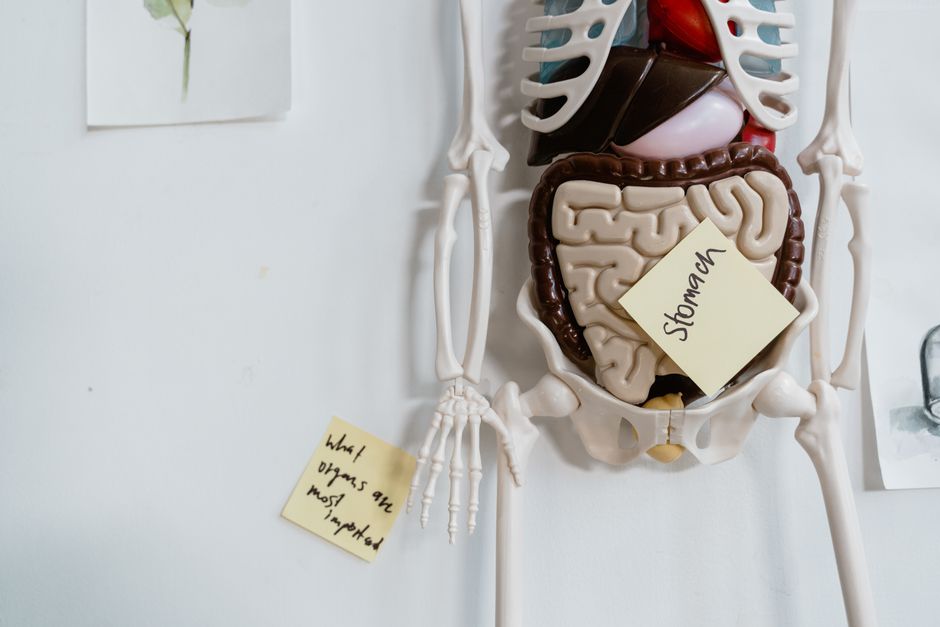
The digestive system is your body’s food-processing plant. It breaks down the food you eat into tiny nutrients your body can absorb and use for energy, growth, and cell repair. This process turns a sandwich into fuel for your brain, muscles, and organs. It also eliminates the waste your body cannot use. It is a long, coordinated pipeline that runs from your mouth to your rectum, and every stop along the way has a specific job.
How Does the Digestive System Actually Work?
Digestion starts before you take your first bite. The sight or smell of food triggers your salivary glands to produce saliva. This moisture softens food and contains an enzyme called amylase that begins breaking down carbohydrates right in your mouth.
Once you swallow, food travels down the esophagus. This muscular tube pushes food toward your stomach using wave-like movements called peristalsis. These contractions are the engine of your entire digestive tract. They move food through your system from start to finish.
In the stomach, food meets a powerful mix of gastric acid and enzymes. This acidic environment kills many harmful bacteria and begins breaking down proteins. The stomach churns everything into a semi-liquid mixture called chyme. This mixture then moves slowly into the small intestine, where the most important work happens.
What Does the Small Intestine Do?
The small intestine is where nearly all nutrient absorption takes place. Despite its name, it is actually the longest part of the digestive tract — roughly 20 feet long in adults. It has three sections: the duodenum, the jejunum, and the ileum.
The duodenum receives digestive juices from the pancreas and bile from the liver and gallbladder. These fluids neutralize stomach acid and break down fats, proteins, and carbohydrates into their smallest building blocks. Fats become fatty acids. Proteins become amino acids. Carbohydrates become simple sugars.
The inner lining of the small intestine is covered with tiny finger-like projections called villi. These increase the surface area for absorption dramatically. Nutrients pass through the villi into your bloodstream and lymphatic system. From there, they travel to the liver, which processes and distributes them to the rest of your body.
Most people absorb the majority of their nutrients in the first half of the small intestine. The lower portion handles what remains, particularly vitamin B12 and bile salts.
What Role Does the Large Intestine Play?
By the time food reaches the large intestine, most nutrients have been extracted. The large intestine, also called the colon, is about five feet long. Its main job is to absorb water and electrolytes from the remaining liquid waste.
The colon is home to trillions of bacteria. This gut microbiota ferments undigested fiber and produces certain vitamins, including vitamin K and some B vitamins. These bacteria also play a role in immune function and protecting the gut lining from harmful pathogens.
As water is absorbed, the remaining material becomes more solid. This stool is stored in the rectum until it is expelled through the anus. The entire journey from mouth to exit typically takes anywhere from 24 to 72 hours, though this varies from person to person.





Which Organs Help Digestion But Are Not Part of the Tract?
Several organs support digestion without food ever passing through them. These are called accessory organs. The liver, gallbladder, and pancreas each play a critical role.
The liver produces bile, a greenish fluid that breaks down fats into smaller droplets. Bile is stored and concentrated in the gallbladder, then released into the small intestine when you eat. The liver also processes all the nutrients absorbed from your gut. It stores glucose, vitamins, and iron, and it detoxifies harmful substances.
The pancreas produces digestive enzymes that break down proteins, fats, and carbohydrates. It also releases bicarbonate, which neutralizes stomach acid as chyme enters the small intestine. Without pancreatic enzymes, your body cannot properly digest food.
What Can Go Wrong With the Digestive System?
Digestive problems are common. Acid reflux occurs when stomach acid backs up into the esophagus. Irritable bowel syndrome, or IBS, causes cramping, bloating, and changes in bowel habits. Celiac disease is an immune reaction to gluten that damages the small intestine lining.
More serious conditions include inflammatory bowel disease, which includes Crohn’s disease and ulcerative colitis. These involve chronic inflammation of the digestive tract. Gallstones can block bile flow and cause intense pain. Pancreatitis is inflammation of the pancreas that can be life-threatening.
Symptoms like persistent abdominal pain, unexplained weight loss, blood in the stool, or difficulty swallowing warrant medical evaluation. These can signal conditions that need treatment rather than lifestyle adjustment alone.
Some digestive conditions have clear diagnostic criteria. For example, celiac disease is confirmed through blood tests for specific antibodies followed by an intestinal biopsy. IBS is diagnosed based on symptom patterns after other conditions are ruled out. If you have concerns, a healthcare provider can determine which tests are appropriate.
How Can You Support a Healthy Digestive System?
Diet is the most direct influence on digestive health. Fiber is essential. It adds bulk to stool and feeds beneficial gut bacteria. Good sources include vegetables, fruits, whole grains, beans, and nuts. Most adults should aim for roughly 25 to 38 grams of fiber per day, though many people fall short of this range.
Water is equally important. Fiber without adequate fluid can worsen constipation. Hydration keeps stool soft and moving through the colon smoothly.
Regular physical activity stimulates intestinal contractions. Even a daily walk can help maintain regular bowel movements. Managing stress also matters. The gut and brain are connected through the vagus nerve, and stress can alter digestion, increase sensitivity, and trigger symptoms like cramping.
Probiotics are live bacteria found in fermented foods like yogurt, kefir, sauerkraut, and kimchi. Some research suggests they may help with certain digestive conditions, but the evidence is mixed. No specific probiotic strain has been proven to treat digestive disease. If you enjoy these foods, they can be part of a healthy diet, but they are not a medical treatment.
What Are Common Digestive Myths?
One widespread myth is that detox cleanses or colon cleanses remove toxins and improve health. No clinical evidence confirms that these products provide any benefit. Your liver and kidneys perform detoxification naturally. Colon cleansing can actually cause dehydration, electrolyte imbalances, and bowel perforation in severe cases.
Another myth is that spicy food causes stomach ulcers. Research has shown that most ulcers are caused by the bacterium H. pylori or by nonsteroidal anti-inflammatory drugs like ibuprofen. Spicy food may aggravate existing symptoms, but it does not cause ulcers.
A third misconception is that eating late at night causes weight gain because your metabolism slows. Your body digests food at roughly the same rate regardless of the clock. Late-night eating is more strongly linked to weight gain because people tend to choose higher-calorie foods and eat larger portions at night.
When Should You See a Doctor?
Occasional bloating, gas, or heartburn is normal. Persistent changes are not. See a doctor if you experience any of the following:
- Unexplained weight loss
- Blood in your stool or black, tarry stool
- Severe or worsening abdominal pain
- Difficulty swallowing or pain with swallowing
- Persistent vomiting or vomiting blood
- Changes in bowel habits lasting more than a few weeks
These symptoms can indicate conditions that require medical treatment. Early evaluation improves outcomes for many digestive diseases. Do not delay care if you are concerned.
Frequently Asked Questions
How long does food take to digest?
Digestion typically takes 24 to 72 hours from the moment you eat to the time waste leaves your body.
What is the main function of the digestive system?
The main function is to break down food into nutrients your body can absorb and use for energy, growth, and repair.
Can stress affect your digestion?
Yes, stress can alter gut movement, increase sensitivity to pain, and trigger symptoms like cramping, bloating, and changes in bowel habits.
Is fiber good for constipation?
Fiber adds bulk to stool and helps it move through the colon, but it must be paired with adequate water to be effective.
