
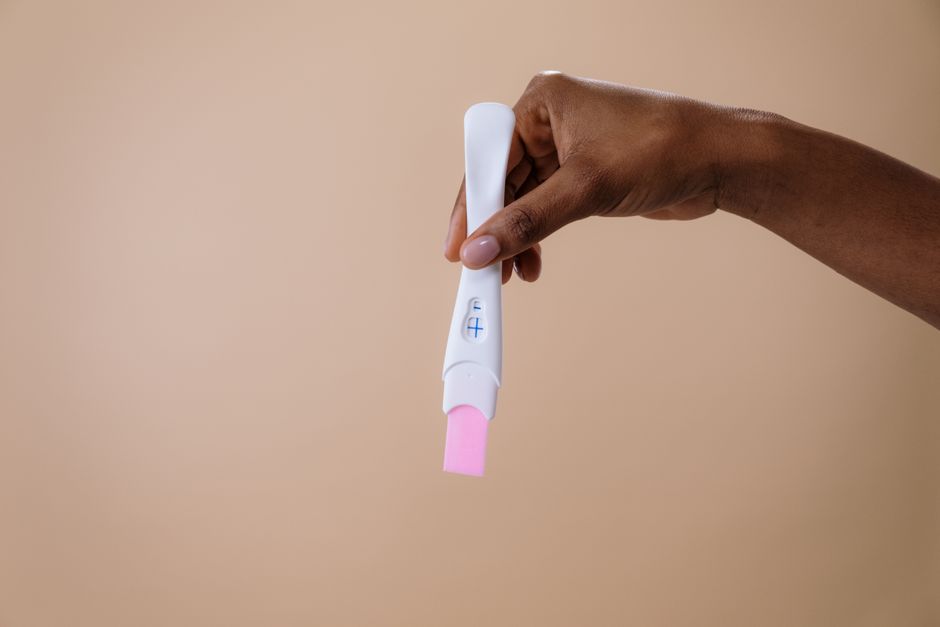
If you have had unprotected sex and are wondering whether you could be pregnant, the earliest a home urine test can reliably detect pregnancy is about the first day of a missed period — roughly two weeks after ovulation. Some highly sensitive tests claim accuracy a few days before that, but testing early raises the odds of a false negative. The single most reliable approach is to wait until your period is late, then test first thing in the morning.
How Soon Can You Test for Pregnancy?
The short answer is that timing depends on what the test is measuring and how much of that substance is present in your body.
Home pregnancy tests detect a hormone called human chorionic gonadotropin (hCG). This hormone is produced by the developing placenta after a fertilized egg implants in the uterine lining. Implantation typically occurs about 6 to 12 days after ovulation, though the range can vary. Before implantation happens, there is no hCG for a test to detect — no matter how sensitive the test claims to be.
Once implantation occurs, hCG levels begin to rise. The hormone roughly doubles every 48 to 72 hours in early pregnancy. This means that a test taken too soon may miss a pregnancy simply because hCG has not yet reached the level the test can detect.
Most home urine tests are designed to detect hCG at a concentration of around 20 to 25 milli-international units per milliliter (mIU/mL). Some tests advertise sensitivity as low as 10 mIU/mL. But even a sensitive test cannot detect a hormone that has not been produced yet.
When Is the Best Time to Take a Pregnancy Test?
The best time to take a home pregnancy test is the first day of a missed period. If your cycles are regular, that is usually about 14 days after ovulation.
For the most accurate result, test with your first urine of the morning. Overnight, urine becomes more concentrated, which means hCG levels — if present — will be at their highest detectable concentration. Drinking a lot of water before testing can dilute urine and potentially lower hCG concentration below the test’s detection threshold.
If you get a negative result but still believe you could be pregnant, wait a few days and test again. hCG levels rise quickly in early pregnancy, so a test that was negative at day 10 after ovulation may be positive by day 14 or 15.
If your cycles are irregular, predicting the best testing day is harder. Ovulation may happen later than you expect, which pushes back the earliest possible implantation and hCG production. In that case, waiting at least 14 days after suspected ovulation — or testing when your period is late by your own normal pattern — gives you a better chance of an accurate result.
How Do Home Pregnancy Tests Work?
Home pregnancy tests work by using antibodies that bind to hCG in your urine. When hCG is present at or above the test’s sensitivity threshold, a chemical reaction produces a visible line, a plus sign, or a digital “Pregnant” reading.
There are two main types of home tests:
- Strip and cassette tests — you dip the test into urine or hold it in your stream, and results appear as lines. These are typically the least expensive option.
- Digital tests — these use the same underlying antibody technology but display results electronically as words rather than lines. Some digital tests also estimate how many weeks since conception, though that estimate is based on hCG concentration and is not precise.
All urine tests — regardless of brand or price — rely on the same basic principle. A more expensive test is not necessarily more accurate. What matters most is the test’s sensitivity threshold and whether enough time has passed since ovulation for hCG to reach that threshold.
One point that is often misunderstood: a positive result on a home test is highly reliable. False positives are uncommon. Most reported false positives turn out to be very early pregnancies that were lost — sometimes called chemical pregnancies — rather than tests malfunctioning. A negative result, on the other hand, is much more likely to be wrong if you test too early.



Can You Test Before Your Missed Period?
Some tests are marketed for testing up to five or six days before a missed period. The evidence behind those claims is more limited than the marketing suggests.
These early-detection tests typically have a lower sensitivity threshold — around 10 mIU/mL rather than 20 to 25 mIU/mL. But even at that lower threshold, the timing problem remains. If implantation has not happened yet, or happened only a day or two ago, hCG may not have reached 10 mIU/mL.
Research on early pregnancy test accuracy has found that the proportion of pregnant women who get a positive result increases steadily with each day past ovulation. Testing several days before a missed period means a meaningful chance of a false negative — even with a sensitive test.
If you choose to test early, understand that a negative result does not rule out pregnancy. It may simply mean you tested before hCG reached a detectable level. Retesting after your missed period is the only way to get a reliable answer.
What About Blood Tests for Pregnancy?
Blood tests can detect pregnancy earlier than urine tests. A quantitative blood test — which measures the exact amount of hCG in your blood — can detect pregnancy as early as 6 to 8 days after ovulation, though it is more commonly performed around 10 days after ovulation.
Blood tests are typically ordered by a healthcare provider when there is a medical reason: confirming a suspected early pregnancy, monitoring hCG levels over time, or evaluating symptoms that could indicate an ectopic pregnancy or miscarriage.
There are two types of blood tests:
- Qualitative hCG blood test — gives a yes-or-no answer about whether hCG is present.
- Quantitative hCG blood test — measures the exact level of hCG. This is sometimes called a beta hCG test.
Blood tests are not typically used as a first step for routine pregnancy confirmation. They are more invasive and more expensive than urine tests. But when a provider needs to know hCG levels precisely — for example, to track whether a pregnancy is progressing normally — a blood test provides information that a urine test cannot.
What Can Cause a False Negative or False Positive?
A false negative — a negative result when you are actually pregnant — is most often caused by testing too early. Other possible causes include diluted urine from drinking too much fluid before testing, using an expired test, or not following the test instructions correctly.
Certain medications can interfere with pregnancy test results, though this is uncommon. Fertility medications that contain hCG — such as those used during IVF or ovulation induction — can cause a false positive if taken too soon after the injection. Most other medications, including birth control pills and antibiotics, do not affect hCG-based pregnancy tests.
A false positive can also occur in rare cases due to certain medical conditions, such as some types of tumors that produce hCG. This is uncommon and would typically be evaluated by a healthcare provider.
If you get a positive result on a home test, contact a healthcare provider. They can confirm the pregnancy and discuss next steps. If you get a negative result but your period remains late, retest in a few days or contact a provider for guidance.
Does Test Timing Differ for Irregular Cycles or Fertility Treatment?
Yes. If your cycles are irregular, the standard “first day of missed period” rule is harder to apply because you may not know when you ovulated.
For people undergoing fertility treatment — such as intrauterine insemination (IUI) or in vitro fertilization (IVF) — the timing of testing is usually specified by the clinic. This is because hCG injections used during treatment can interfere with test results, and because the exact timing of embryo transfer or insemination is known.
If you are tracking ovulation through basal body temperature, cervical mucus changes, or ovulation predictor kits, you have a better sense of when you ovulated. That information can help you estimate when to test. If you ovulated later than usual, your test date should shift accordingly.
When in doubt, waiting longer is almost always the safer choice. A test taken a few days after your missed period will give you a clearer answer than one taken before it.
Frequently Asked Questions
How soon after unprotected sex can I take a pregnancy test?
A home urine test can detect pregnancy about two weeks after ovulation, which is roughly the first day of a missed period. Testing earlier than that increases the chance of a false negative because hCG may not have reached detectable levels yet.
Can I test positive before my missed period?
Some sensitive tests can detect pregnancy a few days before a missed period, but the earlier you test, the higher the chance of a false negative. If you test early and get a negative result, retest after your period is late.
Is a positive home pregnancy test always accurate?
A positive result on a home pregnancy test is highly reliable. False positives are uncommon and are usually related to fertility medications containing hCG or, rarely, certain medical conditions.
What should I do if I get a negative result but still think I am pregnant?
Wait a few days and test again with your first morning urine. If your period is still late and tests remain negative, contact a healthcare provider for further evaluation.
