
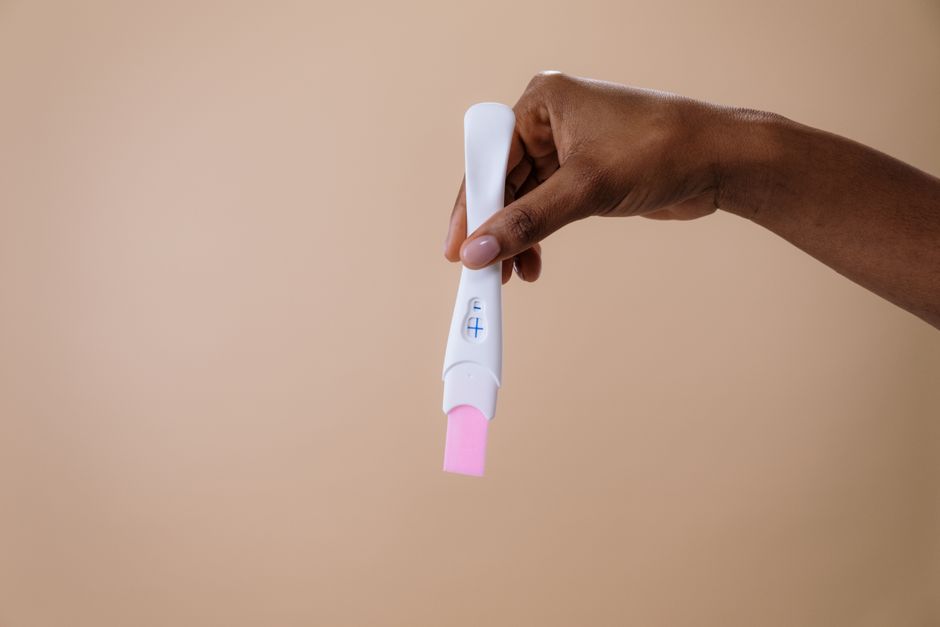
Waiting to find out if you are pregnant can feel like the longest part of the process. Most home pregnancy tests can give you an accurate result on the first day of your missed period. Some early detection tests claim to work up to six days before your missed period, but the accuracy is lower that early. For the most reliable result, wait until the day after your missed period.
How Soon Can You Take a Home Pregnancy Test?
The answer depends on what kind of test you buy and when you ovulated. Most standard home pregnancy tests are designed to work from the first day of your missed period. That is roughly 14 days after ovulation for a typical 28-day cycle.
Early detection tests are different. They can detect lower levels of hCG, the pregnancy hormone. Some brands claim to work as early as six days before your missed period. But there is a big catch. Only about half of pregnant women will get a positive result that early. The other half will get a false negative.
Research published in the American Journal of Obstetrics and Gynecology found that testing four days before a missed period catches only about half of pregnancies. Testing on the day of the missed period catches more than 90 percent. Waiting one more day pushes accuracy above 97 percent.
What Affects How Soon You Can Do A Pregnancy Test Timing Accuracy?
Several factors determine how soon a test will show a positive result. The most important one is when implantation happens. After a fertilized egg attaches to the uterus, hCG starts doubling every 48 to 72 hours. That timing varies between women.
Implantation usually happens 6 to 12 days after ovulation. If it happens on the early side, your test will turn positive sooner. If it happens late, you might test negative even if you are pregnant. That is not a problem with the test. It is just biology.
The sensitivity of the test also matters. Tests are labeled in milli-international units per milliliter (mIU/mL). A test that detects 10 mIU/mL is more sensitive than one that detects 25 mIU/mL. More sensitive tests can catch lower hCG levels earlier. But even the most sensitive test cannot work before implantation happens.
Your cycle length matters too. If your cycle is irregular, you might not know when your period is actually due. That makes timing harder. Women with cycles longer than 35 days may need to wait longer before testing.
How Do Early Detection Tests Compare to Standard Tests?
Not all pregnancy tests are the same. The table below shows how different types compare in timing and accuracy.
| Test Type | Earliest Use | Accuracy at Earliest Use | Accuracy at Missed Period |
|---|---|---|---|
| Standard test | First day of missed period | 90-97% | 99% |
| Early detection test | 6 days before missed period | 50-60% | 99% |
| Digital test | First day of missed period | 90-97% | 99% |
| Early digital test | 5 days before missed period | 50-65% | 99% |
Notice the pattern. The earlier you test, the more likely you are to get a false negative. By the day of your missed period, all tests are about equally accurate. The extra cost of early detection tests does not buy you much if you can wait a few days.




What Does the Evidence Say About Testing Too Early?
Testing too early is the most common reason for a false negative. A study in the Journal of Clinical Endocrinology and Metabolism tracked hCG levels in women trying to conceive. The researchers found that only 10 percent of women had detectable hCG by 8 days after ovulation. By 12 days after ovulation, that number jumped to 90 percent.
The CDC reports that home pregnancy tests are about 99 percent accurate when used correctly. But “used correctly” includes testing at the right time. If you test too early, the test is working fine. Your body just has not produced enough hCG yet.
Another factor is how concentrated your urine is. First morning urine has the highest hCG concentration. Testing later in the day after drinking fluids can dilute the sample. Some early detection tests claim to work at any time of day. But for the best shot at an early positive, use first morning urine.
Some people report getting a faint positive line that disappears or gets lighter over time. This can happen with very early testing. It is usually not a chemical pregnancy, as some internet sources claim. More often, it is just a very low hCG level that varies with hydration.
How Soon Can You Do A Pregnancy Test Timing Accuracy After a Missed Period?
If you have missed your period entirely, you can test right away with high confidence. The first day after a missed period is the sweet spot. At this point, hCG levels are usually high enough for any test to detect them. The accuracy is above 99 percent for most brands.
Waiting one week after your missed period gives you the most definitive result. By that time, hCG levels are typically in the hundreds or thousands. False negatives are extremely rare at this point. The only exceptions are very rare medical conditions that prevent hCG production.
If you get a negative result but still have not gotten your period, wait three days and test again. This is the standard advice from the American College of Obstetricians and Gynecologists. A second test a few days later rules out the possibility that you tested too early the first time.
Some women get irregular periods for reasons unrelated to pregnancy. Stress, illness, travel, and hormonal conditions can delay ovulation. If your period is consistently irregular, track your ovulation with an app or ovulation test kit. That gives you a better idea of when to test.
What Are the Common Mistakes People Make With Early Testing?
- Testing before implantation has had a chance to happen. Even the most sensitive test cannot work before the embryo attaches to the uterus.
- Using a test that has expired or been stored in heat or humidity. Expired tests can give false results.
- Reading the result outside the time window. Reading too early or too late can show a false positive or false negative.
- Assuming a faint line means a chemical pregnancy. A faint line is usually a real positive with low hCG levels.
- Testing with diluted urine later in the day. First morning urine is always the most concentrated.
- Not waiting long enough after a miscarriage or recent birth. hCG can remain detectable for weeks after pregnancy loss.
These mistakes are easy to avoid. Read the instructions carefully. Use first morning urine. Wait until the day after your missed period. If the result is negative and your period does not come, test again in a few days.
When Should You See a Doctor After a Positive Test?
If you get a positive result at home, call your doctor or midwife. They will usually schedule an appointment for a few weeks later. There is no need to rush to the emergency room for a positive pregnancy test.
Some clinics offer blood tests that can detect pregnancy earlier than urine tests. Blood tests can measure hCG as low as 1 to 2 mIU/mL. But they are not usually needed. A home urine test on the day of your missed period is reliable enough for most women.
See a doctor sooner if you have heavy bleeding, severe pain on one side, or a history of ectopic pregnancy. These symptoms need medical attention regardless of when you tested. Otherwise, wait for your scheduled prenatal appointment.
Frequently Asked Questions
Can a pregnancy test be negative at 5 weeks but positive later?
Yes, this is possible if you ovulated later than you thought. A negative at what you think is 5 weeks could actually be 3 or 4 weeks.
How long after implantation can I test positive?
Most women get a positive result 3 to 5 days after implantation. By 7 days after implantation, nearly all pregnancies show a positive.
Does a faint line mean I am pregnant?
A faint line usually means you are pregnant with low hCG levels. Most tests show a clear positive within a few days as levels rise.
Can taking the test at night give a false negative?
Yes, testing later in the day with diluted urine can cause a false negative. First morning urine is the most reliable for early testing.
