
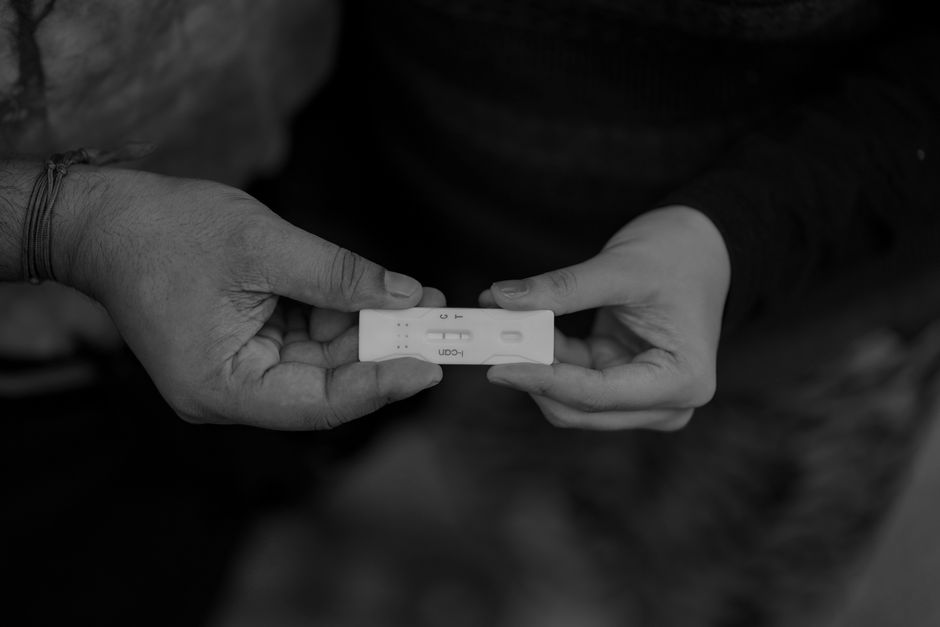
If you had unprotected sex and are wondering when to test with Clearblue, the answer depends on the type of test and when you ovulated. Clearblue Early Detection tests can detect pregnancy up to 6 days before your missed period, which is about 5 days before you expect your period. For the most reliable result, wait until the day of your missed period. Testing too early raises the chance of a false negative, so timing matters more than many people realize.
How Soon After Unprotected Sex Can I Use a Clearblue Test?
You cannot get a positive result immediately after sex. It takes time for the body to produce enough of the pregnancy hormone hCG (human chorionic gonadotropin) for a test to detect. After unprotected sex, sperm can fertilize an egg within minutes, but implantation of that fertilized egg into the uterus does not happen for 6 to 12 days. hCG only starts rising after implantation. Clearblue tests work by detecting hCG in urine. The earliest you might get a positive result is about 10 days after unprotected sex, but that is rare. Most women who are pregnant will not test positive until around day 14. The American College of Obstetricians and Gynecologists states that home pregnancy tests are most accurate when used after a missed period. Testing before that point increases the risk of a false negative, even with sensitive Clearblue tests.
Does How Soon After Unprotected Can I Test With Clearblue Depend on the Test Type?
Yes, it does. Clearblue sells several types of pregnancy tests, and they have different sensitivity levels. The Clearblue Early Detection test can detect hCG levels as low as 10 mIU/mL. That is the most sensitive option they offer. Some studies suggest that tests with a 10 mIU/mL threshold can detect about 76% of pregnancies 6 days before a missed period. But that still means nearly one in four pregnancies will be missed at that point. The Clearblue Digital test with a week indicator has a sensitivity around 25 mIU/mL. That test is designed for use on or after the day of your missed period. Using it earlier than that significantly lowers accuracy. The standard Clearblue Digital test without a week indicator has similar sensitivity. Always check the package label for the specific sensitivity. The more sensitive the test, the earlier it can potentially detect pregnancy, but no test is 100% accurate before a missed period.
What Factors Affect How Early You Can Get an Accurate Result?
Several variables determine when a Clearblue test will show a positive result. The most important is the timing of ovulation. If you ovulated late in your cycle, then your missed period date is later than you think. Testing on the calendar day you expect your period might be too early. Your cycle length matters too. A woman with a 35-day cycle ovulates later than a woman with a 28-day cycle. The standard advice of “test after your missed period” assumes a 28-day cycle with ovulation on day 14. That is not true for everyone. Another factor is the concentration of your urine. First morning urine has the highest hCG concentration because you have not been drinking fluids overnight. Testing later in the day with diluted urine can lower sensitivity. Implantation timing also varies. A study published in the New England Journal of Medicine found that implantation happened between day 6 and day 12 after ovulation. Later implantation means later hCG rise. Some women simply produce less hCG early in pregnancy. That is normal, but it means they test positive later than others.
| Days Before Missed Period | Clearblue Early Detection Accuracy | Clearblue Digital Accuracy |
|---|---|---|
| 6 days before | About 76% of pregnancies detected | Not recommended |
| 4 days before | About 85% of pregnancies detected | Not recommended |
| 2 days before | About 95% of pregnancies detected | About 90% of pregnancies detected |
| Day of missed period | Over 99% accurate | Over 99% accurate |




What Does Research on Early Testing Show?
Research published in the journal Human Reproduction looked at how early home pregnancy tests can detect pregnancy. The study tracked women who were trying to conceive and tested daily. Results showed that only 10% of pregnant women had a positive test by 8 days after ovulation. By 10 days after ovulation, about 50% tested positive. By 12 days, about 80% tested positive. By 14 days, nearly all pregnant women tested positive. This means that testing at 10 days after unprotected sex catches only half of pregnancies at best. The CDC reports that about 85% of women will get a positive home pregnancy test by the time their period is one week late. For Clearblue specifically, the manufacturer states that the Early Detection test is 76% accurate when used 6 days before a missed period. That number jumps to over 99% on the day of the missed period. The data is clear: waiting gives you a more reliable result. There is no evidence that any home pregnancy test, including Clearblue, can reliably detect pregnancy before 8 days after ovulation.
What Should You Do If You Get a Negative Result?
A negative result on Clearblue does not mean you are not pregnant. It means the test did not detect hCG at that moment. If you tested before your missed period, a negative result is common even if you are pregnant. The best next step is to wait three to five days and test again with first morning urine. If your period still has not arrived after a week, test again. If you continue to get negative results and your period has not started for over a week, see a healthcare provider. They can do a blood test, which is more sensitive than any urine test. Blood tests can detect hCG levels as low as 1 to 2 mIU/mL. Some women have irregular cycles, and a late period does not always mean pregnancy. Stress, illness, weight changes, and hormonal conditions can all delay ovulation and your period. If you have symptoms like nausea, breast tenderness, or fatigue but a negative test, those symptoms could be from progesterone rise after ovulation, not pregnancy. Progesterone causes similar symptoms in both pregnant and non-pregnant women.
Common Misconceptions About Testing Early
One common myth is that if you test negative, you are definitely not pregnant. That is false. As explained, testing too early misses many pregnancies. Another myth is that a faint line on a Clearblue test means a chemical pregnancy or miscarriage. A faint line usually means low hCG levels, which is normal early on. It does not predict the outcome of the pregnancy. Some people believe that Clearblue digital tests are more sensitive than line tests. They are not. Digital tests use the same technology but display a word instead of a line. The sensitivity is the same or lower. Another misconception is that drinking a lot of water before testing helps. It does the opposite. Diluted urine lowers hCG concentration and can cause false negatives. Some women think that if they have pregnancy symptoms, a negative test is wrong. Symptoms alone are not reliable. Only a positive test or blood work confirms pregnancy. There is also a belief that Clearblue tests can detect pregnancy immediately after sex. That is biologically impossible. hCG does not exist until after implantation, which takes at least 6 days.
Frequently Asked Questions
Can Clearblue detect pregnancy 5 days after unprotected sex?
No. Implantation has not happened yet at 5 days after sex. hCG is not present in your body at detectable levels that early.
What is the earliest day I can use Clearblue Early Detection?
You can use it up to 6 days before your missed period, but accuracy is only about 76% at that point. Waiting until your missed period gives over 99% accuracy.
Does a negative Clearblue test mean I am not pregnant?
Not necessarily. If you tested before your missed period, a negative result could mean your hCG levels are still too low to detect. Test again in a few days.
Should I use first morning urine with Clearblue?
Yes. First morning urine has the highest concentration of hCG. Testing later in the day with diluted urine can increase the chance of a false negative.
