

You miss a period. You buy a test. Then you wait. The answer to how long to wait for a pregnancy test is simple: for the most accurate result, wait until the first day of your missed period. For earlier testing, wait at least 12 to 14 days after ovulation. Testing before that raises your chances of a false negative — a test that says not pregnant when you actually are. The timing matters because of how the pregnancy hormone hCG builds up in your body.
When Is the Earliest I Can Take a Pregnancy Test?
Some pregnancy tests claim they can detect pregnancy up to six days before your missed period. That is technically true for some people. But it comes with a big catch.
These “early detection” tests work by measuring hCG, the hormone your body makes after a fertilized egg implants in your uterus. Implantation usually happens 6 to 12 days after ovulation. Only after implantation does hCG start rising. If you test before implantation happens, you get a negative result even if you are pregnant.
Research published in the journal Human Reproduction found that only about 10 percent of women had detectable hCG by the time they were 6 days before their expected period. By the day of the missed period, about 90 percent had detectable levels. That means testing early gives you a real chance of a false negative.
If you are testing early, use a test labeled “early result” or “6 days sooner.” These tests have a lower hCG threshold — usually around 10 mIU/mL instead of the standard 25 mIU/mL. Even then, follow the instructions exactly. Do not test with dilute urine. First morning urine is best because it has the highest concentration of hCG.
How Long To Wait For Pregnancy Test After Sex?
This is the most common question people ask. The answer depends on when you ovulated, not when you had sex.
Sperm can live inside your body for up to five days. If you had sex on Monday and ovulated on Thursday, fertilization could happen on Thursday. Implantation takes another 6 to 12 days after that. So counting from the day you had sex gives you a wide window that is not very useful.
A better approach: track your ovulation. If you know when you ovulated, add 12 to 14 days. That is the earliest reliable testing day. If you do not track ovulation, wait until your period is late. That is the simplest and most accurate rule.
Some people report getting positive results as early as 10 days after sex. That is possible if they ovulated within a day or two of having sex. But it is not typical. Do not assume a negative test at 10 days means you are not pregnant.
How Long To Wait For Pregnancy Test After Missed Period?
The day after your missed period is the gold standard. By this point, nearly all pregnancies have enough hCG to show up on a standard test.
The American College of Obstetricians and Gynecologists states that home pregnancy tests are about 99 percent accurate when used on the first day of a missed period. That is the highest accuracy you can get outside a doctor’s office.
If you test on the day of your missed period and get a negative result, wait three more days and test again. Some women have irregular cycles and may have ovulated later than they thought. A second test a few days later catches those cases.
Blood tests at a doctor’s office can detect pregnancy earlier — about 7 to 12 days after conception. But they are not needed for most people. Home tests are reliable enough when used correctly.
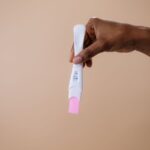

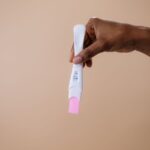


What Affects Pregnancy Test Accuracy?
Several factors can make a test less accurate. Knowing them helps you avoid a wrong result.
| Factor | How It Affects Accuracy | What To Do |
|---|---|---|
| Testing too early | hCG levels too low to detect | Wait until missed period |
| Dilute urine | Lowers hCG concentration | Use first morning urine |
| Expired test | Chemicals break down over time | Check expiration date |
| Not following instructions | Wrong wait time or reading window | Read the package insert |
| Certain medications | Fertility drugs with hCG can cause false positives | Check with your doctor |
| Ectopic pregnancy | hCG rises more slowly | See a doctor if symptoms occur |
One factor people overlook: drinking too much water before testing. It dilutes your urine and can lower hCG below the test’s detection threshold. First morning urine avoids this problem entirely.
Another factor: reading the test too late. Most tests tell you to read the result within 3 to 10 minutes. After that, evaporation lines can appear and look like a faint positive. Always read within the time window stated on the package.
What Does a Faint Line Mean?
A faint line on a pregnancy test usually means you are pregnant. It does not mean “kind of pregnant” or “almost pregnant.”
Pregnancy tests work by detecting hCG. Any visible line — even a faint one — means hCG is present. The darkness of the line depends on how much hCG is in your urine. Early in pregnancy, levels are low, so the line is faint. As pregnancy progresses, the line gets darker.
There is one exception: some tests have an “evaporation line” that appears after the test dries. This line is usually colorless or grayish, while a true positive line has color — often pink or blue. If you see a faint line within the reading window, it is likely real. If you see it hours later, it is probably an evaporation line.
If you get a faint positive, wait two days and test again. A true pregnancy will show a darker line as hCG doubles every 48 to 72 hours in early pregnancy. If the line does not get darker or disappears, it could be a chemical pregnancy — an early miscarriage that happens before the fifth week. This is common and usually does not require medical treatment.
Can You Trust Digital Pregnancy Tests More?
Digital pregnancy tests are not more accurate than line tests. They are just easier to read.
Digital tests use the same technology as line tests. They detect hCG at the same threshold — usually 25 mIU/mL. The difference is that a digital test displays the words “Pregnant” or “Not Pregnant” instead of showing lines. This removes the guesswork of interpreting a faint line.
A study published in Obstetrics & Gynecology compared digital and line tests and found no difference in accuracy when used correctly. Both types are reliable. The choice comes down to preference.
One downside of digital tests: they cost more. Some digital tests also have a shorter reading window. If you do not read the result in time, the screen may go blank or show an error. Line tests give you more time to check the result.
For early testing, line tests may be better because they show a faint positive that a digital test might miss. Digital tests need a higher hCG level to display “Pregnant.” If you are testing before your missed period, consider using a line test first.
Common Misconceptions About Pregnancy Test Timing
There is a lot of bad information online about pregnancy tests. Here are three myths that keep coming up.
Myth: You can test the day after sex. This is false. Implantation has not happened yet. No hCG means no positive result. Testing this early guarantees a negative result even if you are pregnant. Do not waste a test.
Myth: A negative test means you are definitely not pregnant. Only if you tested after your missed period and followed the instructions. If you tested early, a negative result could be wrong. Wait a few days and test again if your period does not come.
Myth: All pregnancy tests are the same. They are not. Tests differ in their hCG detection threshold. Early detection tests can pick up lower levels of hCG. Generic store brands often have the same threshold as name brands but cost less. Check the package for the hCG sensitivity level — lower numbers mean earlier detection.
Another misconception: that drinking water will help you get a positive result faster. It does the opposite. Water dilutes your urine and lowers hCG concentration. Do not chug water before testing. Use concentrated urine for the best result.
How Long To Wait For Pregnancy Test If You Have Irregular Cycles
Irregular cycles make timing tricky. If you do not know when your period is due, you cannot wait for a missed period. The standard advice does not apply as neatly.
For women with irregular cycles, the best approach is to track ovulation. Use ovulation predictor kits, track cervical mucus, or monitor basal body temperature. Once you confirm ovulation, add 14 days. That is the earliest reliable testing day.
If you do not track ovulation, wait at least 21 days after your last unprotected sex before testing. This covers the maximum time from sex to implantation to detectable hCG. It is a longer wait, but it reduces false negatives.
If you get a negative test and still have not gotten your period, wait one week and test again. Some women with irregular cycles ovulate very late in their cycle, which pushes back the timing of a positive test. Do not assume you are not pregnant just because one test was negative.
Frequently Asked Questions
How many days after ovulation can I take a pregnancy test?
Wait at least 12 to 14 days after ovulation for the most accurate result. Testing earlier increases your chance of a false negative.
Can a pregnancy test be positive at 10 days past ovulation?
Yes, some tests can detect pregnancy at 10 days past ovulation, but it is not guaranteed. Most women will not get a positive result until 12 to 14 days past ovulation.
Is first morning urine necessary for a pregnancy test?
It is best because it has the highest concentration of hCG. If you test later in the day, hold your urine for at least four hours without drinking much water.
How long after implantation can I test positive?
Most tests can detect hCG within 1 to 2 days after implantation. By the day of your missed period, hCG levels are usually high enough for any standard test.
