
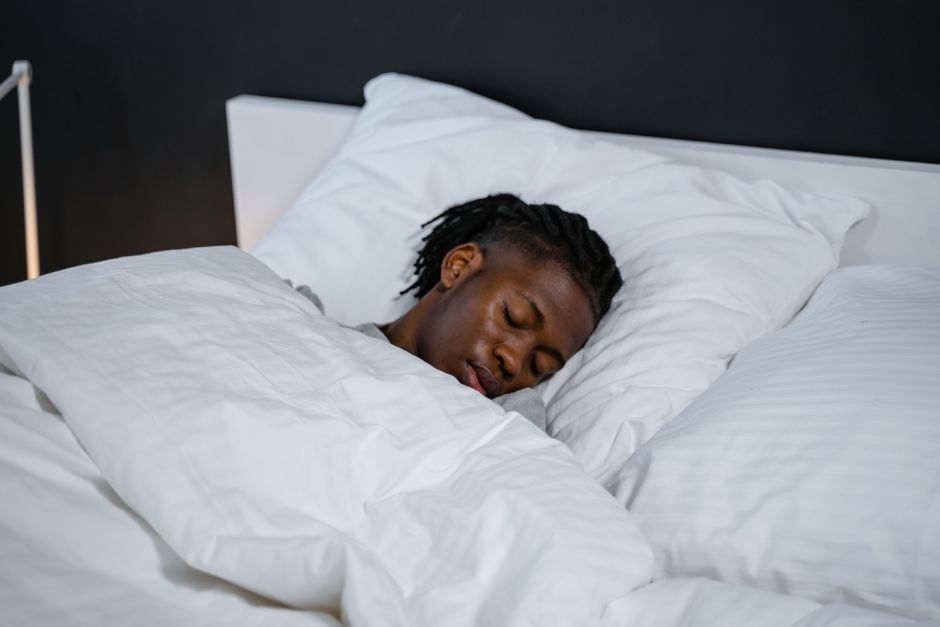
Getting good sleep often comes down to two things: how you position your body and the habits you build around bedtime. For most adults, sleeping on your back or side with proper support is the best choice. Back sleeping keeps your spine in a neutral line, while side sleeping can ease snoring and acid reflux. But the real foundation of good sleep is consistency — going to bed and waking up at the same time every day, keeping your room cool and dark, and giving yourself enough hours in bed to actually rest.
What Is the Best Sleeping Position for Most People?
Side sleeping is the most common position among adults, and for good reason. It helps keep your airway open, which can reduce snoring and may ease mild sleep apnea. It also takes pressure off your lower back compared to sleeping flat on your stomach.
Back sleeping is the second-best option for many people. When you lie on your back with a supportive pillow under your head and possibly one under your knees, your spine stays in a more neutral position. This can reduce morning stiffness and neck pain.
Stomach sleeping is the weakest choice for most adults. It forces your neck to rotate to one side for hours, which strains the cervical spine. It also flattens the natural curve of your lower back. If you are a dedicated stomach sleeper, placing a thin pillow under your pelvis can reduce some of that strain.
How Should I Sleep Best Positions And Habits for Neck and Back Pain?
If you wake up with neck pain, your pillow height is often the culprit. Side sleepers need a thicker pillow to fill the space between their ear and shoulder. Back sleepers need a thinner pillow so their head is not pushed forward at an angle.
For lower back pain, the goal is to maintain the natural S-curve of your spine. Side sleepers can place a firm pillow between their knees. This keeps the top leg from pulling the pelvis out of alignment. Back sleepers can place a pillow under their knees to reduce pressure on the lumbar spine.
Memory foam and latex pillows conform to your head and neck better than traditional feather pillows, which tend to flatten overnight. Replace pillows every 18 to 24 months — a flattened pillow cannot support your cervical spine properly.
Does Sleeping Position Affect Snoring or Sleep Apnea?
Yes. Sleeping on your back makes snoring worse for most people. In this position, gravity pulls the soft palate and tongue backward, narrowing the airway. Side sleeping keeps the airway more open and is the standard recommendation for people who snore regularly.
For people with obstructive sleep apnea, the evidence is clear that back sleeping increases the number of breathing pauses per hour. Some studies suggest that side sleeping can reduce the apnea-hypopnea index by about half in people with mild to moderate sleep apnea. However, side sleeping is not a treatment for sleep apnea. Continuous positive airway pressure (CPAP) therapy remains the first-line treatment for moderate to severe cases.
If you snore loudly every night and feel exhausted during the day despite getting enough hours in bed, talk to a doctor about a sleep study. Snoring alone is common, but loud snoring with daytime sleepiness warrants a medical evaluation.





What Is the Best Position for Acid Reflux at Night?
Sleeping on your left side is the best position for nighttime acid reflux. The stomach sits on the left side of the abdomen. When you lie on your left, the junction between your stomach and esophagus stays above the level of stomach acid, making it harder for acid to flow backward.
Research on this is consistent. Studies have measured acid exposure in the esophagus during sleep and found significantly less reflux when participants lay on their left side compared to their right side or back. Right-side sleeping actually worsens reflux because it relaxes the lower esophageal sphincter and positions the stomach opening unfavorably.
Elevating the head of your bed by 6 to 8 inches also helps. Use blocks under the bed frame legs rather than stacking pillows. Stacked pillows bend your neck and can increase pressure on your throat, which may make reflux worse rather than better.
What About Sleeping During Pregnancy?
Side sleeping, particularly on the left side, is the recommended position during the second and third trimesters of pregnancy. This position improves blood flow to the uterus and kidneys by keeping the heavy uterus off the inferior vena cava, the large vein that returns blood to the heart.
Back sleeping in late pregnancy can compress this vein and reduce cardiac output, which may cause dizziness or reduced blood flow to the fetus. The risk is not severe for short periods, and most women naturally shift positions during the night. But making side sleeping your default position is a reasonable and widely recommended choice.
Using a full-body pregnancy pillow can help. It supports the belly and keeps your top leg elevated, which reduces strain on the lower back and hips.
What Daily Habits Improve Sleep Quality?
Sleep habits — often called sleep hygiene — matter as much as position. The most powerful habit is a fixed wake time. Waking up at the same time every day, including weekends, anchors your circadian rhythm. This makes falling asleep at night easier and more predictable.
Light exposure is the second major lever. Your brain uses light to set its internal clock. Bright light in the morning tells your body it is daytime. Dim light in the evening tells your body melatonin production can begin. Try to get natural light within an hour of waking, and reduce bright overhead light in the two hours before bed.
Temperature matters more than most people realize. Your core body temperature needs to drop slightly to initiate sleep. A bedroom temperature around 65°F (18°C) supports this natural drop. If you tend to feel cold, use an extra blanket rather than raising the thermostat.
Caffeine has a half-life of about 5 to 6 hours. A coffee at 3 p.m. means roughly half the caffeine is still in your system at 9 p.m. If you are sensitive to caffeine, stop all sources — including tea, chocolate, and some sodas — by early afternoon.
What Are the Most Common Sleep Mistakes?
Using your phone in bed is one of the most common mistakes. The blue light from screens suppresses melatonin, and the content itself — emails, news, social media — keeps your brain alert. Keep screens out of the bedroom entirely if you can. If you must use your phone at night, enable night mode and dim the brightness.
Watching the clock is another quiet saboteur. When you wake at 3 a.m. and check the time, your brain starts calculating how much sleep you have left. This triggers anxiety, which makes falling back asleep harder. Turn your clock away from the bed or remove it from view.
Alcohol is a trap many people fall into. A drink before bed can make you feel sleepy initially, but alcohol fragments sleep in the second half of the night. It also relaxes the throat muscles, which worsens snoring and sleep apnea. If you drink, finish at least three hours before bedtime.
Irregular sleep schedules on weekends are also common. Staying up two hours later on Friday and sleeping in on Saturday shifts your circadian rhythm. By Monday, your body feels like it is in a different time zone. Keeping your wake time within one hour of your weekday time — even on weekends — prevents this “social jetlag.”
Frequently Asked Questions
Is it better to sleep on my back or side?
Both are good options for most people. Side sleeping helps with snoring and acid reflux, while back sleeping keeps the spine most neutral. Choose based on which gives you less pain and more restful sleep.
What pillow is best for side sleepers?
Side sleepers need a firm, thicker pillow that fills the space between the ear and shoulder. A pillow that is too thin lets your neck bend sideways, which causes morning stiffness.
How many hours of sleep do adults actually need?
Most adults need 7 to 9 hours per night. Some people function well on 7, and others need closer to 9. If you feel rested and alert during the day without caffeine, you are likely getting enough.
Can changing my sleep position cure sleep apnea?
No. Side sleeping can reduce the severity of mild sleep apnea, but it is not a cure. CPAP therapy remains the standard treatment for moderate to severe sleep apnea.
