
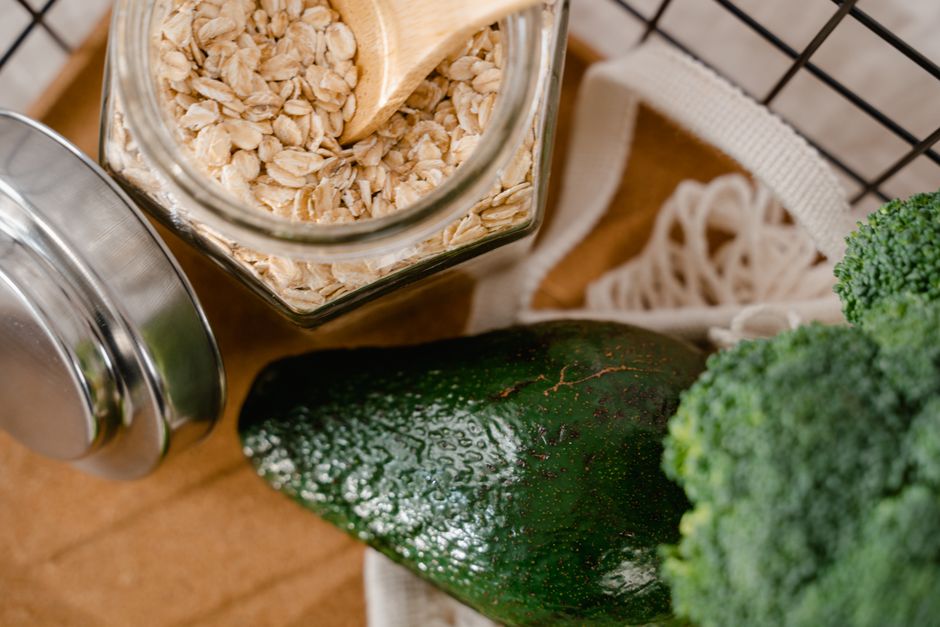
Most adults need about 5 to 10 grams of soluble fiber each day to see a meaningful drop in LDL (bad) cholesterol. Studies show this amount can lower LDL cholesterol by roughly 5 to 10 percent. Eating 10 to 25 grams of soluble fiber daily produces an even larger effect, though most people struggle to reach that level through food alone.
How Does Soluble Fiber Lower Cholesterol?
Soluble fiber works in your digestive tract, not in your blood. When you eat it, the fiber dissolves in water and forms a thick, gel-like substance in your intestines.
This gel traps cholesterol-rich bile acids and carries them out of your body in stool. Your liver then has to pull more cholesterol from your blood to make new bile acids. That process lowers the amount of LDL cholesterol circulating in your bloodstream.
This is a well-established mechanism. It has been confirmed in dozens of clinical trials over several decades. The effect is real, measurable, and reproducible.
One important detail: soluble fiber does not block cholesterol absorption from food directly. The main effect happens through bile acid binding. That is why it works even if your dietary cholesterol intake is low.
What Foods Contain the Most Soluble Fiber?
Not all fiber is the same. Insoluble fiber — the kind in wheat bran and many vegetables — helps with regularity but does not lower cholesterol. You need the soluble kind.
These foods are the richest sources of soluble fiber:
- Oats and oat bran — about 2 grams of soluble fiber per half-cup of dry oats
- Barley — one of the highest grain sources
- Psyllium husk — about 7 grams of soluble fiber per tablespoon
- Beans and lentils — roughly 2 to 3 grams per half-cup cooked
- Brussels sprouts — about 2 grams per half-cup
- Oranges — about 2 grams per medium fruit
- Apples — about 1 gram per medium fruit, mostly in the skin
- Carrots — about 1 gram per medium carrot
Psyllium is the most concentrated source available. It is the active ingredient in many commercial fiber supplements. A single dose provides roughly the same soluble fiber as several bowls of oatmeal.
How Much Soluble Fiber Do You Need To Lower Cholesterol?
The target is 5 to 10 grams of soluble fiber per day for a measurable cholesterol reduction. This amount reliably lowers LDL cholesterol by about 5 to 10 percent in most people.
To put that in perspective, a 5 to 10 percent LDL reduction is modest. Most statin medications lower LDL by 30 to 50 percent. Soluble fiber is not a replacement for medication in people who need it.
However, the effect is meaningful. A 10 percent reduction in LDL cholesterol is associated with a lower risk of heart disease over time. And fiber has other benefits beyond cholesterol — better blood sugar control, improved digestion, and increased fullness after meals.
Some research suggests that 10 to 25 grams of soluble fiber daily produces a larger drop, possibly up to 15 percent. But that amount is difficult to reach through food alone. Most people would need a supplement plus a high-fiber diet to get there.
The practical takeaway: aim for at least 5 grams of soluble fiber daily. If you can reach 10 grams, you are getting the full cholesterol-lowering benefit that fiber can offer.

How Long Does It Take To See Results?
Cholesterol changes do not happen overnight. Most studies measure LDL levels after 4 to 8 weeks of consistent fiber intake.
You need to eat the fiber every day. Missing several days resets the process because the bile acid binding only happens when fiber is present in your intestines.
Some people see changes in as little as 2 weeks. Others need closer to 3 months. The speed depends on your starting cholesterol level, your overall diet, and how consistently you consume the fiber.
One thing to know: if you stop eating the fiber, your cholesterol will return to its previous level. This is not a permanent fix. It only works while you maintain the habit.
Do You Need a Fiber Supplement?
A supplement is the easiest way to guarantee you get enough soluble fiber. Psyllium is the most studied option. It is the form of fiber with the strongest evidence for cholesterol reduction.
Other supplements exist — methylcellulose, inulin, and beta-glucan extracts. The evidence for cholesterol lowering is strongest for psyllium and oat beta-glucan. Methylcellulose works but has less research behind it. Inulin has minimal effect on cholesterol.
If you choose a supplement, start with a low dose. Increase gradually over 1 to 2 weeks. This reduces gas, bloating, and cramping that can occur when you suddenly add fiber.
Always take fiber supplements with plenty of water. Fiber absorbs water in your digestive tract. Without enough fluid, it can cause constipation or, in rare cases, intestinal blockage.
Whole foods are still the better choice when possible. They provide additional nutrients, phytochemicals, and other types of fiber that supplements do not offer. But if you cannot consistently eat enough high-fiber foods, a supplement is a reasonable addition.
Can You Eat Too Much Soluble Fiber?
Yes. Very high intakes — above 50 grams of total fiber per day — can cause problems. Most people would never reach this level accidentally.
More relevant is the discomfort from a sudden increase. Going from 10 grams to 30 grams of fiber in one day will cause gas, bloating, and abdominal pain. This is not dangerous, but it is unpleasant.
Very high soluble fiber intake can also interfere with mineral absorption. The same gel that binds cholesterol can bind calcium, iron, and zinc. This is rarely a problem at normal intake levels, but it matters if you take large doses of fiber supplements daily.
Fiber can also affect medication absorption. Take fiber supplements at least 2 hours away from other medications. This is especially important for thyroid medication, some antibiotics, and certain heart medications.
What Else Should You Do Alongside Fiber?
Soluble fiber is one piece of a cholesterol-lowering plan. It works best when combined with other proven strategies.
Replacing saturated fats with unsaturated fats — olive oil, nuts, avocados — has a larger effect on LDL than fiber alone. Reducing trans fats matters even more, though these are now largely removed from the US food supply.
Regular physical activity and weight loss, if you carry excess weight, both help lower LDL and raise HDL. Losing even 5 to 10 percent of body weight can produce measurable cholesterol improvements.
Some foods have specific cholesterol-lowering effects beyond fiber. Plant sterols and stanols, found in fortified margarines and some yogurts, block cholesterol absorption. Clinical trials show they can lower LDL by an additional 5 to 10 percent.
Soy protein has a modest effect. The FDA allows a cholesterol-lowering health claim for soy protein, though the effect is smaller than fiber or sterols.
If you have high cholesterol, talk to your doctor about your overall risk. Fiber is helpful, but it is not sufficient for everyone. People with familial hypercholesterolemia, very high LDL, or a history of heart disease usually need medication regardless of their fiber intake.
Frequently Asked Questions
Is 5 grams of soluble fiber a day enough to lower cholesterol?
Yes, 5 grams daily is the minimum amount shown to lower LDL cholesterol by about 5 percent. Ten grams produces a larger effect.
What is the best soluble fiber for lowering cholesterol?
Psyllium and oat beta-glucan have the strongest clinical evidence for cholesterol reduction. Both are effective and widely available.
How long does it take for fiber to lower cholesterol?
Most studies show measurable LDL reduction after 4 to 8 weeks of consistent daily fiber intake. Some people respond faster.
Can fiber supplements replace cholesterol medication?
No. Fiber lowers LDL by 5 to 15 percent, while statins lower it by 30 to 50 percent. Fiber is not a substitute for medication in people who need it.
