
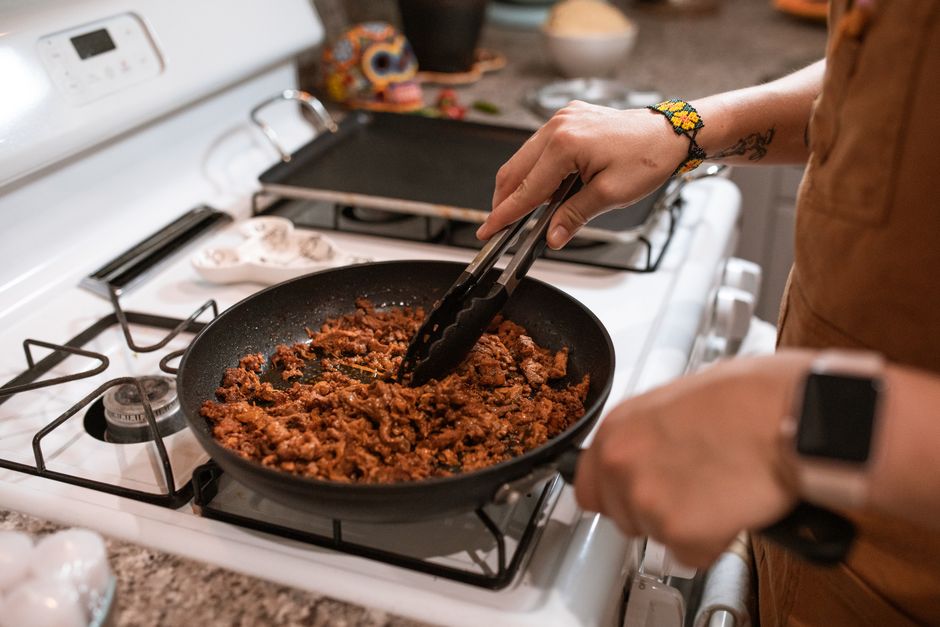
Ground beef contains about 20 to 24 grams of protein per 100 grams (roughly 3.5 ounces) of cooked meat. The exact amount depends on the lean-to-fat ratio. A 90% lean patty delivers more protein per ounce than a 70% lean one, because fat takes up weight that protein would otherwise occupy. For a typical 4-ounce cooked serving, expect somewhere between 22 and 30 grams of protein.
That range covers most of what you’ll find at the grocery store. The number moves based on fat content, how the beef is cooked, and whether you’re weighing it raw or cooked. Understanding those variables is the difference between guessing and knowing what’s actually on your plate.
How Much Protein Is In Ground Beef by Lean Percentage?
The lean-to-fat ratio printed on the package is the single biggest factor. A 4-ounce (113-gram) cooked serving of 70% lean ground beef provides roughly 20 to 22 grams of protein. The same serving of 90% lean beef delivers about 26 to 28 grams.
That’s a meaningful gap. The difference comes down to simple arithmetic: fat and protein compete for the same total weight. When fat goes down, protein goes up as a percentage of that weight.
Here’s how the common ratios compare for a 4-ounce cooked portion:
| Lean Ratio | Protein (4 oz cooked) | Fat (4 oz cooked) | Calories |
|---|---|---|---|
| 70% lean | ~20–22 g | ~22–24 g | ~290–310 |
| 80% lean | ~22–24 g | ~17–19 g | ~250–270 |
| 85% lean | ~24–25 g | ~13–15 g | ~220–240 |
| 90% lean | ~26–28 g | ~9–11 g | ~190–210 |
| 93% lean | ~27–29 g | ~7–8 g | ~170–190 |
These figures are consistent with USDA nutrient data for cooked ground beef. Small variations exist between brands and batches, but the pattern holds: leaner beef means more protein per bite.
One thing worth knowing — the “lean percentage” on the label refers to the raw product. After cooking, the ratio shifts because fat renders out and water evaporates. A 90% lean raw product doesn’t stay exactly 90% lean after it hits the pan. This is why nutrition labels on raw meat can be slightly misleading if you’re comparing them to cooked values.
Does Cooking Change the Protein Content?
Cooking doesn’t destroy protein. It concentrates it. When you cook ground beef, water and some fat cook off. The protein stays behind. So a 4-ounce raw patty weighs less after cooking — typically 3 to 3.5 ounces — but the protein grams remain roughly the same.
This matters because people often weigh their food after cooking and compare it to a raw-weight nutrition label. If you cook a 4-ounce raw patty and it shrinks to 3 ounces, you still got the protein from that original 4 ounces. You didn’t lose protein. You lost water and fat.
The practical takeaway: if you’re tracking protein, weigh your meat raw when possible, or use cooked-weight values from a reliable database. Mixing the two will throw off your numbers.
Higher-fat ground beef loses more weight during cooking because more fat renders out. That’s another reason the protein-per-ounce-of-cooked-meat goes up as the lean percentage increases.
How Does Ground Beef Compare to Other Protein Sources?
Ground beef holds its own against most common protein foods. For a 4-ounce cooked serving, here’s how it stacks up:
- 90% lean ground beef: ~26–28 g protein
- Chicken breast (skinless): ~30–35 g protein
- Ground turkey (93% lean): ~24–26 g protein
- Canned tuna (in water): ~25–27 g protein
- Eggs (2 large): ~12–13 g protein
- Black beans (1 cup cooked): ~15 g protein
- Tofu (firm, 4 oz): ~10–11 g protein
Chicken breast edges out even the leanest ground beef on protein density. But ground beef brings nutrients that chicken doesn’t — notably heme iron, zinc, and vitamin B12. Those are well-absorbed forms that plant sources can’t match.
For people watching saturated fat, the comparison shifts. Even 90% lean ground beef carries more saturated fat than skinless chicken breast. That’s not a reason to avoid it, but it’s a factor if your doctor has flagged your LDL cholesterol.





Is Ground Beef a Complete Protein?
Yes. Ground beef is a complete protein, meaning it contains all nine essential amino acids your body can’t make on its own. It’s also highly digestible — your body absorbs a large proportion of the protein it contains.
This is one area where animal proteins have a clear advantage over most plant proteins. Individual plant foods are often low in one or more essential amino acids. You can combine them across a day to cover the gaps, but beef does it in a single serving.
The protein quality score used in nutrition science — called DIAAS — rates beef protein very high. That means the grams on the label translate efficiently into usable amino acids. Not every protein source works that way.
How Much Protein Do You Actually Need?
The Recommended Dietary Allowance for protein is 0.8 grams per kilogram of body weight per day for most healthy adults. For a 150-pound (68 kg) person, that’s about 54 grams daily. A single 4-ounce serving of 90% lean ground beef covers roughly half that.
But the RDA is a minimum to prevent deficiency, not an ideal target. People who are physically active, over 65, recovering from illness, or trying to build muscle often need more. Some research suggests intakes of 1.2 to 1.6 grams per kilogram per day may be beneficial for older adults to help preserve muscle mass. The evidence for higher intakes in athletes is fairly consistent.
For people with kidney disease, protein intake needs to be discussed with a doctor. The general population doesn’t need to worry about kidney damage from higher protein intake — that concern isn’t supported by current evidence in healthy people.
Ground beef fits into most protein targets easily. But it shouldn’t be the only source. Variety across meat, fish, eggs, dairy, legumes, and grains gives you a broader nutrient profile.
Does Ground Beef Have Downsides?
Ground beef is nutritious, but it’s not a free pass. Regular consumption of high-fat ground beef adds saturated fat and calories that can work against heart health and weight goals.
Processed meats — bacon, sausage, deli meats — are classified differently from fresh ground beef. The World Health Organization’s cancer agency classifies processed meat as carcinogenic to humans and red meat as probably carcinogenic. That classification is about long-term cancer risk and applies to red meat broadly, including ground beef.
That doesn’t mean you need to eliminate it. It means moderation and context matter. The research linking red meat to cancer risk generally involves high intake over many years, often alongside other lifestyle factors. A few servings a week is a different picture than daily consumption of large portions.
Food safety is another consideration. Ground beef must be cooked to an internal temperature of 160°F (71°C) to kill bacteria like E. coli. Unlike whole cuts, where bacteria stay on the surface, grinding mixes surface bacteria throughout the meat. That’s why ground beef can’t be eaten rare the way a steak can.
Tips for Getting the Most Protein From Ground Beef
Choose 90% lean or higher if protein density is your priority. You’ll get more protein per calorie and less fat.
Weigh your meat raw if you’re tracking macros. Use cooked weights only if your nutrition app specifies cooked values. The two are not interchangeable.
Don’t drain the fat and assume you’ve removed all the calories. Some fat remains in the meat even after draining. The leaner the beef, the less this matters.
Pair ground beef with fiber-rich foods — vegetables, beans, whole grains. This slows digestion and helps with satiety. It also balances the meal nutritionally.
If you’re watching saturated fat, alternate ground beef with ground turkey, chicken, or plant proteins across the week. You still get the iron and B12 from beef on the days you eat it.
Frequently Asked Questions
How much protein is in 4 oz of ground beef?
A 4-ounce cooked serving contains roughly 20 to 28 grams of protein, depending on the lean-to-fat ratio. Leaner beef (90% or higher) sits at the top of that range.
Is ground beef a good source of protein?
Yes. It’s a complete protein with all nine essential amino acids, and it also provides heme iron, zinc, and vitamin B12. Leaner varieties give you more protein with less saturated fat.
Does ground beef have more protein than chicken?
No. Skinless chicken breast provides slightly more protein per ounce than even the leanest ground beef. However, ground beef offers more iron and zinc.
How much protein is in 100g of cooked ground beef?
About 20 to 24 grams per 100 grams cooked, depending on fat content. Higher lean percentages push the number toward the upper end of that range.
