
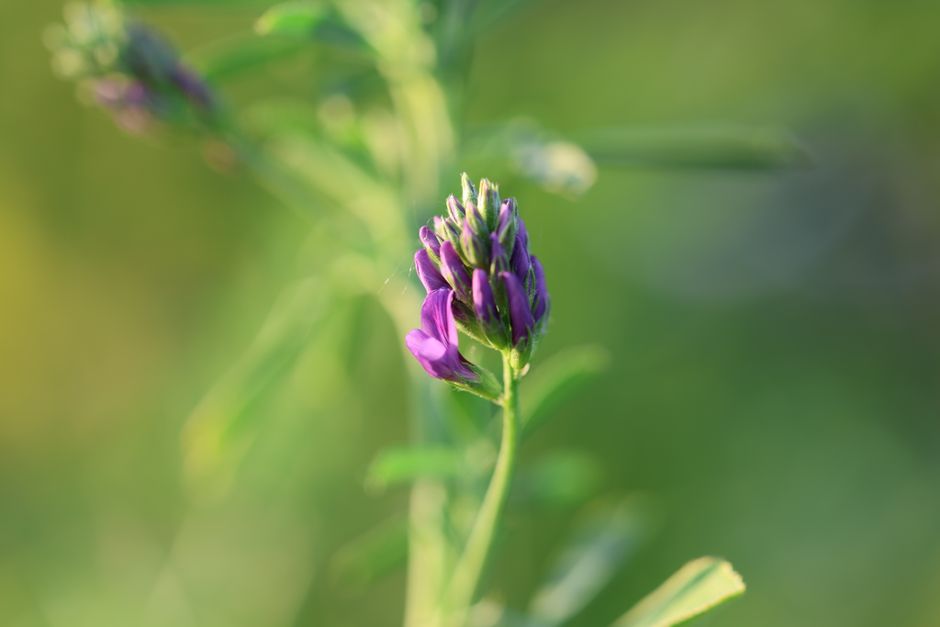
Alfalfa hay is one of the most protein-dense forages grown in North America, and its protein content swings widely depending on when it was cut and how it was graded. The short answer: alfalfa hay typically ranges from about 13% to 22% crude protein on a dry matter basis, with dairy-quality hay at the top of that range and lower grades falling toward the bottom. Grade is not a marketing label — it reflects the plant’s maturity at harvest, which is the single biggest driver of protein content.
How Much Protein Is In Alfalfa Hay By Grade?
Protein content tracks closely with grade because grade is largely determined by maturity at cutting. Early-cut, leafy alfalfa is highest in protein. Late-cut, stemmy alfalfa is lowest.
Using the USDA hay grading framework that many labs and buyers reference, the general pattern looks like this:
| Grade | Typical Crude Protein (dry matter) | Maturity at Harvest |
|---|---|---|
| Prime / Dairy Quality | About 19–22% | Pre-bud to early bud |
| Grade 1 | About 17–19% | Early bud to early bloom |
| Grade 2 | About 14–16% | Early bloom to mid-bloom |
| Grade 3 | About 12–14% | Mid to full bloom |
| Grade 4 / Utility | Under about 12% | Full bloom to seed pod |
These are working ranges, not fixed numbers. Actual protein depends on variety, soil fertility, irrigation, cutting height, weather during curing, and storage. A well-managed Grade 2 field can out-protein a poorly managed Grade 1 field. That is why a lab test on a representative sample beats a grade label every time.
The reason the ranges overlap is that grade is assigned on physical characteristics — leaf-to-stem ratio, maturity, color, and foreign material — not on a protein measurement. Protein is a consequence of those characteristics, not the definition of the grade.
Why Does Cutting Stage Change Protein So Much?
As alfalfa matures, the plant shifts resources from leaves to stems. Leaves hold most of the protein. Stems are mostly fiber. So every day past early bud, the leaf-to-stem ratio drops and total protein drops with it.
Crude protein in alfalfa leaves can run well above 20% of dry matter. Stems may sit closer to 8–10%. When you blend those two fractions at different ratios, you get the whole-plant protein values that show up on a hay test. A leafy, pre-bud cutting is mostly leaf. A full-bloom cutting is mostly stem.
This is also why leaf loss during harvest matters so much. Leaves shatter when hay gets too dry before baling. A field that tested 20% standing in the windrow can bale out at 16% if the leaves crumbled off. Grade can look fine on color and still hide significant protein loss.
Heat damage is a related issue. If hay is baled too wet, it can heat and bind up protein through a Maillard-type reaction. The nitrogen is still there on a lab report, but it becomes unavailable to the animal. This shows up as elevated acid detergent insoluble crude protein, or ADICP, on a forage analysis.
Does Crude Protein Tell You What The Animal Actually Gets?
No. Crude protein is a rough proxy, not a measure of usable protein. It is calculated as total nitrogen multiplied by 6.25, which assumes all nitrogen is in protein form. That is not true.
Some nitrogen in forage is non-protein nitrogen, including free amino acids, nitrates, and other compounds. Rumen microbes can use much of it, but not all of it converts to microbial protein the animal can absorb. Crude protein also says nothing about amino acid balance.
For a more useful picture, look at these values on a forage test:
- ADICP — acid detergent insoluble crude protein, an indicator of heat-damaged, unavailable protein
- NDICP — neutral detergent insoluble crude protein, which relates to how much protein escapes rumen breakdown
- RDP and RUP — rumen degradable and rumen undegradable protein, the fractions nutritionists actually formulate around
- Relative Feed Value or Relative Forage Quality — digestibility indexes that track with maturity
Two hays can both test 18% crude protein and perform very differently in a ration. One may be highly digestible and well balanced. The other may be heat damaged with a chunk of that protein unavailable. Crude protein alone will not tell you which is which.

Does Alfalfa Hay Protein Vary By Region And Cutting?
Yes, and the variation can be larger than the gap between grades. First cutting is often lower in protein because it grows slower in cool spring weather and tends to be stemmier. Later cuttings in warm, fast-growing conditions are frequently leafier and higher in protein.
Region matters through climate and management. Irrigated alfalfa in the desert Southwest can produce four to seven cuttings a year with consistently high protein. Rain-fed or short-season regions may get two or three cuttings with more variability. Soil potassium, sulfur, and boron levels also affect protein and yield.
Variety selection plays a role too. Some cultivars are bred for higher leaf-to-stem ratio or for fall dormancy characteristics that affect how quickly they mature. But management — cutting timing, curing speed, and baling moisture — usually outweighs genetics for protein content.
How Do You Know What You Actually Bought?
Test it. A grade label and a visual inspection cannot tell you protein content with confidence. A core sample sent to a forage lab can.
The standard method is a hydraulic hay probe that pulls cores from multiple bales, ideally 15 to 20 bales per lot. Mix the cores, submit a composite, and ask for at least crude protein, acid detergent fiber, neutral detergent fiber, and moisture. If the hay is for dairy, add the protein fractions and digestibility measures.
Sampling error is real. A single grab sample from one bale can be off by several percentage points from the true lot average. The value of a hay test comes from how representative the sample is, not from the lab itself.
One practical note: alfalfa protein values are almost always reported on a dry matter basis. If a seller quotes a number without specifying dry matter or as-fed, ask. Fresh hay can be 10–15% moisture, and as-fed protein values will read lower than dry matter values for the same hay.
Is High Protein Alfalfa Always The Better Buy?
Not necessarily. Higher protein usually costs more per ton, and it is not always what the animal needs.
For high-producing dairy cows, dairy-quality hay with high protein and high digestibility is often worth the premium. For mature horses at maintenance, beef cows in mid-gestation, or sheep on a moderate plane of nutrition, that same hay is expensive overkill. It can also cause problems — excess protein in some species and life stages can be metabolically wasteful, and very rich alfalfa is not appropriate for all animals.
Alfalfa also carries risks that have nothing to do with protein level. It is high in calcium and can be imbalanced for some rations. Bloat is a real concern in cattle grazing pure stands. In horses, some individuals handle alfalfa poorly. These are animal-specific considerations that a protein number does not address.
The right question is not “which hay has the most protein” but “which hay fits this animal’s ration at the best cost.” A lower-grade alfalfa blended with the right supplement can outperform a premium hay that overshoots the requirement.
Frequently Asked Questions
What is the protein content of dairy-quality alfalfa hay?
Dairy-quality or prime alfalfa hay typically tests about 19–22% crude protein on a dry matter basis. It is cut at pre-bud to early bud, when leaves make up the largest share of the plant.
Is alfalfa hay higher in protein than grass hay?
Yes, generally. Alfalfa commonly runs 13–22% crude protein, while most grass hays fall in the 6–12% range. The gap comes from alfalfa’s higher leaf-to-stem ratio and legume nitrogen fixation.
Does first-cutting alfalfa have less protein than later cuttings?
Often, yes. First cutting tends to be stemmier and slower growing, so it frequently tests lower than second or third cuttings. Weather and cutting timing can override that pattern in any given year.
How do I find out the actual protein in my alfalfa hay?
Send a core sample from 15 to 20 representative bales to a forage lab for analysis. A grade label or visual inspection cannot reliably tell you the protein content.
