
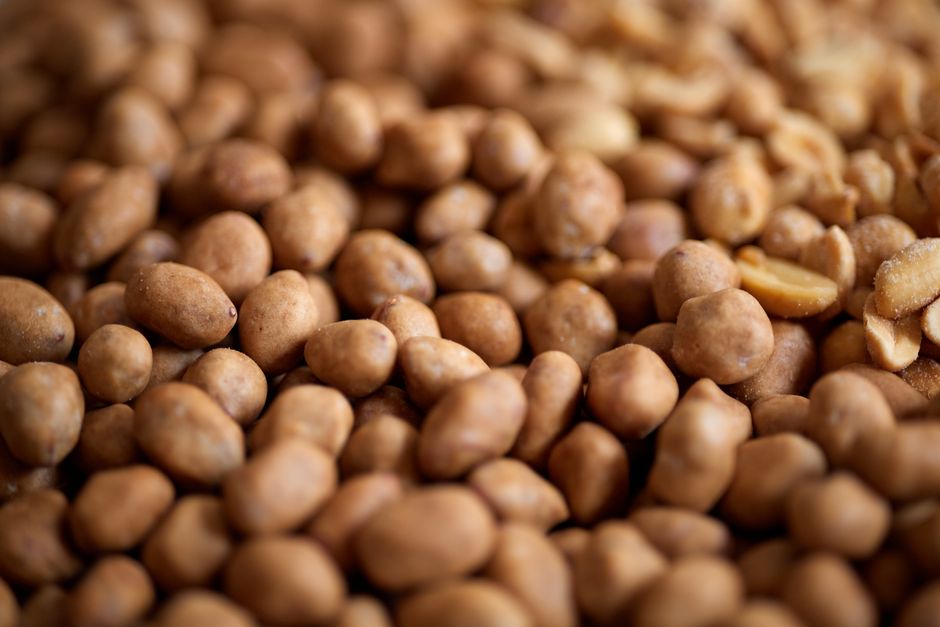
Yes, peanuts contain protein. One ounce of raw peanuts — about 28 grams, or a small handful — provides roughly 7 grams of protein. That is close to the protein in one large egg. Peanuts are actually a legume, not a true nut, which helps explain their higher protein content compared with almonds, cashews, and most tree nuts.
Roasted peanuts land in the same range. Dry-roasted and oil-roasted peanuts both supply around 7 grams of protein per ounce. Peanut butter is a different story because serving sizes and added ingredients vary widely, so the numbers shift depending on the jar.
How Much Protein Is in Peanuts Per Serving?
Serving size changes the answer. The table below shows protein content across common peanut portions. Values are drawn from USDA nutritional data.
| Peanut type and amount | Protein |
|---|---|
| Raw peanuts, 1 oz (28 g) | ~7 g |
| Dry-roasted peanuts, 1 oz (28 g) | ~7 g |
| Peanuts, 1 cup | ~38 g |
| Smooth peanut butter, 2 tbsp | ~7 g |
| Peanut flour, defatted, 1/4 cup | ~14 g |
Notice the cup measurement. A single cup of peanuts carries around 38 grams of protein, but it also carries roughly 800 calories. That is a lot of food to eat in one sitting. The one-ounce serving is the realistic unit for most people.
Peanut flour is worth a mention because defatting removes much of the oil, leaving a concentrated protein powder. It is not the same product as regular peanut flour sold for baking, which retains more fat. Check the label if protein content matters to you.
Is Peanut Protein Complete?
Peanut protein is incomplete, meaning it is low in one or more essential amino acids. Peanuts are notably low in methionine and lysine relative to animal proteins. This matters less than it sounds.
Incomplete does not mean inadequate. Most people eating a varied diet get complementary amino acids from other foods across the day. Grains tend to be low in lysine and higher in methionine. Legumes are the opposite. A peanut butter sandwich on whole wheat bread is a classic example of two incomplete proteins covering each other’s gaps.
You do not need to combine them in the same meal. Your body maintains a pool of amino acids and draws from it as needed. The old idea that every meal must contain complementary proteins has been revised. Total daily intake is what counts.
For someone eating mostly plant foods, peanuts are a useful protein source but not a complete one on their own. Pairing them with grains, beans, or a variety of other plant proteins fills the gaps.
How Does Peanut Protein Compare With Other Nuts and Legumes?
Peanuts beat most tree nuts on protein. One ounce of almonds provides about 6 grams. Cashews provide about 5 grams. Walnuts and pecans provide around 2 to 3 grams. Peanuts are higher than all of them at roughly 7 grams per ounce.
The comparison with other legumes is more mixed. Soybeans are higher in protein and are one of the few plant foods that are complete proteins on their own. Lentils and chickpeas are in a similar range to peanuts per cooked cup, though the serving sizes differ.
What sets peanuts apart is convenience and cost. They are shelf-stable, require no cooking, and are among the cheapest protein sources available by weight. That combination is hard to match.




Does Roasting or Processing Change the Protein?
Roasting does not meaningfully change protein content. Heat can slightly alter protein structure, but the total amount of protein in the peanut stays essentially the same whether raw or roasted.
Processing is where things shift. Peanut butter often contains added sugar, palm oil, and salt. These add calories and ingredients without adding protein. A two-tablespoon serving of a typical commercial peanut butter still provides around 7 grams of protein, roughly the same as whole peanuts, but the calorie count and added ingredients differ.
Natural peanut butter made from peanuts alone has the simplest profile. The oil separates and rises to the top, which is normal. Stirring it back in restores the original texture. Some people find this inconvenient, but it signals that nothing has been added to keep it homogenized.
Peanut butter powder is different again. Manufacturers press out most of the oil, then grind the remaining solids into a powder. This concentrates protein by weight and cuts fat and calories. The trade-off is texture and taste. It works in smoothies and oatmeal but not as a direct spread.
How Does Peanut Protein Fit Into a Daily Diet?
Protein needs vary by body weight, activity level, and life stage. A common general reference is around 0.8 grams of protein per kilogram of body weight per day for sedentary adults. For a 150-pound person, that is roughly 54 grams daily.
At 7 grams per ounce, peanuts can contribute meaningfully to that total. Two ounces of peanuts plus a tablespoon of peanut butter gets you close to 20 grams. That is more than a third of a sedentary adult’s daily target.
Peanuts are calorie-dense, which cuts both ways. They help people who need more calories and protein, such as athletes or older adults with poor appetite. For people watching calorie intake, portion size matters because a small handful adds up quickly.
Peanuts also provide fiber, healthy fats, vitamin E, magnesium, and niacin. The protein is only one part of what they offer. Treating them as a protein food alone undersells them.
Who Should Be Careful With Peanuts?
Peanut allergy is one of the most common food allergies and can be severe. For people with a diagnosed peanut allergy, none of the nutritional information here applies. Avoidance is the only safe approach, and that includes checking labels for hidden peanut ingredients.
Peanuts are also a choking risk for young children. Whole peanuts and large dollops of peanut butter are not appropriate for children under four. Current guidance from pediatric organizations supports introducing peanut-containing foods to infants at appropriate ages and in safe forms, but this should be discussed with a pediatrician, especially for babies with eczema or existing food allergies.
For everyone else, peanuts are a safe and useful food. Aflatoxin is a contaminant that can occur in poorly stored peanuts, but commercial peanuts sold in the US are tested and regulated for this. Storage at home in a cool, dry place reduces risk further.
One more note on peanut butter and aflatoxin. Major US brands test their supply, and levels are generally well below regulatory limits. This is not a reason to avoid peanuts for most people.
Frequently Asked Questions
How much protein is in one ounce of peanuts?
One ounce of peanuts, about 28 grams, contains roughly 7 grams of protein. This is similar whether the peanuts are raw, dry-roasted, or oil-roasted.
Is peanut protein as good as meat protein?
Peanut protein is incomplete because it is low in certain essential amino acids like methionine and lysine, while meat is a complete protein. Peanuts still contribute useful protein when eaten as part of a varied diet.
How much protein is in two tablespoons of peanut butter?
Two tablespoons of peanut butter typically provide around 7 grams of protein, similar to one ounce of whole peanuts. Check the label because added ingredients and serving sizes vary by brand.
Can peanuts be a main protein source?
Peanuts can contribute significantly to daily protein intake but are not a complete protein on their own. For most people, they work best alongside other protein sources like grains, beans, or animal foods.
