
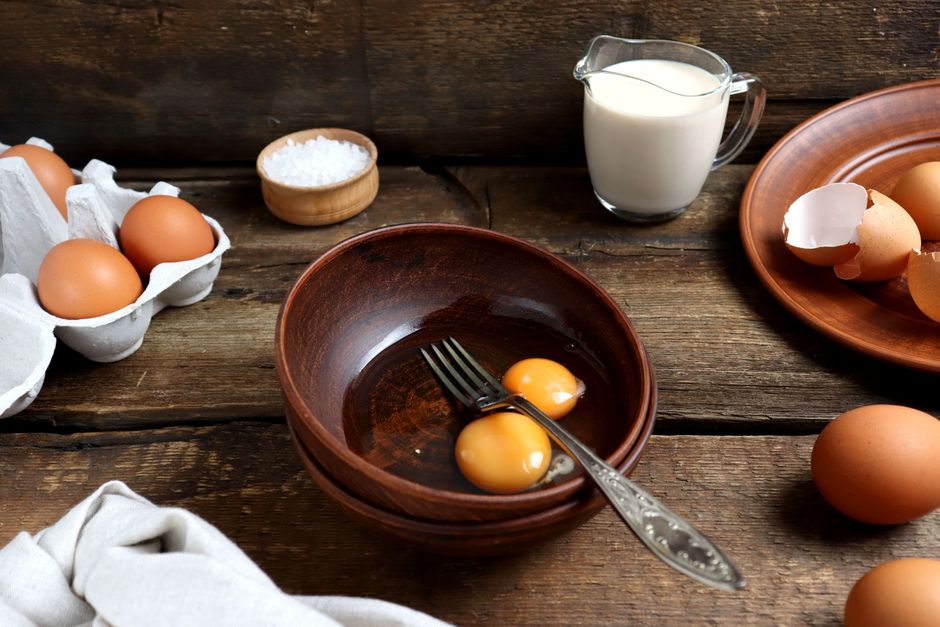
An egg yolk contains about 2.7 grams of protein. This is roughly 40% of the total protein in a whole large egg, which has about 6 grams. The white holds the remaining 3.3 grams. People often separate yolks from whites, thinking the white is the only source of protein. That is not accurate. The yolk has a meaningful amount of protein, along with nearly all the egg’s fat, vitamins, and minerals.
How Much Protein Is In One Egg Yolk Exactly?
A single large egg yolk (about 17 grams) provides 2.7 grams of protein. This number is consistent across most commercially sold large eggs in the United States. Smaller eggs have slightly less. Jumbo eggs have slightly more. But for a standard large egg, 2.7 grams is the reliable figure.
To put that in context, 2.7 grams of protein is roughly the same amount found in half a tablespoon of peanut butter or a quarter cup of cooked oatmeal. It is not a trivial amount. If you eat two whole eggs, you get about 5.4 grams of protein from the yolks alone.
How Does Yolk Protein Compare To Egg White Protein?
The egg white contains about 3.3 grams of protein per large egg. That is roughly 60% of the total. The yolk contains 2.7 grams, or about 40%. The difference is smaller than most people assume.
Egg white protein is mostly water and albumin. Yolk protein is more complex. It includes lipoproteins and other compounds that are bound to fats. Both are high-quality proteins with a complete amino acid profile. Your body uses them equally well for muscle repair and other functions.
If you eat only egg whites, you are getting more protein per egg. But you are also losing the yolk’s vitamins A, D, E, K, B12, riboflavin, folate, iron, and choline. For many people, the tradeoff is not worth it.
Does Cooking Change The Protein Content In Yolks?
Cooking does not change the amount of protein in an egg yolk. The 2.7 grams remain regardless of whether you boil, fry, poach, or scramble the egg. Heat does not destroy protein. It denatures it, which means it changes the shape of the protein molecules. That is why cooked egg whites turn from clear to white and become firm. But the protein is still there and still digestible.
In fact, cooked egg protein is slightly more digestible than raw egg protein. Your body absorbs about 90% of the protein from a cooked egg compared to about 50% from a raw egg. So cooking actually helps you get more of the 2.7 grams from the yolk, not less.





How Much Protein In An Egg Yolk Compared To Other Foods
Comparing the yolk alone to other common protein sources helps put the number in perspective. A large egg yolk has 2.7 grams of protein. Here is how that stacks up against other single-serving foods you might eat:
- One large egg white: 3.3 grams protein
- One whole large egg: 6 grams protein
- One ounce of chicken breast: about 7 grams protein
- One tablespoon of almond butter: about 3.4 grams protein
- One quarter cup of cooked lentils: about 3 grams protein
- One slice of cheddar cheese: about 4 grams protein
By itself, a single egg yolk is not a high-protein food. But if you eat two or three eggs for a meal, the yolks contribute 5 to 8 grams of protein. That is a meaningful addition to your total intake, especially when paired with other protein sources.
Should You Eat Yolks For Protein Or Just Whites?
That depends on your goals. If you need to maximize protein while minimizing calories and fat, egg whites are the better choice. Three egg whites give you about 10 grams of protein with only 50 calories and almost no fat.
But if you want the nutrients that come with the protein, keep the yolk. The yolk contains choline, which supports brain health. It has lutein and zeaxanthin, which protect your eyes. It has vitamin D, which most people do not get enough of. And it has iron and B vitamins that the white lacks entirely.
Many people avoid yolks because of cholesterol concerns. Research consistently shows that dietary cholesterol from eggs has a small effect on blood cholesterol for most people. The bigger drivers are saturated fat and trans fat. For the average healthy person, eating whole eggs daily is not a problem.
What About The Protein In Egg Yolks From Different Bird Species?
Chicken eggs are the standard, but people also eat duck, quail, and goose eggs. The protein content varies by size and species. A duck egg yolk is larger than a chicken egg yolk and contains about 4.5 grams of protein. A quail egg yolk is tiny, with only about 0.5 grams of protein. A goose egg yolk can have 7 grams or more.
If you are counting protein precisely, check the weight of the yolk rather than assuming it is the same as a chicken egg. The protein percentage stays roughly the same across species — about 16% of the yolk weight is protein. So a larger yolk always means more protein.
Frequently Asked Questions
How many grams of protein are in a single egg yolk?
A single large egg yolk contains about 2.7 grams of protein. Smaller eggs have slightly less and jumbo eggs have slightly more.
Is egg yolk or egg white higher in protein?
Egg white is higher in protein with about 3.3 grams compared to 2.7 grams in the yolk. The white has about 60% of the total protein and the yolk has about 40%.
Does eating only egg whites give you enough protein?
Egg whites provide protein without fat or cholesterol, but you miss the vitamins, minerals, and healthy fats found in the yolk. For most people, eating whole eggs is a better nutritional choice.
Does the protein in egg yolk change when you cook it?
No, the amount of protein stays the same regardless of cooking method. Cooking actually makes the protein slightly more digestible than eating raw eggs.
