
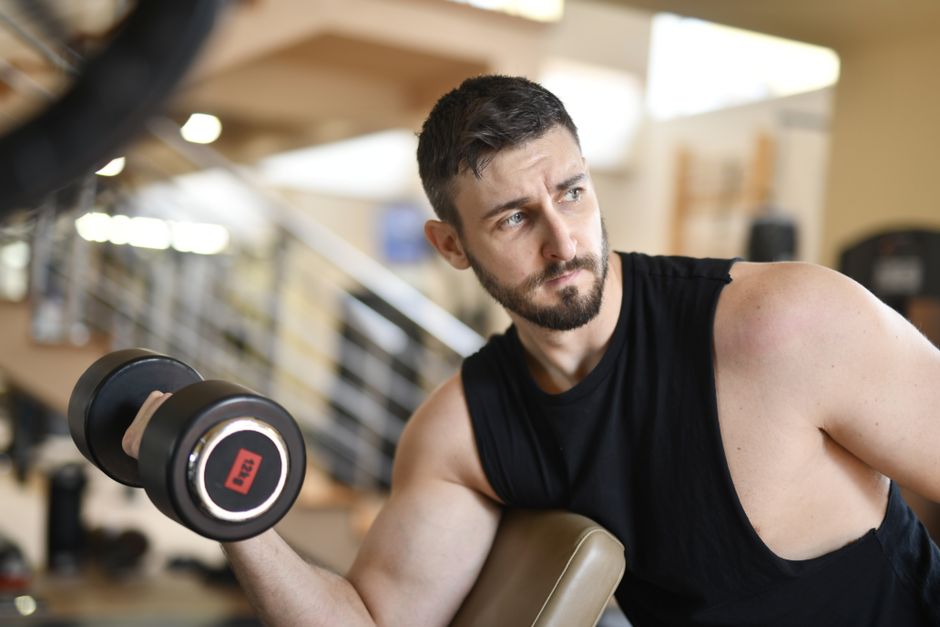
Most beginners can gain about 1 to 2 pounds of muscle per month with proper training and nutrition. That translates to roughly 0.5 to 1 kilogram. People with more training experience gain much less — often 0.25 to 0.5 pounds per month. These numbers come from research on resistance training and represent the realistic ceiling for most people. Anyone promising more is selling something.
What Determines How Much Muscle You Can Gain In A Month?
Your training history matters more than almost anything else. A complete beginner has never exposed their muscles to progressive overload. Their body responds rapidly to this new stimulus. Someone who has trained for five years has already captured most of their genetic potential. Their body has little reason to add more tissue.
Age plays a role too. Younger men and women tend to build muscle faster than older adults. Research consistently shows that people in their 20s and 30s respond more quickly to resistance training than those in their 60s and 70s. That does not mean older adults cannot build muscle. They absolutely can — just at a slower rate.
Genetics set the outer limits. Some people are natural responders. They gain muscle quickly with minimal effort. Others train hard for years and still struggle to add noticeable size. Both groups exist on the same spectrum. Most people fall somewhere in the middle.
Gender also matters. Men typically gain muscle faster than women because of higher testosterone levels. Women can still build significant muscle, but the rate is usually lower. Research suggests women gain roughly half to two-thirds of what men gain under similar training programs.
Why Beginners Gain Muscle Faster
The first year of training produces the most dramatic changes. Your nervous system learns to recruit muscle fibers more efficiently. Your body adapts to the stress of lifting weights. Protein synthesis rates increase. All of these adaptations happen quickly at first.
This is called the novice effect. A beginner following a sensible program can expect noticeable changes within weeks. Studies on untrained individuals show measurable muscle growth in as little as eight to twelve weeks of consistent training.
The rate slows dramatically after the first year. Your body has already made the easy adaptations. Further growth requires more effort, more precision, and more time. This is why intermediate lifters often feel like they are spinning their wheels.
The same principle applies to advanced lifters. After several years of training, muscle gain becomes extremely slow. A month of hard work might produce a few ounces of new tissue. This is normal. This is expected. This is not a sign that your program is broken.
How Much Protein Do You Need To Build Muscle
Protein provides the building blocks for muscle tissue. Without enough of it, your body cannot repair and rebuild the muscle fibers damaged during training. Most research suggests that people training for muscle growth need about 0.7 to 1 gram of protein per pound of body weight daily.
For a 180-pound person, that means roughly 126 to 180 grams of protein per day. This range is well supported by sports nutrition research. It applies to both men and women who are actively resistance training.
Spreading protein intake across the day appears to work better than eating it all in one meal. Most experts recommend 20 to 40 grams of protein per meal, depending on your total needs. This gives your body a steady supply of amino acids for muscle repair.
Protein quality matters as well. Complete proteins — found in meat, fish, eggs, dairy, and soy — contain all essential amino acids. Plant proteins can work too, but you may need to combine different sources to get the full amino acid profile.




How Many Calories Do You Need To Gain Muscle
Building muscle requires energy. Your body cannot create new tissue from nothing. Most people need to eat slightly more calories than they burn to support muscle growth. This is called a calorie surplus.
A modest surplus of 300 to 500 calories per day above maintenance is usually sufficient. This supports muscle growth while minimizing fat gain. Larger surpluses lead to more fat accumulation without additional muscle benefits.
The quality of those calories matters. A surplus of fast food and processed snacks will not support muscle growth as well as whole foods. Prioritize lean proteins, complex carbohydrates, and healthy fats. These provide the nutrients your body needs for recovery and growth.
Carbohydrates are particularly important for training performance. They fuel your workouts and help replenish glycogen stores. Most resistance training programs work best with a moderate to high carbohydrate intake.
What Training Program Builds The Most Muscle
Progressive overload is the foundation of muscle growth. Your muscles must face increasing demands over time. This means adding weight, reps, or sets as you get stronger. Without progressive overload, your body has no reason to add muscle.
Compound exercises are the most efficient way to build muscle. Squats, deadlifts, bench presses, rows, and overhead presses work multiple muscle groups simultaneously. They allow you to lift heavier weights and stimulate more muscle fibers.
Training frequency matters. Research suggests that training each muscle group two to three times per week produces better results than once per week. This allows for more total training volume while still providing adequate recovery time.
Volume is also important. Most research indicates that 10 to 20 sets per muscle group per week is effective for muscle growth. Beginners can start at the lower end of this range. More experienced lifters may need the higher end to continue progressing.
How Sleep and Recovery Affect Muscle Growth
Muscle growth happens during recovery, not during training. Your workouts create the stimulus. Your body builds new tissue while you rest. Sleep is the most critical recovery tool you have.
Research consistently shows that inadequate sleep impairs muscle recovery and growth. Most adults need seven to nine hours of quality sleep per night. Athletes may need more, especially during intense training periods.
Growth hormone and testosterone — two hormones important for muscle building — are released primarily during deep sleep. Cutting sleep short reduces these hormonal signals. This directly limits your ability to build muscle.
Rest days are equally important. Training the same muscle groups every day without rest leads to overtraining. This impairs recovery and increases injury risk. Most effective programs include at least one or two full rest days per week.
Can You Build Muscle While Losing Fat
Building muscle while losing fat is possible, but it is harder than doing either one alone. Your body prefers to use the calorie deficit for fat loss. Adding muscle at the same time requires careful programming and nutrition.
This is called body recomposition. It works best for beginners and people returning after a long break from training. Their bodies are primed for muscle growth, so they can build tissue even in a calorie deficit.
For experienced lifters, body recomposition is slower and more difficult. You may gain small amounts of muscle while losing fat, but the process takes months. It requires a modest calorie deficit, high protein intake, and consistent resistance training.
A better approach for most people is to focus on one goal at a time. Spend several months building muscle in a calorie surplus. Then spend several months losing fat in a calorie deficit. This cycle produces more reliable results than trying to do both simultaneously.
How Much Muscle Can You Gain In A Month As A Woman
Women build muscle at a slower rate than men. Research suggests that women gain roughly half as much muscle as men under similar training programs. A typical female beginner might gain 0.5 to 1 pound of muscle per month.
This difference comes down to hormones. Testosterone is the primary driver of muscle growth. Women have significantly lower levels than men. This does not mean women cannot build muscle — it just means the rate is different.
Women respond well to the same training principles as men. Progressive overload, adequate protein, and sufficient calories all apply. The main difference is the rate of visible change. Women may notice improvements in strength and body composition before they see changes in muscle size.
What About Muscle Gain Supplements
The supplement industry makes bold claims about muscle growth. Most of these claims are not supported by evidence. The truth is that supplements play a minor role compared to training, nutrition, and recovery.
Creatine is the most well-studied supplement for muscle growth. Research consistently shows that creatine monohydrate can enhance strength and muscle mass when combined with resistance training. It is safe and effective for most people.
Protein powder is convenient but not magical. It provides the same amino acids found in whole foods. If you already meet your protein needs through food, protein powder adds nothing extra.
Most other supplements — pre-workouts, BCAAs, testosterone boosters — have little to no evidence supporting their use for muscle growth. Save your money and focus on the fundamentals.
Realistic Expectations For Your First Month
Your first month of training sets the stage for long-term progress. You will likely notice strength gains quickly. Your muscles may feel fuller and more defined. The scale might move slightly upward.
Visible muscle growth in one month is usually subtle. You may see changes in your arms, shoulders, or chest. But dramatic transformations take months and years, not weeks. Instagram transformations are often the result of lighting, angles, and water manipulation — not actual muscle gain.
Track your progress with photos, measurements, and strength numbers. These provide more accurate feedback than the scale alone. Muscle weighs more than fat, so your weight may stay the same or even increase while your body composition improves.
The people who see the best results are the ones who stay consistent. They train regularly, eat enough protein, and get adequate sleep. They do not chase quick fixes. They understand that muscle gain is a slow, steady process.
Frequently Asked Questions
How much muscle can a beginner gain in one month?
A beginner can realistically gain 1 to 2 pounds of muscle in the first month of consistent training. This rate is highest during the first year and slows significantly after that.
How many grams of protein per day do I need to build muscle?
Most research recommends 0.7 to 1 gram of protein per pound of body weight daily for muscle growth. A 180-pound person would need roughly 126 to 180 grams per day.
Can you build muscle without gaining fat?
Yes, but it is slower than focusing on one goal at a time. Beginners can often build muscle while losing fat, but experienced lifters usually do better with separate bulking and cutting phases.
How many times per week should I train to build muscle?
Training each muscle group two to three times per week is most effective for muscle growth. This allows enough volume to stimulate growth while providing adequate recovery time.
