
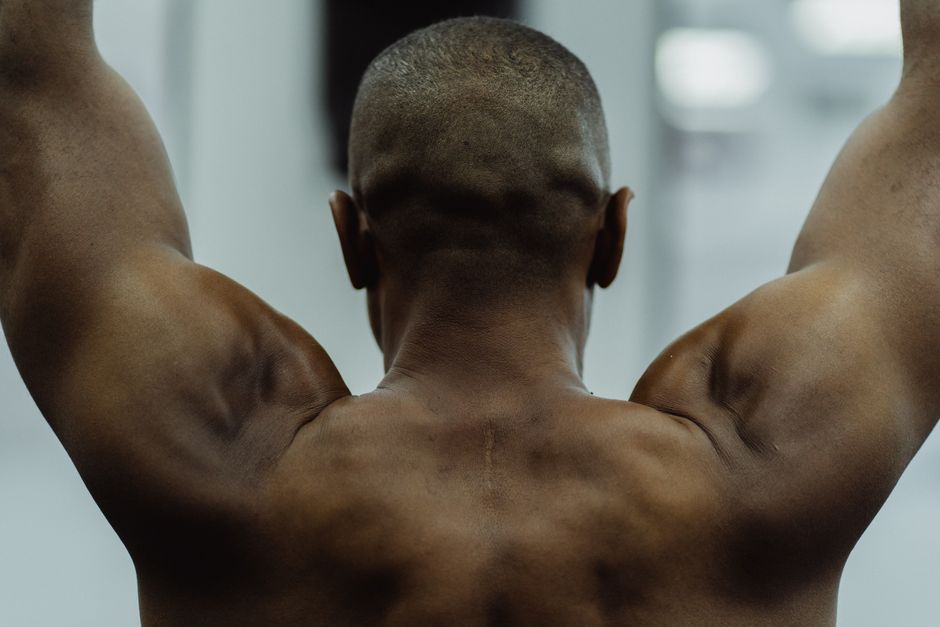
A strong back comes from training several different muscle groups, not just one. The main ones are the latissimus dorsi, trapezius, rhomboids, erector spinae, and the rear deltoids. Effective exercises include pull-ups, rows, deadlifts, and face pulls, and most people see meaningful strength gains by training the back two to three times per week with progressive resistance.
What Muscles Make Up The Back?
The back is not a single muscle. It is a layered system of muscles that pull, stabilize, and extend the spine. Understanding them helps you choose exercises that actually train what you intend to train.
The latissimus dorsi are the large muscles on either side of your mid-back. They run from the lower spine and pelvis up to the upper arm. These are the muscles that give the back its width. When you pull your elbows down and back, you feel them working.
The trapezius is a large diamond-shaped muscle covering the upper back and neck. It has three parts. The upper part lifts your shoulders. The middle part pulls your shoulder blades together. The lower part pulls them down. Most back training neglects the lower and middle portions.
The rhomboids sit between your shoulder blades. They pull the shoulder blades toward the spine. They work hard during rowing movements and are often weak in people who sit at desks all day.
The erector spinae are the columns of muscle running along your spine. They keep you upright and let you bend and extend. They are trained by deadlifts, back extensions, and good mornings.
The rear deltoids sit at the back of the shoulder. They are technically shoulder muscles, but they assist nearly every back pulling movement and are important for shoulder health.
One clarification worth making: the lower back and upper back respond to different training. You cannot train “the back” as one unit. A complete program hits vertical pulling, horizontal pulling, and spinal extension.
How To Get A Strong Back: Exercises And Muscle Groups?
Back strength comes from three movement patterns: pulling down, pulling toward you, and hinging at the hips. If your program includes all three, you cover every major back muscle.
Vertical Pulling
Vertical pulling trains the lats and lower traps. The elbow travels from overhead down toward your ribs.
- Pull-ups: Hands slightly wider than shoulders, palms facing away. Pull your chest toward the bar. If you cannot do one, use a band for assistance or an assisted pull-up machine.
- Lat pulldowns: The same movement pattern with adjustable weight. Good for building strength before progressing to full pull-ups.
Horizontal Pulling
Horizontal pulling trains the rhomboids, middle traps, and rear deltoids. The elbow travels from in front of you back past your ribs.
- Barbell rows: Hinge forward, keep your back flat, and pull the bar to your lower ribs.
- Dumbbell rows: One arm at a time, supported on a bench. Easier to learn than barbell rows.
- Seated cable rows: Constant tension through the whole movement. Good for beginners.
- Face pulls: A cable or band pulled toward your face with elbows high. Trains rear delts and upper back posture muscles.
Hip Hinging
Hip hinging trains the erector spinae and the whole posterior chain. The hips move back while the spine stays neutral.
- Deadlifts: The most effective single exercise for overall back strength. Also technically demanding. Learn the form with light weight or a coach before adding load.
- Romanian deadlifts: A deadlift variation with less knee bend. Emphasizes the hamstrings and lower back.
- Back extensions: A gentler option for the erector spinae. Useful if deadlifts are not yet appropriate.
How Often Should You Train Your Back?
Training each muscle group roughly twice per week is a well-supported approach for building strength. Research on resistance training frequency generally shows that spreading volume across two or more sessions per week produces similar or slightly better results than doing everything in one session.
For most people, that means two or three back sessions per week. A simple structure:
- One vertical pull (pull-ups or pulldowns)
- One horizontal pull (rows)
- One hinge (deadlift or back extension)
Do three to four sets of each. That is enough volume to drive adaptation without exhausting recovery.
Beginners often do well with two sessions per week. More experienced lifters may need three to keep progressing. There is no single correct number. What matters more is that you recover between sessions and add weight or reps over time.





How Do You Progress Without Getting Hurt?
Progressive overload is the principle that drives all strength gains. You gradually ask your muscles to do more than they did before. That can mean more weight, more reps, or better control.
For back training, add weight slowly. A common mistake is jumping up too fast on rows or deadlifts because the back muscles are strong but the connective tissue adapts more slowly. Tendons and ligaments do not strengthen at the same rate as muscle.
Form matters more on back exercises than almost any other muscle group. A rounded spine under heavy load is a known risk factor for injury, though the relationship is not as simple as once believed. Some spinal flexion under load is tolerated well. The bigger issues are sudden increases in load and loss of control.
If you are new to deadlifting, spend several weeks with light weight learning the hip hinge. A qualified coach or physical therapist can check your form. This is not a requirement, but it reduces the learning curve.
Pain is different from effort. Muscle fatigue during a set is expected. Sharp pain, pain that radiates down a leg, or pain that persists after training is not. Stop and get it evaluated.
Can You Strengthen Your Back Without A Gym?
Yes. Bodyweight training can build meaningful back strength, especially for beginners.
- Inverted rows: Use a sturdy table, a low bar, or a suspension trainer. Lie underneath and pull your chest up to the bar.
- Doorframe rows: Grab both sides of a doorframe and lean back, pulling yourself toward the frame.
- Superman holds: Lie face down and lift your arms, chest, and legs off the floor. Hold briefly.
- Bird dogs: On hands and knees, extend one arm and the opposite leg. Trains spinal stability.
- Resistance band rows: Anchor a band and row toward your ribs.
Bodyweight back training has limits. Pull-ups and rows are the primary movements, and both can be loaded with bands or a weighted vest as you get stronger. For the erector spinae, hip hinges with a backpack or kettlebell work well.
What bodyweight training cannot easily replace is heavy deadlifting. If maximal lower back strength is your goal, external load helps. If general back strength and posture are the goal, bodyweight work is sufficient for many people.
What About Posture And Desk Work?
Back strength and posture are related but not identical. Strong back muscles support good posture, but sitting at a desk does not automatically weaken your back. The evidence on “text neck” and “sitting is the new smoking” is more mixed than headlines suggest.
What does help: regular movement, training the upper back and rear delts, and breaking up long periods of sitting. Face pulls and rows are particularly useful here because they train the muscles that pull the shoulders back.
Stretching the chest also matters. Tight chest muscles pull the shoulders forward, which makes good posture harder to maintain. A simple chest stretch in a doorway can help.
How Long Until You See Results?
Strength gains begin within the first few weeks of consistent training. Most of the early improvement comes from the nervous system learning to recruit muscle more efficiently, not from muscle growth.
Visible muscle growth in the back typically takes longer. Most people notice meaningful changes in back width and thickness after several months of consistent training. This varies widely based on training history, genetics, nutrition, and recovery.
Consistency matters more than any single program. Three months of steady training will outperform three weeks of perfect training followed by a break.
Frequently Asked Questions
What is the single best exercise for back strength?
The deadlift trains more back muscle than any other single movement. That said, no single exercise covers every back muscle, so a program needs at least one pulling movement as well.
How many days a week should I train my back?
Two to three sessions per week is a well-supported range for most people. Training each muscle group at least twice weekly tends to produce better results than once-weekly training.
Can I build a strong back at home without equipment?
Yes, using inverted rows, doorframe rows, and bodyweight hip hinges. Progress will be slower than with weights, but meaningful strength gains are possible.
Do I need to feel my back muscles working to know the exercise is effective?
Feeling the muscle work can help with form, but it is not required for strength gains. Progressive overload and consistent training matter more than the sensation during a set.
