
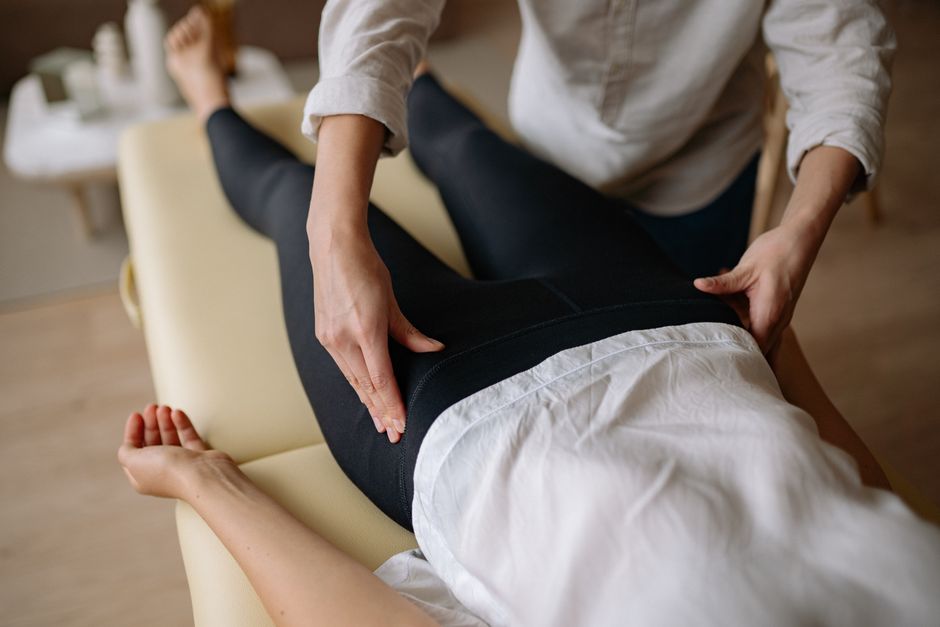
The iliacus muscle runs from the inside of your pelvis down to the top of your thigh bone. When it tightens or develops trigger points, it can cause deep groin pain, hip stiffness, and sometimes low back discomfort. You can release it at home with targeted stretches, self-massage using a ball, and gentle strengthening — but the evidence for these techniques comes mostly from clinical practice and biomechanical reasoning rather than large controlled trials.
What Is the Iliacus Muscle and Why Does It Matter?
The iliacus is one of two muscles that make up the iliopsoas group. It starts on the inner surface of your pelvic bone — the iliac fossa — and joins the psoas major tendon to attach to the lesser trochanter, a small bump on the inside of your thigh bone.
Its main job is hip flexion. Every time you lift your knee, walk upstairs, or get out of a chair, the iliacus contracts. It also helps stabilize the pelvis and lower spine during movement.
Because of where it sits — buried deep inside the pelvis — the iliacus is difficult to stretch directly. You cannot isolate it the way you can a hamstring or calf muscle. Most movements that lengthen it also involve the psoas, the quadriceps, and other hip flexors.
This matters because iliacus tightness is often part of a broader hip flexor pattern. Treating it in isolation rarely works. The muscle responds best to a combination of lengthening, releasing, and then strengthening in a new range.
What Does Iliacus Tightness Actually Feel Like?
People with iliacus tightness or trigger points commonly describe:
- Deep aching pain in the front of the hip or groin
- Stiffness when standing up after sitting for a while
- A feeling of tension that radiates into the lower abdomen
- Low back pain that worsens with standing or walking
- Difficulty lying flat on the back without discomfort
These symptoms overlap with many other conditions — hip labral tears, inguinal hernias, lumbar disc issues, and even appendicitis. A physical therapist or physician can help distinguish between them. Self-diagnosis based on symptoms alone is unreliable.
How To Release The Iliacus Muscle At Home
No single technique reliably releases the iliacus on its own. The most practical approach combines three things: positions that lengthen the muscle, pressure to reduce trigger point sensitivity, and exercises that teach the muscle to relax under load.
None of these methods have been tested in large randomized trials specifically for the iliacus. What follows reflects common clinical practice and established principles of muscle physiology.
1. Half-Kneeling Hip Flexor Stretch
Kneel on one knee with the other foot flat on the floor in front of you. Tuck your pelvis under — imagine tilting your belt buckle toward your nose. Then shift your weight slightly forward until you feel a stretch in the front of the kneeling hip.
The pelvic tilt is the key part. Without it, you mostly stretch the quadriceps and rectus femoris, not the iliacus. Hold for 20–30 seconds, breathe normally, and repeat two to three times per side.
Do not arch your lower back. If you feel pinching in the low back, you have gone too far.
2. Supine Ball Release
Lie on your back with a tennis ball or lacrosse ball placed just inside your hip bone, above the groin crease. This is approximately where the iliacus sits.
Apply gentle pressure by relaxing your body weight onto the ball. Do not press hard. The iliacus is deep and surrounded by sensitive structures — nerves, blood vessels, and the intestines are nearby. Pressure should feel like a dull ache, not sharp pain.
Hold for 30–60 seconds while breathing slowly. Then move the ball slightly to a new spot and repeat. Spend no more than two to three minutes total on each side.
Some clinicians use this technique with good results. Others avoid direct pressure on the anterior hip because of the risk of irritating the femoral nerve or blood vessels. If you feel tingling, numbness, or sharp pain, stop immediately.
3. Active Straight Leg Raise with Pelvic Control
Lie on your back with one leg straight and the other bent. Flatten your lower back against the floor by gently contracting your abdominal muscles. Then slowly lift the straight leg about 12 inches, keeping the pelvis still.
Lower it slowly. Repeat 8–10 times per side. This exercise teaches the iliacus to work while the pelvis stays neutral — which is often the missing piece for people with chronic tightness.
If your lower back arches or your pelvis rocks, the weight is too much. Bend the knee slightly or reduce the range.
Why Does the Iliacus Get Tight in the First Place?
Prolonged sitting is the most common contributor. When you sit for long periods, the iliacus stays in a shortened position. Over time, the muscle may adapt to that length and feel tight when you stand.
But “tight” does not always mean “short.” Research on muscle adaptation shows that some people with hip flexor tightness actually have normal or even long muscle length — the sensation of tightness comes from the nervous system, not from physical shortening.
Other factors that may contribute include:
- Running or cycling with high training volume
- Weak gluteal muscles, which forces the hip flexors to work harder
- Previous injury to the hip, pelvis, or lower back
- Pregnancy, which changes pelvic alignment and load
- Poor breathing mechanics that keep the diaphragm and iliacus in a guarded state
This is why stretching alone often fails. If the muscle is not actually short, stretching it further may not help — and could aggravate the nervous system’s protective tension.





Does Stretching Actually Release the Iliacus?
Stretching increases tolerance to stretch. It does not permanently lengthen a muscle in most cases. What changes is your nervous system’s willingness to let the muscle extend further.
That is still valuable. If you feel tight and stretching reduces that feeling, it is working — even if the muscle length has not changed measurably.
For the iliacus specifically, stretching alone is unlikely to resolve chronic tightness. The muscle responds better when you combine stretching with strengthening in the new range. This is a well-established principle in rehabilitation.
Some evidence suggests that eccentric strengthening — loading the muscle while it lengthens — produces better long-term changes in muscle length tolerance than static stretching alone. This has been studied more in hamstrings and calf muscles than in the iliacus, so the comparison is not directly proven for this muscle.
What About Foam Rolling and Massage Guns?
Foam rolling and massage guns are popular, but their effect on the iliacus specifically is limited by anatomy. The iliacus sits deep inside the pelvis, behind the abdominal contents. A foam roller on the front of the hip cannot reach it directly.
What these tools can do is reduce sensitivity in the surrounding tissues — the quadriceps, TFL, and hip capsule. That may indirectly help the iliacus by reducing overall hip tension.
Massage guns on the anterior hip should be used with caution. The femoral artery, femoral nerve, and lymph nodes are in that area. Avoid direct high-pressure application over the groin crease.
If you use a massage gun, keep it on the muscle belly of the quadriceps and outer hip, not deep into the groin.
When Should You See a Professional?
Home release techniques are reasonable for mild, activity-related tightness. They are not appropriate for every situation.
See a healthcare provider if you have:
- Pain that wakes you at night
- Numbness, tingling, or weakness in the leg
- Groin pain with a visible bulge (possible hernia)
- Pain after a fall or trauma
- Difficulty bearing weight
- Fever, chills, or unexplained weight loss alongside hip pain
These signs point to conditions that need medical evaluation, not self-massage. A physical therapist can assess whether your symptoms actually come from the iliacus or from something else.
How Long Does It Take to Feel a Difference?
Some people notice less stiffness within a few days of consistent practice. Others need several weeks. There is no standard timeline because the evidence for these techniques is not strong enough to predict individual outcomes.
What matters more than speed is consistency. A few minutes daily is generally more useful than a long session once a week.
If nothing changes after four to six weeks of regular practice, the problem is likely not just muscle tightness. Consider getting assessed by a professional who can look at your hip, pelvis, and movement patterns as a whole.
Frequently Asked Questions
Can you release the iliacus muscle by yourself?
Yes, you can use a combination of hip flexor stretches, gentle ball pressure near the hip crease, and active strengthening exercises. These methods are widely used in clinical practice, though large trials specifically for the iliacus are lacking.
How do you know if your iliacus is tight?
Common signs include deep groin pain, hip stiffness after sitting, and low back discomfort when standing. A physical therapist can confirm whether the iliacus is involved, since many other conditions cause similar symptoms.
Is it safe to foam roll the iliacus?
A foam roller cannot reach the iliacus directly because the muscle sits deep inside the pelvis. Rolling the surrounding hip and thigh muscles may help indirectly, but avoid high pressure over the groin area.
How long does it take to release a tight iliacus?
Some people feel improvement within days, while others need several weeks of consistent practice. If there is no change after four to six weeks, seek a professional assessment.
