
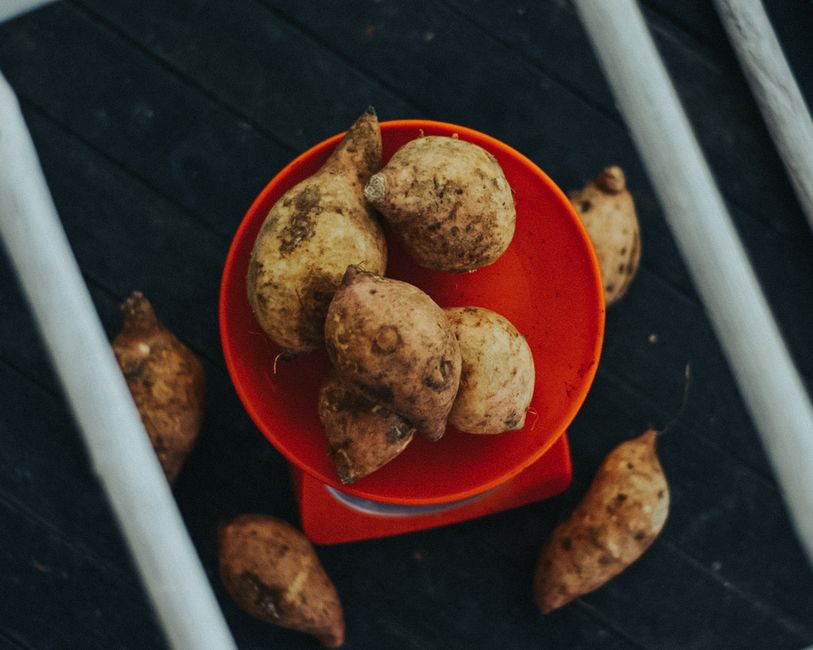
A medium sweet potato with the skin on contains about 4 grams of fiber. That is roughly 14% of the daily value for fiber based on a 2,000-calorie diet. The skin itself holds a significant portion of that fiber, so peeling the potato cuts the total amount roughly in half.
How Much Fiber Is in a Sweet Potato With Skin?
A medium sweet potato (about 5 inches long and weighing around 130 grams) provides approximately 4 grams of fiber when eaten with the skin. This is based on standard USDA nutritional data.
The fiber content changes with size. A small sweet potato delivers closer to 3 grams, while a large one can provide 5 to 6 grams. The key point is that the skin contributes meaningfully to the total. When you peel a sweet potato, you lose roughly half of its fiber content.
Why Does the Skin Matter So Much for Fiber?
The skin of a sweet potato is a concentrated source of insoluble fiber. This type of fiber does not dissolve in water. It adds bulk to stool and helps move food through the digestive tract more quickly.
The flesh of the sweet potato contains a mix of soluble and insoluble fiber. Soluble fiber dissolves in water and forms a gel-like substance in the gut, which can help slow digestion and support blood sugar management. Together, the skin and flesh provide a balance of both fiber types.
Most people do not eat enough fiber. The average American adult gets about 15 grams per day, while the recommended intake is 25 grams for women and 38 grams for men. Choosing sweet potatoes with the skin on is one simple way to close that gap.
Does Cooking Change the Fiber Content?
Cooking does not destroy fiber. Whether you bake, boil, roast, or microwave a sweet potato, the fiber stays intact. The method of cooking can affect other nutrients, but fiber is stable at normal cooking temperatures.
Boiling can leach some water-soluble vitamins into the cooking water, but fiber is not water-soluble in the same way. The fiber remains in the potato itself. Baking and roasting may actually concentrate fiber slightly because they remove some water, making the fiber content per gram slightly higher than in boiled potatoes.
One practical note: the skin becomes tougher when baked or roasted than when boiled. Some people find the skin easier to eat when the potato is boiled or steamed because it softens more. The fiber content is essentially the same either way.





How Does Sweet Potato Fiber Compare to Other Foods?
Sweet potatoes are a good fiber source, but not the highest. For comparison:
- A medium sweet potato with skin: about 4 grams of fiber
- A medium apple with skin: about 4.4 grams of fiber
- A cup of cooked black beans: about 15 grams of fiber
- A cup of cooked oatmeal: about 4 grams of fiber
- A slice of whole wheat bread: about 2 grams of fiber
Sweet potatoes perform well for a starchy vegetable. White potatoes with the skin on contain slightly less fiber, around 3 grams per medium potato. The sweet potato’s fiber advantage comes largely from its skin, which is why leaving it on makes a real difference.
What Are the Health Benefits of Sweet Potato Fiber?
The fiber in sweet potatoes supports digestive health in several ways. Insoluble fiber from the skin adds bulk to stool, which can help prevent constipation. Soluble fiber from the flesh feeds beneficial gut bacteria, which produce short-chain fatty acids that support colon health.
Fiber also slows the absorption of sugar into the bloodstream. Sweet potatoes have a lower glycemic index than white potatoes when boiled, and the fiber content is part of the reason. Eating the skin helps blunt blood sugar spikes after a meal.
Some research suggests that higher fiber intake is linked to a lower risk of heart disease, type 2 diabetes, and certain cancers. These associations come from large observational studies, not from sweet potatoes specifically. The evidence for fiber overall is strong. The evidence for sweet potatoes as a unique superfood is not.
Are There Any Downsides to Eating the Skin?
Sweet potato skin is safe to eat for most people. The main issues are texture and cleanliness. The skin can be tough and chewy, especially on roasted potatoes. Some people simply prefer the texture of peeled sweet potatoes.
Dirt and bacteria can remain on the skin. Scrub sweet potatoes thoroughly under running water before cooking. Organic sweet potatoes may have less pesticide residue, but washing is still necessary. There is no evidence that conventionally grown sweet potato skin is unsafe when washed properly.
People with certain digestive conditions, such as irritable bowel syndrome, may find high-fiber foods uncomfortable. Sweet potatoes contain a type of carbohydrate called FODMAPs that can cause gas and bloating in sensitive individuals. This is not a reason to avoid sweet potatoes entirely, but portion size matters for people with digestive sensitivities.
How to Eat More Sweet Potato Skin
The simplest approach is to stop peeling. Scrub the potato well, then bake, roast, or microwave it whole. The skin crisps up nicely when roasted with a small amount of oil.
Sweet potato skins can also be made into chips. Slice the skin into strips, toss with a little oil and salt, and bake until crisp. This works best with thick-skinned sweet potatoes.
Mashed sweet potatoes can be made with the skin on. Boil the potatoes until tender, then mash them with the skin included. The texture will be slightly more rustic, but the fiber content stays higher.
Adding sweet potatoes to soups, stews, and curries is another easy way to keep the skin on. The skin softens during simmering and becomes less noticeable.
Does the Variety of Sweet Potato Matter?
Fiber content varies slightly by variety, but not by much. Orange-fleshed sweet potatoes, purple sweet potatoes, and white-fleshed varieties all provide similar amounts of fiber. The differences between varieties are more noticeable in taste, texture, and antioxidant content than in fiber.
Purple sweet potatoes contain anthocyanins, which are pigments with antioxidant properties. Orange varieties are high in beta-carotene, which the body converts to vitamin A. All varieties are good sources of fiber when eaten with the skin.
Yams are sometimes confused with sweet potatoes in the United States. True yams are a different vegetable with a rougher, bark-like skin. They are less common in American grocery stores. Most items labeled “yams” in U.S. supermarkets are actually orange-fleshed sweet potatoes.
How Much Fiber Do You Need Per Day?
The Dietary Guidelines for Americans recommend 25 grams of fiber per day for adult women and 38 grams for adult men. These numbers are based on a 2,000-calorie intake for women and 2,500 for men. Needs vary with age and calorie intake.
Most Americans fall short of these targets. A single sweet potato with skin provides a meaningful portion of the daily requirement, but it is not enough on its own. Combining sweet potatoes with beans, whole grains, fruits, and vegetables is the most effective way to meet fiber goals.
If you are not used to eating much fiber, increase your intake gradually. A sudden jump from 15 grams to 40 grams per day can cause bloating, gas, and cramping. Drinking plenty of water helps fiber move through the digestive system smoothly.
Frequently Asked Questions
How many grams of fiber are in a sweet potato with the skin?
A medium sweet potato with the skin on contains about 4 grams of fiber. Peeling it reduces the fiber content to roughly 2 grams.
Is sweet potato skin good for you?
Yes, the skin is a concentrated source of insoluble fiber and contains additional nutrients. Scrub it thoroughly before eating.
Does boiling a sweet potato reduce its fiber?
No, cooking does not destroy fiber. Boiling, baking, or roasting leaves the fiber content essentially unchanged.
Are sweet potatoes a good source of fiber compared to other vegetables?
Sweet potatoes are a good source, providing about 4 grams per medium potato with skin. They are comparable to oatmeal and slightly higher than white potatoes.
