
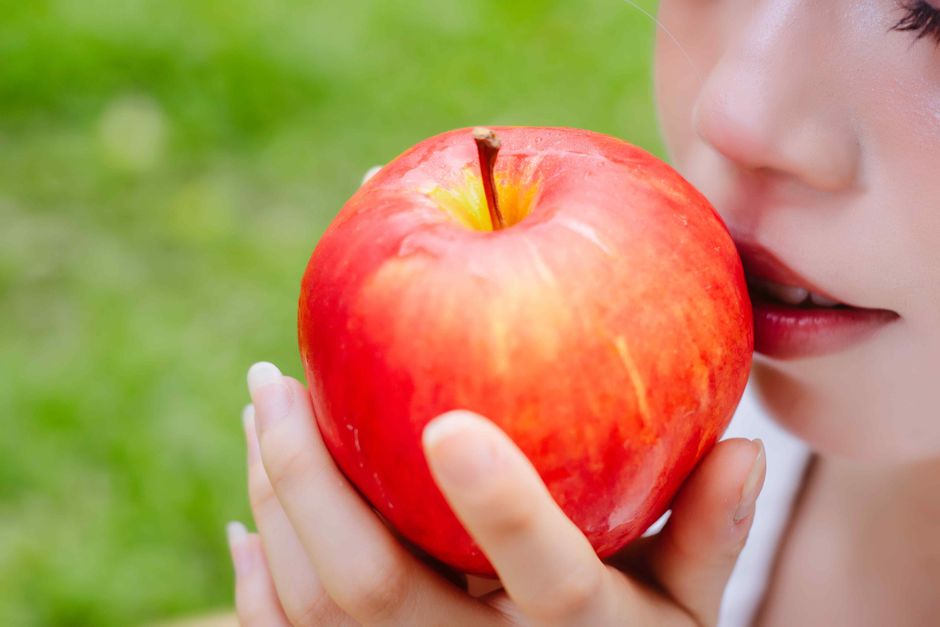
A medium apple with its skin has about 4.4 grams of fiber. Peel the same apple and that number drops to roughly 2.1 grams. The skin holds the majority of the fruit’s fiber, along with many of its antioxidants. If you are eating an apple for digestive health or to feel full, the skin matters more than most people realize.
How Much Fiber Is In An Apple With Or Without Skin?
A medium apple (about 182 grams) with the skin on provides approximately 4.4 grams of fiber. Without the skin, that same apple provides about 2.1 grams. That means removing the skin cuts the fiber content by more than half.
This difference is consistent across most apple varieties. The exact numbers vary slightly depending on the size of the fruit, but the ratio holds: roughly half the fiber lives in the peel.
The skin is also where most of the apple’s polyphenols and antioxidants are concentrated. These compounds are not fiber, but they are part of why whole apples are associated with better metabolic health in observational studies.
What Kind Of Fiber Is In An Apple?
Apples contain both soluble and insoluble fiber. The two types do different jobs in the body.
Soluble fiber dissolves in water to form a gel-like substance. It slows digestion, helps stabilize blood sugar after meals, and feeds beneficial bacteria in the colon. Apples are a good source of a specific soluble fiber called pectin.
Insoluble fiber does not dissolve in water. It adds bulk to stool and helps move material through the digestive tract. This is the fiber that prevents constipation.
Roughly one-quarter to one-third of the fiber in an apple is soluble. The rest is insoluble. Both types are present in the skin and the flesh, but the skin contains higher concentrations of both.
Why Does Apple Fiber Matter For Blood Sugar?
The fiber in apples changes how the body processes the fruit’s natural sugars. A medium apple contains about 25 grams of total carbohydrate, of which roughly 19 grams are sugar. Without fiber, that sugar would enter the bloodstream quickly.
Fiber slows that process. It delays gastric emptying and reduces the speed of sugar absorption in the small intestine. The result is a more gradual rise in blood glucose compared to drinking apple juice or eating peeled apples in large quantities.
This is why whole fruit is consistently recommended over juice for people managing blood sugar. Apple juice has almost no fiber. A glass of apple juice can raise blood sugar nearly as fast as a sugar-sweetened drink of the same carbohydrate content.
Peeling apples does not eliminate this benefit. But it reduces it. If you are eating an apple specifically to blunt the blood sugar response, keep the skin on.





Does Apple Fiber Help With Satiety And Weight?
Fiber contributes to fullness, and apples are a reasonably filling fruit for their calorie content. A medium apple has about 95 calories. The fiber, water content, and physical structure of the fruit all play a role in how satisfying it is.
Some research suggests that eating whole apples before a meal reduces total calorie intake at that meal compared to consuming apple juice or applesauce. The mechanism is likely a combination of fiber, volume, and the mechanical effort of chewing.
Peeled apples are less filling than unpeeled ones. The fiber difference is the main reason. Fiber adds bulk without calories, and it slows the rate at which the stomach empties.
None of this means apples are a weight-loss food on their own. No single food causes weight loss. But replacing higher-calorie snacks with a whole apple is a reasonable strategy for reducing overall calorie intake.
How Do Apples Compare To Other Fruits For Fiber?
Apples are a decent source of fiber, but they are not the highest-fiber fruit available. The comparison depends on serving size and whether the skin is eaten.
| Fruit (medium serving) | Fiber content |
|---|---|
| Apple with skin | About 4.4 grams |
| Apple without skin | About 2.1 grams |
| Banana | About 3.1 grams |
| Orange | About 3.1 grams |
| Pear with skin | About 5.5 grams |
| Raspberries (1 cup) | About 8 grams |
| Blackberries (1 cup) | About 7.6 grams |
Berries are the clear winners. Pears edge out apples when both are eaten with the skin. Apples are a solid mid-range choice, especially when you consider availability, cost, and how easy they are to eat without preparation.
Should You Peel Apples Before Eating?
For most people, no. The skin contains most of the fiber and a large share of the antioxidants. Removing it reduces the nutritional value of the fruit.
There are a few reasons someone might peel an apple. Young children sometimes struggle to chew the skin. People with certain digestive conditions, such as active diverticulitis or a narrowed esophagus, may tolerate peeled apples better. Some people simply prefer the texture.
If you peel apples because of pesticide concerns, know that washing the fruit under running water removes a meaningful portion of surface residues. Peeling removes more, but it also removes the fiber. The evidence does not suggest that the pesticide residue on conventionally grown apples poses a health risk at typical consumption levels.
Organic and conventionally grown apples both provide the same fiber content. The choice between them is about pesticide exposure and farming practices, not nutrition.
How Much Fiber Do You Need Per Day?
Adults should aim for roughly 25 to 38 grams of fiber per day. The lower end of that range is often cited for women, the higher end for men. Most Americans eat far less, averaging around 15 grams daily.
To put apples in context: one medium apple with skin covers about 12 to 17 percent of your daily fiber target. Two apples get you to roughly a third of the way there.
Fiber needs are not a precise science. The range is a general guideline based on what is associated with lower risk of heart disease, type 2 diabetes, and digestive disorders in large population studies.
If you are not used to eating much fiber, increase your intake gradually. A sudden jump from 15 grams to 35 grams per day can cause bloating, gas, and cramping. Adding an apple a day is a reasonable way to move in the right direction.
Does Cooking Or Processing Change Apple Fiber?
Cooking does not destroy fiber. The fiber in a baked apple is essentially the same as in a raw apple. What changes is the water content and the concentration of other nutrients.
Applesauce has less fiber than a whole apple because it is typically made from peeled apples. If you make applesauce at home with the skin on, you retain more fiber. Commercial applesauce is usually peeled.
Apple juice has essentially no fiber. Even cloudy, unfiltered apple juice contains very little. The juicing process separates the pulp, which is where the fiber lives.
Dried apple slices retain the fiber of the fresh fruit. But they are much more calorie-dense per serving because the water is removed. A cup of dried apples has more calories than a cup of fresh apple slices.
Frequently Asked Questions
Which has more fiber: an apple with skin or without?
An apple with skin has about twice the fiber of a peeled apple. A medium apple with skin provides roughly 4.4 grams, while the same apple peeled provides about 2.1 grams.
Is apple skin hard to digest?
Most people digest apple skin without difficulty. The skin is rich in insoluble fiber, which passes through the digestive tract largely intact and adds bulk to stool. People with active inflammatory bowel disease or strictures may tolerate peeled apples better.
Can eating apples help with constipation?
Yes, the insoluble fiber in apples adds bulk to stool and can help prevent constipation. The soluble fiber, pectin, also supports regular bowel movements by feeding beneficial gut bacteria.
Does apple juice count toward daily fiber intake?
No. Apple juice contains essentially no fiber because the pulp is removed during processing. Even unfiltered juice has minimal fiber compared to whole apples.
