
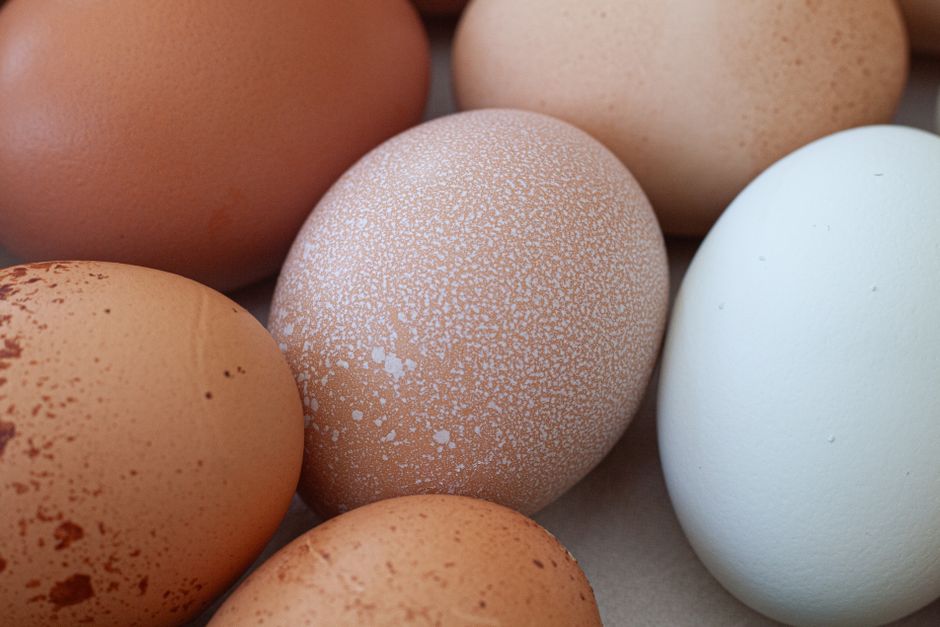
Two large eggs contain about 373 milligrams of cholesterol. That is all in the yolk. For years, health guidelines told people to keep their daily cholesterol under 300 milligrams. So two eggs put you over the old limit. But research has changed how experts think about this. The 2020-2025 Dietary Guidelines for Americans no longer set a specific cholesterol limit. The real question is not just how much cholesterol is in two eggs but whether that amount matters for your health. For most people, it does not.
What Changed in the Science on Dietary Cholesterol?
For decades, the advice was simple: eat less cholesterol, and your blood cholesterol drops. That made sense on paper. But when researchers actually tested this, they found something different. The body makes most of its own cholesterol. Your liver produces about 80 percent of the cholesterol in your blood. Only about 20 percent comes from food.
When you eat more cholesterol, your liver usually makes less. This feedback system keeps blood levels fairly stable for most people. The 2015 Dietary Guidelines Advisory Committee reviewed all the evidence and concluded that dietary cholesterol is “not a nutrient of concern for overconsumption.” That was a major shift. The American Heart Association still recommends limiting saturated fat, not cholesterol itself.
A 2019 study in the journal Circulation looked at data from over 29,000 people. It found no strong link between egg consumption and heart disease in healthy adults. The real driver of high blood cholesterol is saturated fat and trans fat, not the cholesterol you eat.
How Much Cholesterol In Two Eggs And Is It Too Much Compared to Daily Limits?
Let us look at the numbers directly. One large egg has about 186 milligrams of cholesterol. Two eggs give you 372 milligrams. That is more than the old 300-milligram daily limit. But here is what many articles leave out: that old limit was never based on strong evidence.
The current dietary guidelines say to keep cholesterol as low as possible without compromising nutritional quality. That is not a hard number. It is a suggestion to avoid excessive amounts. Two eggs per day are well within what most health organizations consider safe for healthy people.
For comparison, a single fast-food breakfast sandwich with egg, cheese, and sausage can have 250 to 400 milligrams of cholesterol. But it also has 15 to 20 grams of saturated fat. The eggs are not the problem. The bacon, butter, and cheese are.
Do Eggs Raise Your Blood Cholesterol?
Studies consistently show that eggs have a mild effect on blood cholesterol for most people. A 2018 meta-analysis in the journal Nutrients reviewed 28 studies. It found that eating eggs increased HDL (good) cholesterol. It also raised LDL (bad) cholesterol, but the increase was small. The ratio of LDL to HDL stayed the same or improved.
There is a group of people called hyper-responders. About 25 to 30 percent of the population has a genetic tendency to absorb more dietary cholesterol. For these individuals, eating two eggs a day can raise LDL cholesterol by 10 to 15 percent. If you know you have high cholesterol or a family history of heart disease, it is worth checking how your body responds.
Most people can eat eggs daily without harm. The American Heart Association says one egg per day is fine for healthy adults. Some people can eat two or three. The bigger concern is what you eat with the eggs. Toast with butter, bacon, and processed meats add saturated fat that raises cholesterol far more than the eggs themselves.





What About the Yolk vs. the White?
All the cholesterol in an egg is in the yolk. The white is mostly protein and water with zero cholesterol. Some people eat only egg whites to avoid cholesterol entirely. That works, but you lose nutrients.
The yolk contains choline, vitamin D, vitamin B12, selenium, and lutein. Choline is important for brain health. Lutein supports eye health. If you throw away the yolk, you lose most of the nutritional value of the egg. For most people, eating the whole egg is better than skipping the yolk.
One study published in the American Journal of Clinical Nutrition found that eating whole eggs improved HDL function compared to eating egg whites alone. The yolk is not the enemy. The saturated fat in your breakfast sides is.
How Do Eggs Compare to Other High-Cholesterol Foods?
Eggs are not the only food high in cholesterol. Here is how common foods stack up for cholesterol content per serving:
| Food | Cholesterol (mg) | Saturated Fat (g) |
|---|---|---|
| 2 large eggs | 372 | 3.2 |
| 3 oz beef liver | 330 | 1.4 |
| 1 shrimp (3 oz) | 179 | 0.3 |
| 1 tablespoon butter | 31 | 7.3 |
| 4 oz ground beef (80/20) | 80 | 8.0 |
| 1 cup whole milk | 24 | 4.6 |
The table shows that shrimp and liver have cholesterol levels close to eggs. But shrimp has almost no saturated fat. Butter has less cholesterol but more saturated fat. The foods that truly drive up blood cholesterol are those high in saturated fat, not necessarily high in dietary cholesterol.
Who Should Be Careful About Egg Consumption?
Not everyone can eat eggs freely. People with diabetes or familial hypercholesterolemia may need to be more cautious. Some observational studies have linked high egg intake to higher heart disease risk in people with diabetes. But these studies are not proof of cause.
A 2020 study in the American Journal of Clinical Nutrition followed over 100,000 people for 10 years. It found no link between moderate egg intake and heart disease or stroke, even in people with diabetes. The evidence is mixed. If you have diabetes, it is reasonable to limit eggs to one per day and focus on the overall diet.
People with high LDL cholesterol should also monitor their response. You can check your cholesterol levels before and after a month of eating two eggs daily. If your LDL goes up significantly, cut back. If it stays the same, eggs are fine for you.
Common Misconceptions About Eggs and Cholesterol
One myth is that brown eggs are healthier than white eggs. The color of the shell depends on the breed of chicken. It has nothing to do with nutrition or cholesterol content. Both are identical.
Another myth is that eating eggs raises your risk of heart attack. The research does not support this. A 2021 review in Advances in Nutrition analyzed 30 studies and found no association between egg consumption and heart disease in healthy populations. The idea that eggs cause heart attacks came from outdated studies that did not control for other dietary factors.
A third myth is that you should never eat more than one egg per day. Some people eat three or four eggs daily with no ill effects. The key is what else you eat. If your breakfast is eggs with vegetables and avocado, that is a heart-healthy meal. If it is eggs with cheese, bacon, and buttered toast, the problem is not the eggs.
What Actually Matters for Heart Health
If you want to lower your blood cholesterol, cutting out eggs is not the most effective move. Here is what the evidence shows works better:
- Reduce saturated fat. This means less butter, cheese, fatty meats, and fried foods. Saturated fat raises LDL cholesterol more than dietary cholesterol.
- Eat more fiber. Soluble fiber from oats, beans, apples, and psyllium binds to cholesterol and helps remove it from your body. Studies show that 5 to 10 grams of soluble fiber per day can lower LDL by 5 to 10 percent.
- Use plant sterols. Foods fortified with plant sterols, like some margarines and yogurts, can block cholesterol absorption. The National Lipid Association recommends 2 grams per day for people with high cholesterol.
- Exercise regularly. Physical activity raises HDL and helps lower LDL. Even 30 minutes of walking most days makes a difference.
- Maintain a healthy weight. Excess body fat, especially around the belly, is linked to higher LDL and lower HDL. Losing even 5 to 10 percent of body weight can improve cholesterol numbers.
Eggs are a nutrient-dense food. They provide high-quality protein, vitamins, and minerals for very few calories. For most people, the benefits of eating whole eggs outweigh the cholesterol concern. The real risk is not the egg itself but the dietary pattern around it.
Frequently Asked Questions
How much cholesterol is in two eggs?
Two large eggs contain about 372 milligrams of cholesterol. All of it is in the yolk.
Is 372 mg of cholesterol per day too much?
For most healthy people, no. The body adjusts its own cholesterol production based on dietary intake, and current guidelines no longer set a strict daily limit.
Can I eat eggs every day if I have high cholesterol?
It depends on your individual response. Some people see a rise in LDL from eggs, while others do not. Monitor your cholesterol levels and consult your doctor.
Are egg whites better than whole eggs for cholesterol?
Egg whites have no cholesterol, but they also lack the nutrients in the yolk. For most people, whole eggs are more nutritious and still safe in moderation.
