
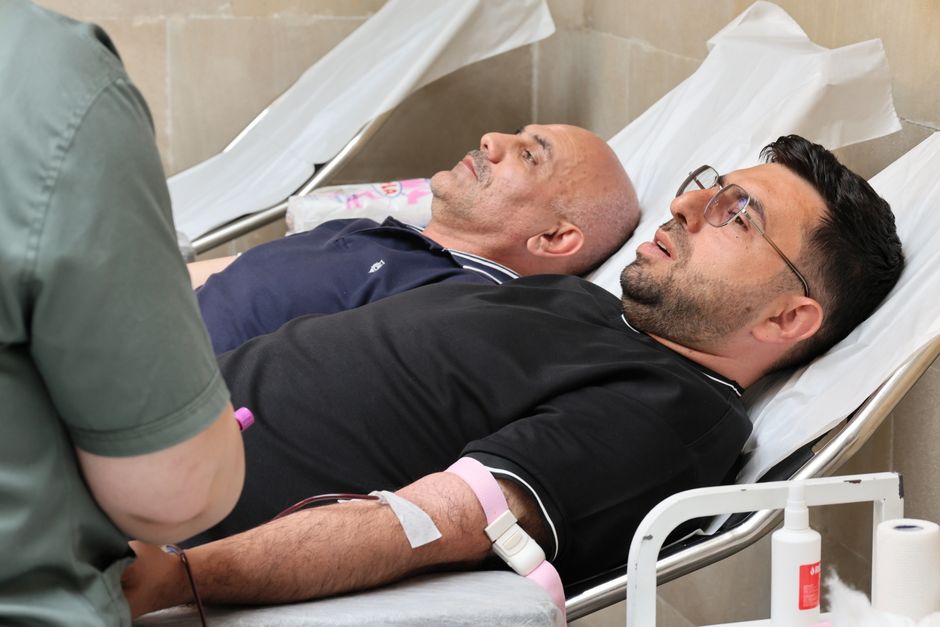
The average adult has about 10 to 12 units of blood in their body. One unit is equal to roughly one pint, or about 450 to 500 milliliters. That means a typical adult carries between 4.5 and 6 liters of blood total, though the exact amount depends on body size, weight, and sex.
How Many Units Of Blood Does The Average Adult Have?
The standard medical definition of one unit of blood is approximately 450 milliliters, which is just under one US pint. When doctors, nurses, and blood banks talk about units, they mean this specific volume. A 150-pound adult male typically has about 12 units. A 130-pound adult female typically has about 9 to 10 units.
Blood volume scales with body size. Larger people have more blood. Smaller people have less. This is why blood donation limits are based on weight — a donor must weigh at least 110 pounds to safely give one unit. The body can usually replace that lost unit within 24 to 48 hours, though red blood cells take longer to fully replenish.
What Determines How Much Blood A Person Has?
Body weight is the biggest factor. Blood makes up about 7 to 8 percent of total body weight. A person who weighs 70 kilograms, or about 154 pounds, has roughly 5 liters of blood. That works out to about 10 to 11 units.
Sex also matters. On average, men have more blood than women of the same weight because they tend to have more muscle mass. Muscle tissue requires more blood flow than fat tissue. Pregnancy increases blood volume significantly — a pregnant woman may have 30 to 50 percent more blood by the third trimester to support the fetus.
Height, age, and overall health play smaller roles. Athletic training can increase blood volume over time. So can living at high altitude, where the body produces more red blood cells to carry oxygen in thinner air.
How Much Blood Can You Lose Before It Becomes Dangerous?
The human body can tolerate losing about 15 percent of its blood volume without major symptoms. For an average adult with 10 units, that is about 1.5 units, or roughly 675 milliliters. A person at this level might feel lightheaded or fatigued but usually recovers without medical treatment.
Losing 20 to 30 percent of blood volume — about 2 to 3 units — is more serious. Heart rate rises, blood pressure drops, and the person may feel anxious or confused. This is the point where medical attention is needed. Losing 40 percent or more, about 4 to 5 units, is life-threatening. Organ failure and shock can occur rapidly without transfusion and emergency care.
These percentages are general guidelines. Individual tolerance varies. A healthy young adult may survive blood loss that would be fatal to an older person with heart disease. Children and infants have smaller total blood volumes, so the same absolute amount of blood loss is much more dangerous for them.




How Much Blood Is In One Donation?
One standard blood donation is exactly one unit — about 450 milliliters. That is roughly 10 percent of an average adult’s total blood volume. Most healthy adults can donate this amount safely every 56 days, which is the minimum interval allowed by the American Red Cross.
After donating, the body quickly replaces the plasma portion of the blood, usually within 24 hours. Red blood cells take longer — about 4 to 6 weeks to fully restore. This is why there is a waiting period between donations. The body needs time to rebuild its red blood cell supply before it can safely give again.
Blood donation is different from blood draws for lab tests. A typical blood test uses only 5 to 10 milliliters, which is a tiny fraction of a unit. Routine lab work does not meaningfully reduce blood volume.
What Happens When You Receive A Blood Transfusion?
When a patient receives a blood transfusion, they get one unit at a time. A single unit of packed red blood cells raises hemoglobin by about 1 gram per deciliter in an average adult. Doctors typically order one to two units for a stable patient with anemia, then recheck blood counts before ordering more.
In severe bleeding, such as trauma or major surgery, patients may receive many units rapidly. Massive transfusion protocols are activated when a patient receives 10 or more units in 24 hours. This is a medical emergency situation, and the body’s clotting factors and calcium balance must be carefully managed alongside the blood replacement.
Blood is typed and cross-matched before transfusion to prevent dangerous immune reactions. ABO and Rh compatibility are the main systems checked. Mismatched blood can cause a severe, potentially fatal reaction, which is why blood banks follow strict protocols.
Can Blood Volume Be Measured At Home?
No. Blood volume cannot be accurately measured at home. Home blood pressure cuffs measure pressure, not volume. Smartwatches and fitness trackers estimate heart rate and oxygen saturation, but they cannot calculate total blood volume.
In a medical setting, blood volume can be estimated using formulas based on weight and sex, or measured directly with specialized dye dilution techniques. These are rarely done in routine care. For most purposes, doctors use hemoglobin and hematocrit levels from a complete blood count to assess whether a patient has enough red blood cells, which is a practical proxy for blood health.
If you are concerned about blood loss or anemia, the right step is to see a doctor and get a blood test. Symptoms like persistent fatigue, shortness of breath, pale skin, or dizziness warrant medical evaluation. These symptoms can have many causes, and only a proper workup can determine what is going on.
Does Hydration Affect Blood Volume?
Yes, but within limits. Drinking water increases plasma volume temporarily. This is why athletes hydrate before events and why dehydration can lower blood pressure. However, the body tightly regulates blood volume through the kidneys and hormonal systems. Drinking extra water does not permanently increase your blood volume.
Severe dehydration can reduce blood volume enough to cause symptoms like dizziness and rapid heart rate. Replacing fluids restores volume. But you cannot drink your way to a higher blood count. Red blood cell production is controlled by erythropoietin, a hormone released by the kidneys in response to low oxygen levels — not by how much water you drink.
Frequently Asked Questions
How many pints of blood are in the human body?
The average adult has about 10 to 12 pints of blood, which equals 10 to 12 units. A smaller adult may have as few as 8 pints, while a larger adult may have 12 or more.
How many units of blood can you lose before needing a transfusion?
Most doctors consider a transfusion when a patient has lost about 2 units, or roughly 30 percent of blood volume. The decision depends on the patient’s symptoms, hemoglobin level, and underlying health conditions.
How long does it take to make one unit of blood?
The body replaces the plasma portion of donated blood within 24 hours. Red blood cells take 4 to 6 weeks to fully replenish, which is why donors must wait at least 56 days between whole blood donations.
Is 5 liters of blood the same as 10 units?
Yes, approximately. One unit equals about 450 to 500 milliliters, so 5 liters equals roughly 10 to 11 units. This is the typical blood volume for a 150-pound adult.
