
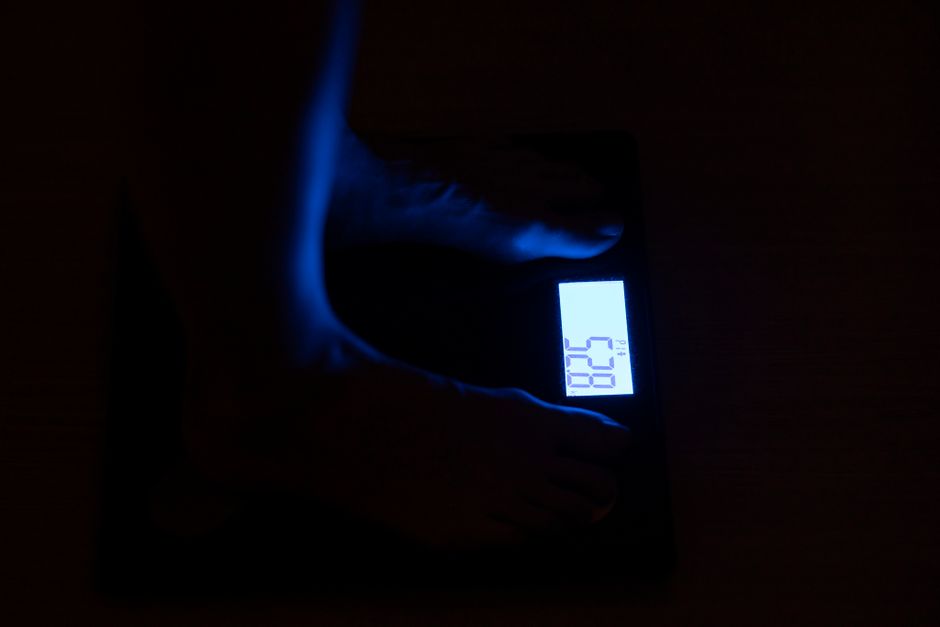
58 kilograms is equal to about 127.9 pounds. The exact conversion is 127.868 pounds, based on the international standard that one kilogram equals 2.20462 pounds. Most people round this to 128 pounds.
That number looks simple, but the way we convert between kilos and pounds, why the US still uses pounds, and what 58 kilos actually means for a real person’s body are all worth understanding. This article covers the math, the health context, and the common mistakes people make with this conversion.
How Many Pounds In 58 Kilos?
58 kilograms equals 127.868 pounds. The math is straightforward: multiply kilograms by 2.20462.
Here is the calculation broken down:
- 58 × 2.20462 = 127.868 pounds
- Rounded to one decimal place: 127.9 pounds
- Rounded to the nearest whole number: 128 pounds
The kilogram is the base unit of mass in the International System of Units (SI). The pound is defined in terms of the kilogram — one pound equals exactly 0.45359237 kilograms. This is not an approximation. It is a fixed, legal definition adopted by international agreement. So the conversion factor of 2.20462 is not a rough estimate. It is exact to five decimal places.
In everyday use, people often round the factor to 2.2. That gives 58 × 2.2 = 127.6 pounds. Close, but about a third of a pound off. For most daily purposes that difference does not matter. For medical dosing, shipping weights, or anything requiring precision, use the full factor.
Why Does the US Still Use Pounds?
The United States is one of only a few countries that still uses pounds as the primary unit of body weight. Most of the world — including Europe, Asia, Australia, and most of Africa — uses kilograms.
The US adopted the metric system as legal in 1866, but never mandated its use for everyday life. The Metric Conversion Act of 1975 encouraged voluntary conversion, but it was never required. As a result, Americans weigh themselves in pounds, buy food measured in ounces and pounds, and see body weight referenced in pounds on most medical charts.
This creates a practical problem. A doctor in the US may record a patient’s weight as 128 pounds. A doctor in Germany records the same patient as 58 kilograms. Neither is wrong. But when medical research is published in kilograms and a US patient reads it in pounds, confusion follows.
Countries like the United Kingdom use a mix. Body weight is often stated in stones and pounds, while food packaging uses grams and kilograms. Canada uses kilograms officially but many people still think in pounds for body weight.
Is 58 Kilos a Healthy Weight?
Body weight alone cannot determine health. A weight of 58 kilograms (128 pounds) may be healthy for one person and unhealthy for another, depending on height, body composition, age, and overall health.
The most common tool for assessing weight status is body mass index (BMI). BMI is calculated as weight in kilograms divided by height in meters squared. The World Health Organization defines the categories as follows:
- Underweight: BMI below 18.5
- Normal weight: BMI 18.5 to 24.9
- Overweight: BMI 25.0 to 29.9
- Obese: BMI 30.0 and above
At 58 kilograms, a person’s BMI depends entirely on height. A person who is 1.55 meters tall (about 5 feet 1 inch) would have a BMI of about 24.1, which falls in the normal range. A person who is 1.75 meters tall (about 5 feet 9 inches) would have a BMI of about 18.9, also normal but near the lower end. A person at 1.80 meters (about 5 feet 11 inches) would have a BMI of about 17.9, which falls below the underweight threshold.
BMI has real limitations. It does not distinguish between muscle and fat. A muscular athlete may have a high BMI but low body fat. An older adult may have a normal BMI but low muscle mass and excess fat. BMI also does not account for where fat is stored, and fat around the organs carries different health risks than fat under the skin.
For these reasons, most clinicians use BMI as a starting point, not a final answer. Waist circumference, body composition, blood pressure, blood sugar, and cholesterol levels all contribute to a fuller picture of health.





How to Convert Kilos to Pounds Without a Calculator
If you need a quick estimate, multiply the kilograms by 2 and then add about 10 percent. For 58 kilos: 58 × 2 = 116. Ten percent of 116 is 11.6. Add that: 116 + 11.6 = 127.6. Close to the exact 127.9.
Another method: double the kilos and add 10 percent of the doubled number. Same result.
For a more precise mental shortcut, remember that 1 kilogram is roughly 2.2 pounds. So 58 × 2.2 = 127.6. That is within a third of a pound of the exact figure.
Going the other way — pounds to kilos — divide by 2.2. So 128 pounds ÷ 2.2 = 58.2 kilograms. Again, close enough for most everyday purposes.
These shortcuts work well for body weight. They are not appropriate for medication dosing, where exact conversion matters. For drug doses, always use the prescriber’s instructions and a calibrated measuring device.
Common Conversion Mistakes
The most common error is using 2.2 as the conversion factor and then rounding too early. If you multiply 58 by 2.2 and get 127.6, then round to 128, you are fine. But if you round 2.2 to 2, you get 116 pounds — off by nearly 12 pounds. That kind of error can matter.
Another mistake is confusing mass with weight. In everyday language, we use the terms interchangeably. In physics, mass is the amount of matter in an object, and weight is the force of gravity on that mass. A person with a mass of 58 kilograms would weigh about 127.9 pounds on Earth. On the Moon, their mass would still be 58 kilograms, but their weight would be about 21 pounds. For body weight conversations on Earth, the distinction rarely matters, but it explains why scientists prefer kilograms — it is a measure of mass, not force.
A third mistake is assuming all pounds are the same. The international avoirdupois pound is the standard used in the US and most countries. But historically, other pounds existed, such as the troy pound used for precious metals. The troy pound is different from the avoirdupois pound. For body weight, only the avoirdupois pound applies.
When Exact Conversion Matters
For most people, knowing that 58 kilos is about 128 pounds is enough. But there are situations where precision matters.
Medical dosing is the most important. Many drugs are dosed in milligrams per kilogram of body weight. If a medication is prescribed at 5 mg per kilogram, a 58-kilogram patient would receive 290 mg. If someone mistakenly used 128 pounds as the weight and dosed at 5 mg per pound, they would give 640 mg — more than double the intended dose. This is why healthcare providers use kilograms for dosing, not pounds.
Air travel is another area. Airlines calculate aircraft weight and balance using kilograms in most of the world. A discrepancy of a few pounds per passenger, multiplied across hundreds of passengers, can affect fuel calculations. This is why airlines ask for accurate weights or use standard averages.
Shipping and freight also rely on accurate conversion. A package weighing 58 kilograms is billed at 127.9 pounds in countries that use pounds for shipping. Rounding down to 127 pounds could result in underpayment or customs issues.
For body weight tracking at home, precision to the decimal is not necessary. A scale that measures in pounds or kilograms is fine. What matters more is consistency — weighing yourself at the same time of day, under similar conditions, and tracking the trend over time rather than day-to-day fluctuations.
Frequently Asked Questions
How many pounds is 58 kilos exactly?
58 kilograms equals 127.868 pounds exactly, based on the international standard conversion factor of 2.20462. Most people round this to 128 pounds for everyday use.
Is 58 kg a good weight for a woman?
There is no single “good” weight because it depends on height, body composition, and overall health. At 58 kilograms, a woman’s BMI would fall in the normal range if she is between roughly 1.53 and 1.77 meters tall.
How do I convert 58 kg to pounds without a calculator?
Multiply 58 by 2 to get 116, then add about 10 percent (11.6) to get approximately 127.6 pounds. The exact answer is 127.9 pounds, so this shortcut is accurate to within a fraction of a pound.
Is 58 kg the same as 128 pounds?
Yes, for practical purposes. The exact conversion is 127.868 pounds, which rounds to 128 pounds. The difference is about two ounces.
