
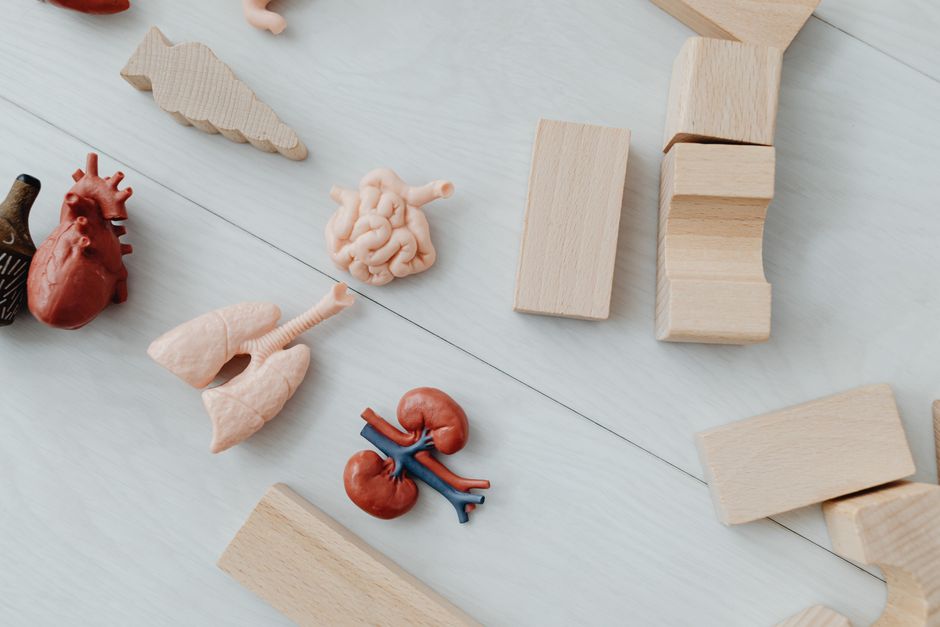
Most people are born with two kidneys, one on each side of the spine just below the rib cage. They are each roughly the size of a fist, shaped like a kidney bean, and together they filter about 200 quarts of blood every day. Some people have only one kidney, and a small number are born with an extra one.
Here is the straightforward count: two is normal, one is common and usually workable, and three is rare. The number matters less than how well the kidney tissue you have is working. A single healthy kidney can carry the full workload for most people.
How Many Kidneys Do You Have and Where Are They?
The standard human count is two. They sit in the back of the abdomen, on either side of the spine, positioned behind the intestines and just below the liver on the right and the spleen on the left. The right kidney usually sits slightly lower than the left because the liver takes up space above it.
Each kidney is about 4 to 5 inches long and weighs roughly 4 to 6 ounces in adults. Blood enters through the renal artery, gets filtered inside tiny structures called nephrons, and leaves through the renal vein. Each kidney contains about a million nephrons. That number is set at birth and declines gradually with age.
Urine made in the kidneys travels down tubes called ureters to the bladder. From there it leaves the body through the urethra. The kidneys also regulate blood pressure, balance electrolytes, produce a hormone that triggers red blood cell production, and activate vitamin D. Filtering waste is only part of the job.
Can You Live With Just One Kidney?
Yes. People live normal, full lives with one kidney. This is one of the better-established facts in nephrology.
When one kidney is removed or never develops, the remaining kidney compensates. It grows larger and filters more blood per unit of tissue, a process called compensatory hypertrophy. This typically happens over months to years. Most people with a single kidney have normal kidney function on standard blood tests and no symptoms.
People are born with one kidney in about 1 in every 750 to 1,000 births, according to estimates cited in medical literature. This is called renal agenesis. Others lose a kidney to surgery, trauma, or donation. Living kidney donors are a well-studied group, and long-term follow-up studies generally show that most donors maintain healthy kidney function, though some develop mildly elevated blood pressure or protein in the urine over time.
Living with one kidney does come with practical considerations. Doctors typically advise avoiding contact sports that carry a high risk of abdominal injury, staying well hydrated, and keeping blood pressure and blood sugar in a healthy range. Nonsteroidal anti-inflammatory drugs like ibuprofen are usually discouraged for regular use, since they can reduce blood flow to the kidney. Anyone with a single kidney should discuss medication choices with their doctor rather than assume a drug is safe.
What Is a Supernumerary Kidney?
A supernumerary kidney is a third, separate kidney. This is genuinely rare. Fewer than 100 cases have been reported in the medical literature, according to published case reviews.
It differs from a duplicated collecting system, which is a much more common finding where one kidney has two ureters or two drainage channels but is still a single organ. A true supernumerary kidney has its own blood supply and its own ureter. It is a distinct organ.
Most supernumerary kidneys are found by accident during imaging for an unrelated problem. Many cause no symptoms. Some are associated with urinary tract infections, abdominal pain, or obstruction, and in those cases surgery may be considered. The condition is usually discovered in childhood, but adults are diagnosed too.





How Common Are Kidney Problems in People With Two Kidneys?
Having two kidneys does not make you immune to kidney disease. Chronic kidney disease affects an estimated 1 in 7 US adults, according to data from the Centers for Disease Control and Prevention. Most of those people do not know they have it.
The reason is that kidney disease is usually silent in its early stages. You can lose a significant amount of kidney function before you feel anything. Symptoms like fatigue, swelling in the ankles, foamy urine, or changes in urination tend to appear later.
The main risk factors are well established:
- Diabetes, the leading cause of kidney failure in the US
- High blood pressure, the second leading cause
- Heart disease
- Family history of kidney failure
- Obesity
- Age over 60
Standard screening involves a blood test for estimated glomerular filtration rate (eGFR) and a urine test for albumin. A normal eGFR is generally considered 90 mL/min/1.73 m² or higher, though values are interpreted alongside age and other factors. Persistent albumin in the urine is an early warning sign even when eGFR looks normal.
One point that gets lost: kidney function naturally declines with age in most people, even without disease. A slightly lower eGFR in a healthy 70-year-old is not the same as kidney disease in a 40-year-old. Context matters, and that is a conversation to have with a clinician, not a number to interpret alone.
Does Kidney Size or Number Change Over Time?
Kidney size changes, but the number does not. You do not grow new kidneys.
In people with two kidneys, total kidney volume tends to shrink slowly with age, mostly after age 50. This is a normal part of aging and usually does not cause problems on its own.
In people with one kidney, the remaining kidney typically enlarges. This is a compensation response, not a sign of disease. It can be seen on imaging and is expected.
Certain conditions do change kidney structure. Polycystic kidney disease causes numerous fluid-filled cysts to grow in the kidneys, making them much larger over time and gradually reducing function. Chronic kidney disease can cause scarring and shrinkage. These are disease processes, not normal variation.
What Should You Know About Kidney Donation?
Living kidney donation is a well-established procedure. More than 100,000 living kidney donations have been performed in the US since the first successful one in 1954, according to the National Kidney Foundation.
Donors go through extensive medical and psychological evaluation before surgery. The remaining kidney typically takes over function within weeks to months. Most donors return to normal activities within a few weeks, though recovery varies.
Long-term data on donors is generally reassuring but not without caveats. Some studies show a modestly increased risk of high blood pressure and proteinuria compared with the general population. The absolute risk remains low for most donors. Anyone considering donation should have a detailed conversation with a transplant center about their individual risk profile, not rely on general statistics alone.
What About People Born With No Kidneys?
Bilateral renal agenesis, being born with no kidneys at all, is rare and fatal. Without kidneys, the fetus cannot produce urine, which is essential for amniotic fluid. This leads to underdeveloped lungs and other complications. It affects roughly 1 in 3,000 to 1 in 10,000 births, based on published estimates.
This is a distinct situation from having one kidney or even one working kidney. It is not survivable without immediate and ongoing medical intervention, and in most cases it is not compatible with life outside the womb.
The Bottom Line on Kidney Numbers
Two is the standard count. One is common and usually fine. Three is rare. But the number is not the main story.
What matters most is how well your kidney tissue is functioning and whether you are managing the conditions that damage it. Diabetes and high blood pressure are the two biggest threats to kidney health in the US, and both are manageable. Regular screening with a blood test and urine test can catch problems early, when there is more room to act.
If you have one kidney, know your numbers and talk to your doctor about medication and lifestyle choices. If you have two, do not assume you are protected. Kidney disease is common, quiet, and worth paying attention to.
Frequently Asked Questions
How many kidneys does a normal person have?
A normal person has two kidneys, one on each side of the spine. Some people are born with one, and a very small number are born with three.
Can you live a normal life with one kidney?
Yes. Most people with one kidney live normal, healthy lives, and the remaining kidney usually takes over the full workload. Regular checkups and avoiding certain medications like frequent NSAID use are typically recommended.
How rare is it to have three kidneys?
A true third kidney, called a supernumerary kidney, is very rare. Fewer than 100 cases have been reported in the medical literature.
Does having two kidneys mean you cannot get kidney disease?
No. Chronic kidney disease affects about 1 in 7 US adults, and having two kidneys does not protect you. Diabetes and high blood pressure are the leading causes.
