
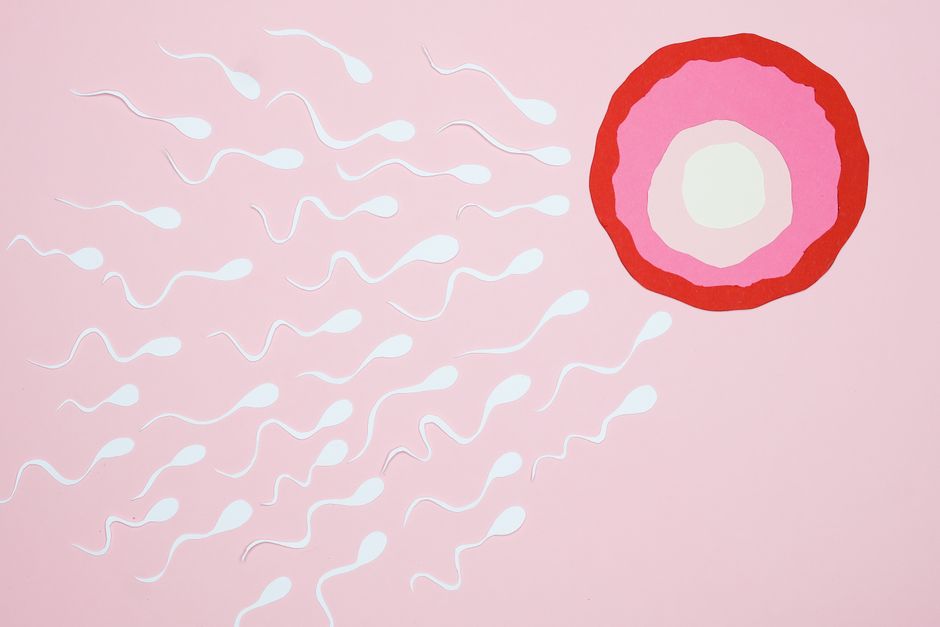
Ovulation itself lasts about 12 to 24 hours. That is the window in which the egg is released from the ovary and remains viable. But the fertile window — the days when sex can lead to pregnancy — is longer, usually about 6 days. That is because sperm can survive in the reproductive tract for up to 5 days, waiting for the egg to arrive.
So when people ask how many days ovulation lasts, there are really two answers. Ovulation as an event: roughly one day. Ovulation as part of a fertile window: about a week. Understanding the difference matters whether you are trying to conceive or trying to avoid pregnancy.
What Actually Happens During Ovulation?
Ovulation is the release of a mature egg from one of the ovaries. It happens roughly midway through the menstrual cycle, though the timing varies widely from person to person and from cycle to cycle.
The process starts in the brain. The hypothalamus signals the pituitary gland to release follicle-stimulating hormone (FSH), which prompts follicles in the ovary to mature. As one follicle becomes dominant, it produces rising levels of estrogen. When estrogen reaches a certain threshold, it triggers a sharp surge in luteinizing hormone (LH). That LH surge is what causes the follicle to rupture and release the egg, usually 24 to 36 hours after the surge begins.
The egg is then swept into the fallopian tube by finger-like structures called fimbriae. If sperm are present in the tube, fertilization can occur. If not, the egg degenerates. The empty follicle becomes a structure called the corpus luteum, which produces progesterone to prepare the uterine lining for a possible pregnancy.
This entire sequence is hormonal and tightly regulated. It is not something you can consciously control or feel happening in most cases. Many people ovulate without any noticeable sensation at all.
How Many Days Does Ovulation Last: The Fertile Window Explained
The egg lives for about 12 to 24 hours after release. Sperm, however, can survive in cervical mucus for up to 5 days under favorable conditions. That combination creates a fertile window of roughly 6 days: the 5 days before ovulation plus the day of ovulation itself.
This is the key point that many people miss. The days leading up to ovulation are often more fertile than the day after. If intercourse happens 2 days before the egg is released, sperm may still be alive and ready. If intercourse happens 2 days after ovulation, the egg is almost certainly gone.
Some research suggests that the probability of conception is highest when intercourse occurs in the 2 days before ovulation and on the day of ovulation. After that, the chance drops sharply. This is not a guarantee of anything — it is a pattern observed across large groups, not a rule for any single person.
The length of the fertile window can shift. It depends on how long sperm survive in a given person’s cervical mucus, which varies. It also depends on the exact day of ovulation, which is not fixed. Stress, illness, travel, sleep changes, and other factors can delay ovulation by days or even weeks.
What Are the Common Signs of Ovulation?
Many people look for physical signs that ovulation is near. Some signs are reliable for some people and unreliable for others. None of them confirm ovulation with certainty on their own.
The most commonly discussed signs include:
- Changes in cervical mucus. As estrogen rises, mucus becomes clearer, wetter, and stretchier — often compared to raw egg white. This type of mucus helps sperm survive and move. After ovulation, progesterone makes mucus thicker and less hospitable.
- Mild pelvic pain. Some people feel a dull ache or twinge on one side of the lower abdomen. This is called mittelschmerz. It can last minutes to a few hours, though some report it for a day or two. It does not happen to everyone.
- Basal body temperature shift. After ovulation, resting body temperature rises slightly — typically by a few tenths of a degree Fahrenheit — due to progesterone. This shift confirms that ovulation has already happened, not that it is about to happen. It is useful for tracking patterns over time, not for predicting the current cycle.
- Luteinizing hormone (LH) surge. Ovulation predictor kits detect LH in urine. A positive result usually means ovulation will occur within 24 to 36 hours. These kits are considered one of the more accurate home methods, though they can produce false positives in some conditions.
- Breast tenderness, bloating, or increased libido. These are reported by some people around ovulation but are not specific. They can also occur for other reasons.
No single sign is definitive. Combining two or more — such as cervical mucus changes plus an LH kit — gives a better picture than relying on one alone.





Can You Ovulate Without Knowing It?
Yes. Many people ovulate with no noticeable symptoms. The absence of pain, mucus changes, or other signs does not mean ovulation did not occur.
This is one reason calendar-based methods of family planning are unreliable. They assume ovulation happens on the same day every cycle. In reality, cycle length and ovulation timing can vary significantly. A person with a 28-day cycle might ovulate on day 14 one month and day 18 the next.
Even people who track carefully can miss the signs. Basal body temperature only shows that ovulation happened after the fact. LH kits can miss the surge if testing is not timed correctly. Cervical mucus changes can be subtle or masked by other fluids.
If you are trying to conceive or avoid pregnancy, it helps to use more than one tracking method and to understand the limits of each.
How Does Ovulation Timing Change With Age?
Ovulation continues from puberty until menopause, but the quality and regularity of ovulation change over time. In the years leading up to menopause — a phase called perimenopause — cycles often become shorter or longer, and ovulation may become less predictable.
This does not mean ovulation stops suddenly. It means the timing becomes harder to predict. Some cycles may not produce a mature egg at all. Others may produce one earlier or later than usual.
Age also affects egg quality. The number of eggs in the ovaries declines from birth, and the remaining eggs are older. This affects fertility and the chance of conception, but it does not change the basic mechanics of ovulation itself. The egg still lives about 12 to 24 hours after release.
If you are over 35 and trying to conceive, or if your cycles have become noticeably irregular, a healthcare provider can help assess what is happening. There are tests for ovarian reserve and hormone levels, though their interpretation is not always straightforward.
What Can Delay or Prevent Ovulation?
Ovulation can be delayed or skipped for many reasons. Some are temporary. Others are ongoing.
Common causes include:
- Stress. Physical or emotional stress can disrupt the hormonal signals that trigger ovulation.
- Illness or infection. A severe illness can delay ovulation in that cycle.
- Significant weight loss or gain. Body fat affects estrogen levels and can interfere with ovulation.
- Intense exercise. Very high training loads can suppress ovulation in some people.
- Polycystic ovary syndrome (PCOS). This is a common hormonal condition that can cause irregular or absent ovulation.
- Thyroid disorders. Both an underactive and overactive thyroid can affect ovulation.
- Perimenopause. As described above, ovulation becomes less regular.
- Certain medications. Some medications, including certain psychiatric and hormonal drugs, can affect ovulation.
If your cycles are consistently irregular or you are not ovulating, a healthcare provider can help identify the cause. Treatment depends on what is found.
How Accurate Are Ovulation Tracking Methods?
No home method is perfect. Each has strengths and weaknesses.
LH kits detect the surge that precedes ovulation. They are generally considered more accurate for predicting ovulation than temperature or mucus alone, but they can be positive without actual ovulation in some cases, such as with PCOS.
Basal body temperature confirms that ovulation occurred but cannot predict it. It requires consistent measurement before getting out of bed each morning.
Cervical mucus tracking is free and can be useful, but it is subjective and can be affected by arousal fluids, infections, or medications.
Calendar methods are the least reliable because they assume a fixed cycle length. They work poorly for anyone with irregular cycles.
If you need a more definitive answer — for example, if you are undergoing fertility treatment — a healthcare provider can use ultrasound to monitor follicle growth and confirm ovulation. This is not typically used for routine tracking.
What Should You Do With This Information?
If you are trying to conceive, the most useful takeaway is that the days before ovulation matter most. Intercourse every 1 to 2 days during the fertile window gives the best chance. After ovulation, the window closes quickly.
If you are trying to avoid pregnancy, understand that no home method is foolproof. The fertile window is longer than just the day of ovulation, and ovulation timing can shift. Reliable contraception does not depend on tracking ovulation.
If your cycles are irregular, or if you have been trying to conceive for a year or more without success — or 6 months if you are over 35 — talk to a healthcare provider. There are many reasons ovulation can be disrupted, and many of them are treatable.
Frequently Asked Questions
How many days does ovulation last exactly?
Ovulation itself lasts about 12 to 24 hours — that is how long the egg remains viable after release. The fertile window around it is longer, usually about 6 days, because sperm can survive for up to 5 days before the egg is released.
Can you get pregnant after ovulation has ended?
Pregnancy after ovulation is very unlikely because the egg degenerates within about 24 hours if not fertilized. Once the egg is gone, conception cannot occur in that cycle.
What are the most reliable signs of ovulation?
An LH surge detected by an ovulation predictor kit is one of the more reliable home signs, usually indicating ovulation within 24 to 36 hours. Changes in cervical mucus — becoming clearer and stretchier — are also a common sign, though they are more subjective.
Can you ovulate without any symptoms?
Yes, many people ovulate with no noticeable signs at all. The absence of pain, mucus changes, or other symptoms does not mean ovulation did not happen.
