
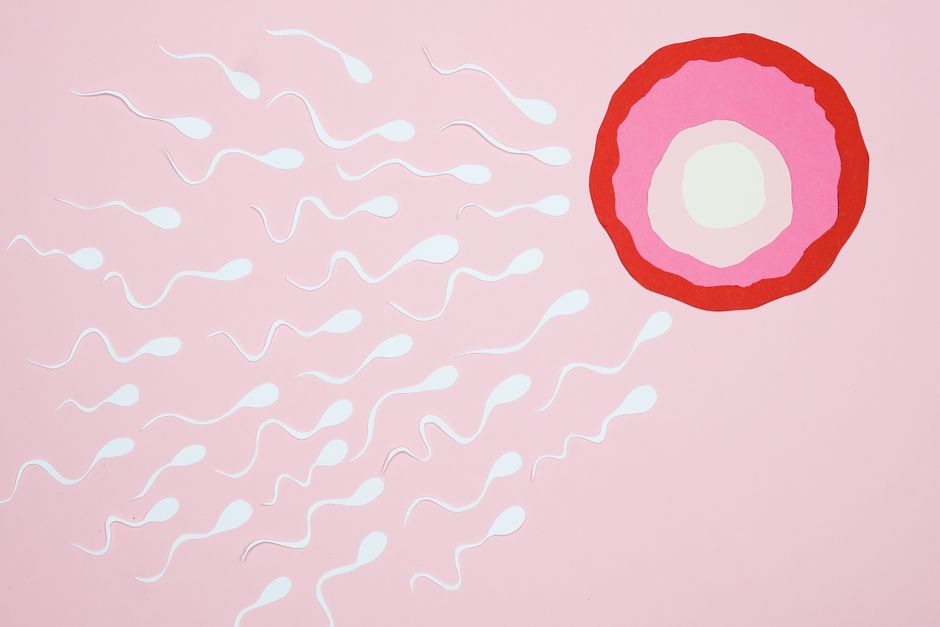
Ovulation itself lasts only about 12 to 24 hours. That is the window in which an egg can be fertilized after it is released from the ovary. But the fertile window — the days when sex can lead to pregnancy — is longer, because sperm can survive in the reproductive tract for up to about five days before ovulation occurs.
So the short answer to “how many days is ovulation” is one day or less. The practical answer is that the fertile window spans roughly six days: the five days before ovulation plus the day of ovulation itself. Getting the timing right matters because the egg’s viable life is so brief.
What Actually Happens During Ovulation?
Ovulation is the release of a mature egg from one of the ovaries. It happens when a surge of luteinizing hormone (LH) triggers the follicle — a fluid-filled sac in the ovary — to rupture and release the egg into the fallopian tube.
The egg then travels toward the uterus. If sperm are present in the fallopian tube, fertilization can occur. If not, the egg dissolves, usually within about 24 hours of release.
The hormonal sequence is well understood. Estrogen rises as the follicle matures, which thickens the uterine lining. When estrogen peaks, it triggers the LH surge. Ovulation typically follows the start of that surge by roughly 24 to 36 hours. After the egg is released, the ruptured follicle becomes a structure called the corpus luteum, which produces progesterone to support a possible pregnancy.
If no pregnancy occurs, hormone levels fall, the uterine lining sheds, and menstruation begins. This cycle repeats roughly every 21 to 35 days in most adults, though cycle length varies widely from person to person and even from month to month in the same person.
How Long Does the Fertile Window Last?
The fertile window is about six days long. That includes the five days before ovulation and the day of ovulation. Pregnancy is essentially not possible on days outside this window.
The reason the window extends backward is sperm survival. Sperm can live in cervical mucus for up to about five days under favorable conditions. The egg, by contrast, survives for only about 12 to 24 hours. This asymmetry is why the days before ovulation matter more than the days after.
A common misunderstanding is that ovulation marks the start of the fertile period. It does not. By the time ovulation occurs, much of the fertile window has already passed. For anyone trying to conceive, the days leading up to ovulation are the most important.
It is also worth knowing that the “day 14” rule taught in many health classes is an average, not a rule. A 28-day cycle with ovulation on day 14 is a textbook example. Real cycles vary. Ovulation can occur earlier or later, and it can shift from cycle to cycle in the same person.
How Can You Tell When Ovulation Is Happening?
There is no single perfect method for pinpointing ovulation, but several approaches together give a reasonably clear picture. Each has limits.
- Cervical mucus changes: As estrogen rises, cervical mucus becomes clearer, wetter, and stretchier — often compared to raw egg white. This typically happens in the days just before ovulation.
- Basal body temperature: Resting body temperature rises slightly after ovulation, usually by a few tenths of a degree. This confirms ovulation has happened but does not predict it in advance.
- Ovulation predictor kits: These detect the LH surge in urine. A positive result generally means ovulation is likely within the next day or two.
- Calendar tracking: Counting days can estimate the likely window, but it is the least precise method because cycle timing varies.
Some people also notice mild pelvic pain on one side, sometimes called mittelschmerz, around the time of ovulation. Not everyone experiences it, and it is not a reliable stand-alone indicator.



Does Ovulation Always Happen on the Same Day Each Cycle?
No. Ovulation timing shifts, sometimes by several days, even in people with regular cycles. Stress, illness, travel, changes in sleep, and significant weight change can all affect when ovulation occurs.
What stays more consistent is the second half of the cycle. The luteal phase — the time from ovulation to the start of the next period — is typically around 14 days, though it can range from about 11 to 16 days. The first half, called the follicular phase, is the part that varies most.
This matters for anyone tracking ovulation. If your cycle is 32 days instead of 28, ovulation is more likely around day 18 than day 14. Counting backward from your expected next period is often more useful than counting forward from your last one.
Irregular cycles make prediction harder. Conditions such as polycystic ovary syndrome (PCOS) and thyroid disorders can affect ovulation frequency and timing. If cycles are consistently irregular or very long, a clinician can help identify why.
Can You Ovulate More Than Once in a Cycle?
Ovulation typically releases one egg per cycle. In some cases, two eggs are released within about 24 hours of each other, which can lead to fraternal twins if both are fertilized.
What does not happen is a second, separate ovulation days later in the same cycle. Once the corpus luteum forms and progesterone rises, the hormonal environment suppresses further ovulation until the next cycle begins.
What If You Are Trying to Conceive or Avoid Pregnancy?
For conception, the guidance is straightforward: the days just before ovulation carry the highest chance of pregnancy. Having sex every one to two days during the fertile window is a common approach, though the evidence does not show that a specific frequency is required for everyone.
For avoiding pregnancy, timing alone is unreliable. Fertile window tracking — sometimes called fertility awareness — requires consistent, careful observation and still carries a meaningful risk of unintended pregnancy when used by itself. Sperm survival of up to five days means the window is wider than many people expect, and ovulation timing can shift unpredictably.
If avoiding pregnancy matters, discussing methods with a healthcare provider gives a clearer picture of what is reliable for your situation. No method based on timing alone is as effective as methods that do not depend on predicting ovulation.
When Should You Talk to a Doctor?
Most variation in ovulation timing is normal and not a cause for concern. But some patterns are worth discussing with a clinician.
Consider talking to a doctor if your cycles are consistently shorter than 21 days or longer than 35 days, if you go several months without a period, or if you have been trying to conceive for a year without success — or six months if you are 35 or older. These timelines reflect general clinical guidance, not a hard cutoff, and individual situations vary.
Ovulation problems are one of the more common causes of difficulty conceiving, and many are treatable. A clinician can assess hormone levels, cycle patterns, and other factors to identify what is happening.
Understanding Ovulation Timing in Plain Terms
The egg’s life is short — about a day. Sperm’s life is longer — up to about five days. That single difference explains why the fertile window opens before ovulation, not after it.
If you remember one thing, let it be this: ovulation is a brief event, but the fertile window around it lasts roughly six days. Timing matters, but it is not perfectly predictable, and no tracking method is flawless. Understanding the biology helps you make sense of what your body is doing, whether you are trying to conceive, avoid pregnancy, or simply understand your cycle better.
Frequently Asked Questions
How many days does ovulation last?
Ovulation itself lasts about 12 to 24 hours, the time the egg remains viable after release. The broader fertile window lasts about six days when the days before ovulation are included.
Can you get pregnant after ovulation?
Pregnancy after ovulation is unlikely because the egg survives only about 12 to 24 hours. Once that window passes, conception is essentially not possible until the next cycle.
How many days after your period do you ovulate?
It varies widely and cannot be pinned to a fixed number of days. Ovulation is more reliably estimated by counting backward from the next expected period, since the luteal phase is more consistent than the follicular phase.
Is ovulation always on day 14?
No. Day 14 is an average based on a 28-day cycle, not a rule. Ovulation can occur earlier or later, and it can shift from one cycle to the next.
