
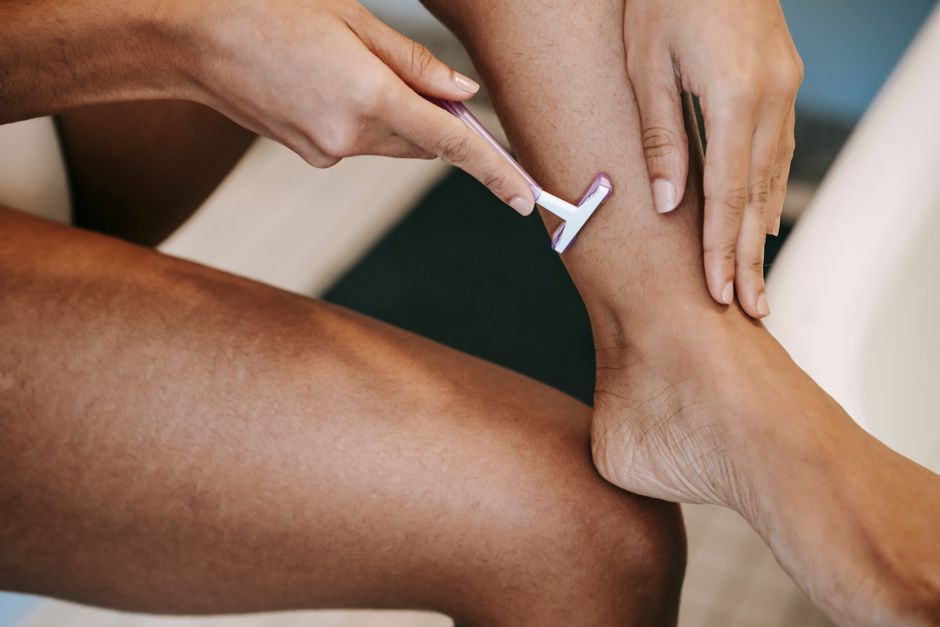
An ingrown hair usually lasts 1 to 2 weeks if left alone, but the timeline depends on how deep the hair is trapped and whether it becomes infected. Most mild cases resolve on their own as the hair eventually grows out or the body pushes it to the surface. However, picking at the area or trying to dig the hair out can extend the problem to several weeks or turn it into a more serious infection.
What Exactly Is an Ingrown Hair?
An ingrown hair occurs when a hair that has been shaved, waxed, or plucked grows back and curves into the skin instead of rising up through the follicle. The tip of the hair can pierce the skin, or the hair may simply stay trapped beneath the surface.
This triggers an inflammatory response. The body treats the hair like a foreign object. Redness, swelling, and sometimes a pus-filled bump develop. That bump is not always an infection — often it is just inflammation from the body reacting to the hair.
People with naturally curly hair are more prone to ingrown hairs. Curly hair has a greater tendency to bend back into the skin after it emerges from the follicle. This is why ingrown hairs are very common in the beard area, neck, and legs.
How Long Will An Ingrown Hair Last Without Treatment?
Most ingrown hairs clear up within 7 to 14 days without any intervention. The body eventually recognizes the hair as foreign material and works to push it out. In many cases, the hair simply continues growing and exits the skin on its own.
The location matters. Ingrown hairs in areas where skin moves a lot — like the neck or underarms — may resolve faster because friction helps release the trapped hair. Areas with thicker skin, like the back of the neck or the bikini line, can take longer.
If the area becomes infected, the timeline extends. An infected ingrown hair can last 3 weeks or more. Signs of infection include increasing pain, spreading redness, warmth, and yellow or green pus. A mild amount of white pus is common and not necessarily a sign of serious infection.
What Makes an Ingrown Hair Last Longer?
Several habits extend the life of an ingrown hair. The most common mistake is picking or squeezing the bump. This damages the skin further and can introduce bacteria from your fingers into the wound. What started as a minor irritation can become a painful infection that lasts weeks.
Repeated shaving over an active ingrown hair also prolongs the problem. Shaving cuts the hair at an angle that makes it more likely to re-enter the skin. It also irritates the inflamed area, slowing the healing process.
Tight clothing can make ingrown hairs worse. Constant friction and pressure trap the hair deeper and increase inflammation. This is particularly relevant for ingrown hairs on the legs, bikini area, and buttocks.
Using thick creams or oils over an ingrown hair can sometimes block the follicle opening. While moisturizing is generally good for skin, heavy occlusive products may keep the hair trapped beneath the surface.





How to Speed Up Healing Safely
The safest approach is to stop shaving or waxing the area until the ingrown hair resolves. This gives the hair time to grow out naturally. Most ingrown hairs will clear on their own within two weeks if left completely alone.
Warm compresses applied for 10 to 15 minutes several times a day can help. The warmth softens the skin and may encourage the hair to surface. It also improves blood flow to the area, which supports the healing process.
Gentle exfoliation can help release a trapped hair. Use a soft washcloth or a mild physical scrub in circular motions. Chemical exfoliants containing salicylic acid or glycolic acid are also effective. These ingredients help remove the layer of dead skin cells that may be trapping the hair.
If you can see the hair loop just beneath the surface, you can use a sterilized needle or tweezers to gently lift the loop out. Do not dig for the hair. Do not break the skin to find it. If the hair is not visible at the surface, leave it alone. Digging will cause more harm than good.
Over-the-counter hydrocortisone cream can reduce redness and itching for a few days. Antibiotic ointments are not needed unless there is a clear infection. Using antibiotics without an infection does not help and can contribute to bacterial resistance.
When to See a Doctor
Most ingrown hairs do not require medical attention. But some situations warrant a professional evaluation. If the area becomes increasingly painful, swollen, or warm to the touch, see a doctor. Spreading redness that expands beyond the immediate bump is a warning sign.
Fever is another red flag. An ingrown hair that causes systemic symptoms like fever or chills requires prompt medical care. This could indicate a deeper skin infection called cellulitis.
People with diabetes or weakened immune systems should be more cautious. Their bodies are less efficient at fighting skin infections. What might be a minor issue for a healthy person can escalate quickly in these populations.
Recurrent ingrown hairs in the same location may also warrant a medical visit. A doctor can examine the area to rule out other conditions that mimic ingrown hairs, such as folliculitis, cysts, or even skin cancer in rare cases. If a bump does not heal within 4 to 6 weeks despite good care, professional evaluation is recommended.
Preventing Future Ingrown Hairs
Prevention is more effective than treatment. The most reliable strategy is to stop shaving or waxing altogether. If that is not an option, changing your shaving technique can significantly reduce the frequency of ingrown hairs.
Shave in the direction of hair growth rather than against it. This leaves the hair with a blunt tip that is less likely to pierce the skin. Use a sharp, single-blade razor. Multi-blade razors pull the hair up before cutting it, which allows the hair to retract below the skin surface after shaving.
Exfoliate regularly between shaves. This removes dead skin cells that can trap hairs before they emerge. Chemical exfoliants with salicylic acid are particularly useful for people prone to ingrown hairs on the legs or bikini area.
Moisturize after shaving to keep skin supple. Soft, hydrated skin allows hairs to grow out more easily. Avoid heavy products that block the follicle.
Consider alternatives to shaving if ingrown hairs are a persistent problem. Depilatory creams dissolve the hair at the skin surface. Laser hair removal reduces hair growth over time and is the most effective long-term solution for chronic ingrown hairs. Electrolysis is another permanent option, though it requires multiple sessions.
Do Home Remedies Actually Work?
Many home remedies circulate online, and most lack solid evidence. Tea tree oil is often recommended for its antibacterial properties. Some research suggests it has antimicrobial effects, but no clinical trials have confirmed it treats ingrown hairs effectively. It can also irritate sensitive skin when used undiluted.
Aloe vera gel is soothing and may reduce inflammation. It is unlikely to cause harm, but it will not release a trapped hair. Aspirin masks are sometimes suggested because aspirin contains salicylic acid. While salicylic acid is proven to help exfoliate skin, crushing aspirin into a paste is not a regulated or studied approach. Commercial salicylic acid products are a safer, more consistent choice.
Witch hazel is an astringent that may reduce inflammation temporarily. It does not address the underlying trapped hair. No home remedy will remove an ingrown hair faster than allowing the hair to grow out naturally.
Myths About Ingrown Hairs
One common myth is that ingrown hairs always become infected. They do not. Most are simple inflammatory reactions that resolve without antibiotics. The presence of white pus does not automatically mean infection. It can be a collection of white blood cells responding to the hair as a foreign body.
Another myth is that pulling the hair out completely prevents recurrence. Pulling the hair from the root can actually make the problem worse. The new hair that grows in its place may also become ingrown. And plucking leaves the follicle open to bacterial entry. The goal should be to release the trapped hair, not remove it entirely.
Some people believe ingrown hairs only affect men who shave their faces. This is false. Anyone who removes hair by shaving, waxing, or plucking can develop ingrown hairs. Women frequently experience them on legs, underarms, and the bikini area.
Frequently Asked Questions
Can an ingrown hair last for months?
An untreated ingrown hair that keeps being irritated can last for months, but this is not typical. If a bump persists beyond 4 to 6 weeks despite good care, see a doctor to rule out other conditions.
Is it safe to pop an ingrown hair like a pimple?
No. Popping an ingrown hair damages the skin, increases infection risk, and often fails to release the hair. Use a warm compress and gentle exfoliation instead.
How do I know if an ingrown hair is infected?
Signs of infection include spreading redness, increasing pain, warmth, and yellow or green pus. A small amount of white pus alone does not confirm infection.
Will shaving over an ingrown hair make it worse?
Yes. Shaving over an active ingrown hair irritates the area and cuts the hair at an angle that makes recurrence more likely. Stop shaving the area until it heals.
