
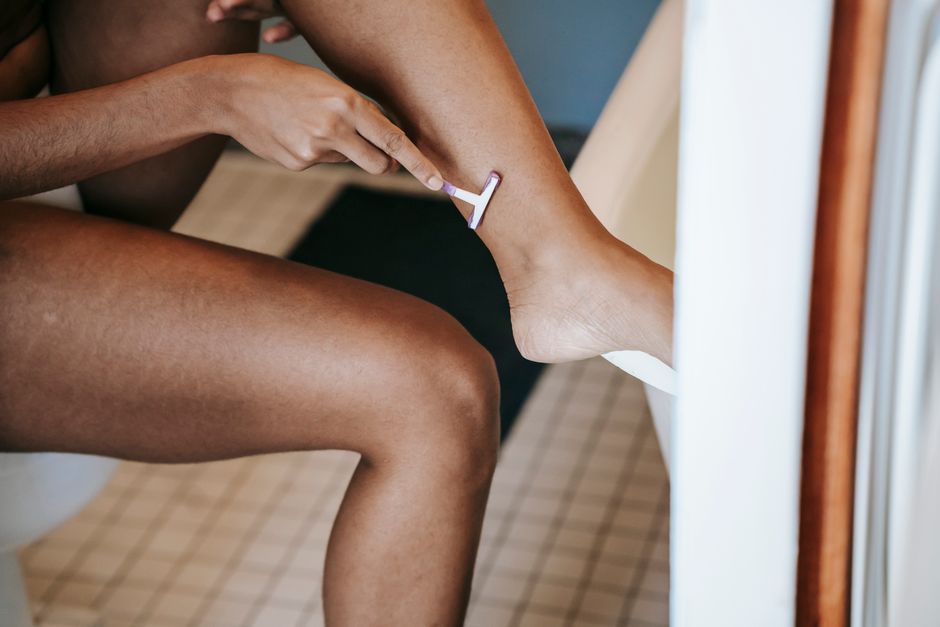
An ingrown hair happens when a hair curls back and grows into the skin instead of up and out. It causes a red, sometimes painful bump that can look like a pimple. You can treat most ingrown hairs at home by gently releasing the trapped hair and keeping the area clean. To prevent them, focus on proper shaving technique, regular exfoliation, and letting the hair grow out when possible. Most ingrown hairs clear up on their own within one to two weeks without any medical treatment.
What Causes An Ingrown Hair To Form?
Hair grows out of a follicle, which is a small tube in the skin. Normally the hair exits the skin surface without trouble. An ingrown hair occurs when the tip of the hair grows sideways or curls back into the follicle wall.
This happens most often in people with naturally curly or coarse hair. When the hair is cut very short, the sharp tip can easily pierce the skin as it tries to grow. Shaving, waxing, and tweezing all increase the risk because they create that sharp edge.
Common areas for ingrown hairs include the beard area on men, the bikini line, legs, and underarms. Anyone who removes hair regularly can get them, but people with thick or curly hair tend to get them more often.
What Does An Ingrown Hair Look Like?
An ingrown hair typically appears as a small, raised bump that is red or darker than the surrounding skin. You may see the hair loop visible beneath the surface. The area can feel tender, itchy, or slightly painful.
Sometimes the bump fills with pus. This is not a true infection in most cases. It is the immune system responding to the hair as a foreign object. The pus is a sign of inflammation, not necessarily a bacterial infection.
If you scratch or pick at the bump, you can introduce real bacteria into the skin. That can turn a simple ingrown hair into a genuine infection that requires medical treatment.
What To Do About An Ingrown Hair Treat And Prevent: Home Treatment Steps
For most ingrown hairs, home treatment is all you need. The goal is to release the trapped hair and reduce inflammation.
Warm compress. Apply a clean cloth soaked in warm water to the area for 10 to 15 minutes. This softens the skin and helps bring the hair closer to the surface. Do this two to three times a day.
Gently exfoliate. After the warm compress, use a soft washcloth or a gentle scrub in small circular motions. This can help free the hair tip from the skin. Do not scrub aggressively. That will irritate the skin more.
Sterile needle technique. If the hair loop is visible just under the skin, you can try to free it with a sterile needle. Clean the area with rubbing alcohol. Use a needle sterilized with alcohol to gently lift the hair loop. Do not dig into the skin. If the hair does not lift easily with light pressure, stop and try again the next day.
Let it be. If you cannot see the hair or it does not release easily, leave it alone. Many ingrown hairs resolve without any intervention. Picking at them increases the chance of scarring and infection.
Keep the area clean. Wash the area daily with a mild soap. You can apply a light, fragrance-free moisturizer to reduce dryness and help the skin shed dead cells around the hair.





When To See A Doctor For An Ingrown Hair
Most ingrown hairs do not require medical care. But some situations do warrant a doctor’s visit.
See a doctor if the bump becomes increasingly painful, grows larger, or fills with yellow-green pus that has a foul odor. These can be signs of a bacterial infection. Redness spreading outward from the bump, especially with warmth or fever, also requires medical evaluation.
If you get ingrown hairs frequently and they keep becoming infected, a dermatologist can help. They may recommend prescription treatments or discuss long-term hair removal options with you.
People with diabetes or weakened immune systems should be more cautious. Skin infections can become serious more quickly in these groups. If an ingrown hair is not improving after a few days, seek medical advice.
What Not To Do With An Ingrown Hair
Do not squeeze the bump like a pimple. This pushes bacteria deeper into the skin and can cause a more serious infection. It also increases the risk of permanent dark spots or scarring.
Do not dig at the area with unsterilized tools. Your fingernails, safety pins, or non-sterile tweezers can introduce bacteria. If you must use a tool, sterilize it with rubbing alcohol first.
Do not repeatedly shave over an active ingrown hair. This can make the inflammation worse and create additional ingrown hairs in the same area. Wait until the bump heals before shaving that spot again.
Do not use harsh chemical products on an active ingrown hair. Strong acne treatments, chemical exfoliants, or astringents can burn the already irritated skin.
How To Prevent Ingrown Hairs From Forming
Prevention is largely about changing how you remove hair. The sharp tip created by shaving is the main culprit, so reducing that sharpness makes a real difference.
Prepare the skin before shaving. Shave after a warm shower or wash the area with warm water for a few minutes. This softens the hair and opens the follicle. Use a shaving cream or gel to create a smooth surface.
Shave in the direction of hair growth. Shaving against the grain gives a closer shave but leaves sharper tips that are more likely to re-enter the skin. Shaving with the grain leaves a slightly longer, blunter hair tip that is less likely to become ingrown.
Use a sharp razor. A dull blade pulls and tugs at the hair instead of cutting it cleanly. This creates an uneven, jagged edge. Replace your razor blade regularly, roughly every five to seven shaves.
Do not stretch the skin while shaving. Stretching the skin makes the hair retract below the surface after the cut. When the skin returns to normal, the hair can easily grow back into the skin.
Rinse the razor after every stroke. A clogged razor cuts poorly and increases irritation.
Consider an electric razor. Electric razors do not cut as close as manual razors. That slightly longer hair is less prone to becoming ingrown.
Exfoliation And Moisturizing For Ingrown Hair Prevention
Regular exfoliation helps prevent ingrown hairs by removing the layer of dead skin cells that can trap hairs beneath the surface. When dead skin builds up, it can block the hair from exiting the follicle normally.
Use a gentle physical exfoliant, like a soft brush or a mild sugar scrub, two to three times per week. Chemical exfoliants containing salicylic acid or glycolic acid can also help. These dissolve the bonds between dead skin cells and allow the hair to break through more easily.
If you use a chemical exfoliant, start with a low concentration and apply it only to areas prone to ingrown hairs. Stop if you experience burning or excessive dryness. These products can irritate sensitive skin, especially in the bikini area.
Moisturizing after exfoliation keeps the skin supple. Well-hydrated skin sheds dead cells more easily. Look for a simple, fragrance-free moisturizer. Fragrances and dyes can irritate freshly exfoliated skin.
Hair Removal Alternatives To Prevent Ingrown Hairs
If shaving constantly causes ingrown hairs, consider changing your hair removal method entirely.
Let hair grow. The most reliable prevention is to stop removing the hair altogether. When hair grows longer, it naturally exits the follicle and is far less likely to curl back into the skin.
Laser hair removal. Laser treatment damages the hair follicle so hair grows back thinner or not at all. Over multiple sessions, this can significantly reduce ingrown hairs. It is expensive and requires several treatments. Results vary by hair color and skin tone.
Depilatory creams. These creams dissolve the hair just below the skin surface. The resulting hair tip is soft rather than sharp, which reduces the risk of ingrown hairs. However, these products can cause chemical burns in sensitive areas. Always test on a small area first.
Waxing. Waxing removes the hair from the root, so the regrowth is soft and pointed. This can actually reduce ingrown hairs compared to shaving. However, waxing can cause ingrown hairs if the hair breaks off below the skin surface during the process.
Can Ingrown Hairs Cause Permanent Damage?
In most cases, ingrown hairs heal without any lasting effect. But repeated ingrown hairs in the same spot can cause long-term changes to the skin.
Post-inflammatory hyperpigmentation is common. This is a darkening of the skin where inflammation occurred. It is more noticeable in people with darker skin tones. The dark spots can take months to fade and may be permanent if the area is repeatedly irritated.
Scarring can occur if you pick or squeeze the bumps. Deep picking can damage the dermis, the layer of skin beneath the surface. This damage can leave a permanent scar.
Rarely, chronic ingrown hairs in the beard area can lead to a condition called pseudofolliculitis barbae. This is a chronic inflammatory condition that can cause significant scarring and skin thickening if untreated. It is more common in men with tightly curled facial hair.
Do Home Remedies Like Tea Tree Oil Work?
Tea tree oil is often promoted as a remedy for ingrown hairs. It has antibacterial and anti-inflammatory properties. Some research supports its use for acne and skin inflammation.
However, no clinical trials have specifically tested tea tree oil for ingrown hairs. It may help reduce redness and prevent infection, but it will not release a trapped hair. If you use it, dilute it with a carrier oil like coconut or jojoba oil. Undiluted tea tree oil can burn the skin.
Other popular remedies like aspirin paste or toothpaste have no evidence behind them. Aspirin paste may reduce inflammation because aspirin is an anti-inflammatory drug, but it can also irritate the skin. Toothpaste is not designed for skin use and can cause contact dermatitis. Skip these.
Aloe vera gel is safe and soothing. It can reduce redness and cool the area. It will not fix the underlying issue of the trapped hair, but it is a reasonable option for comfort.
Frequently Asked Questions
How long does an ingrown hair take to heal?
Most ingrown hairs heal within one to two weeks on their own. If the trapped hair is released with a sterile needle, healing is usually faster.
Should I pop an ingrown hair like a pimple?
No. Squeezing an ingrown hair can push bacteria deeper and cause a real infection. It also increases the risk of scarring and dark spots.
Can I shave over an ingrown hair?
You should avoid shaving over an active ingrown hair until it heals. Shaving can worsen inflammation and create more ingrown hairs in the same area.
Does laser hair removal permanently stop ingrown hairs?
Laser hair removal significantly reduces ingrown hairs by thinning or destroying the hair follicle. It does not guarantee permanent removal of all hairs, but most people see a major improvement.
